
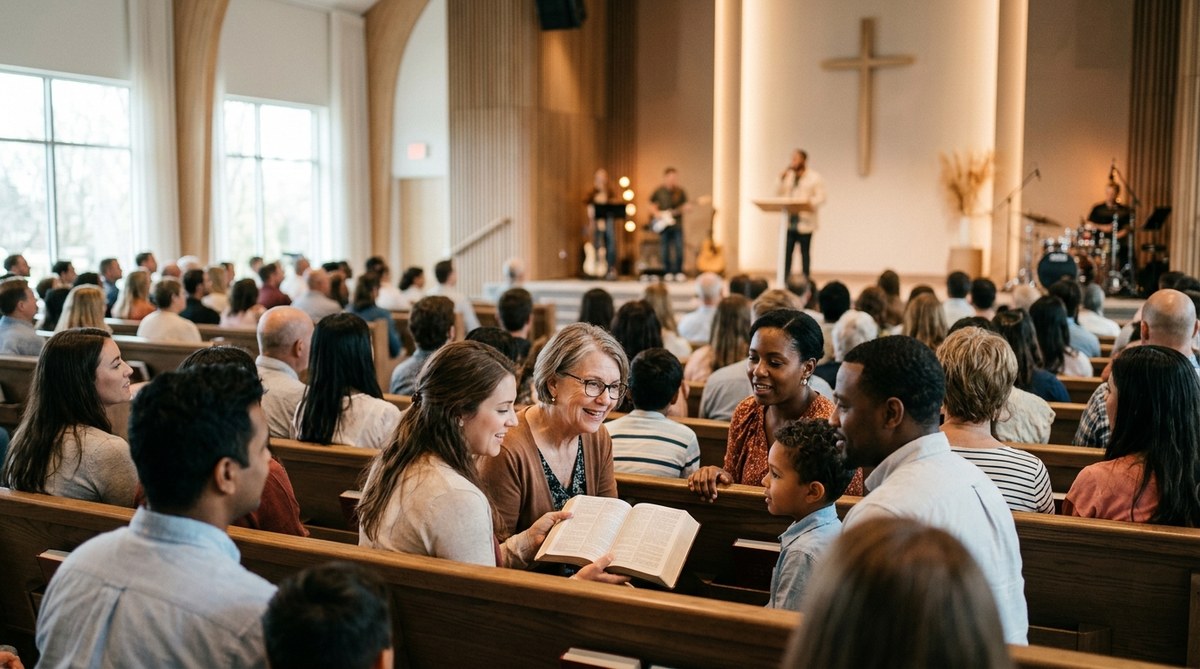
You might be trying to follow Jesus on your own. You read the Bible at home, you pray before meals, and you feel a genuine connection to God. But something still feels missing. You wonder if you really need a building, a pastor, or a group of strangers on Sunday morning to make your faith real. It is a fair question. Many people today treat spirituality as a private project. Yet for two thousand years, Christians have insisted that faith cannot grow in isolation. The church is not just a nice add on. It is woven into the very fabric of what it means to follow Christ.
The church is essential to Christianity because it was established by Jesus and the apostles as the primary place for worship, teaching, and community. It provides accountability, spiritual growth, and a shared history that private faith cannot replicate. Without the church, believers miss out on the fullness of Christian life.
The Biblical Foundation for the Church
The word church comes from the Greek term ekklesia, which means a gathering of people called out for a purpose. In the New Testament, the church is not a building. It is the people who believe in Jesus and gather to worship him.
The Apostle Paul describes the church as the body of Christ. Every believer is a part of that body. In 1 Corinthians 12, Paul explains that the eye cannot do the work of the ear, and the hand cannot replace the heart. Each part needs the others. This image shows that Christians were never meant to function alone.
Jesus himself laid the groundwork for the church. In the Gospel of Matthew, he tells his disciples that they are the light of the world and that they should gather others to spread the good news. After his resurrection, Jesus gave Peter and the other apostles the mission to build a community of believers. The book of Acts records how the first church started in Jerusalem and grew rapidly across the Roman Empire.
If you want to understand the core teachings that bind this community together, you can read about 5 core beliefs every Christian should understand. These beliefs are not just ideas. They are the foundation that the church protects and passes down.
What the Church Provides That Private Faith Cannot
Many people say they are spiritual but not religious. They prefer to worship in nature or meditate alone. Those practices have value, but they lack several critical elements that only a church community can offer.
Accountability and Growth
When you attend a church regularly, you are surrounded by people who know you. They notice when you are absent. They ask how you are doing. This kind of accountability helps you stay committed to your faith even when life gets hard.
A church also provides structured teaching. Sermons, Bible studies, and classes help you learn the Bible in a way that self study cannot match. You can read how to read the Bible for the first time on your own, but a church community gives you context, questions, and conversations that deepen your understanding.
Shared Worship
Worshiping with others changes the experience. When a hundred voices sing a hymn together, something happens in your heart that does not happen when you sing alone in the car. The early church understood this. They met in homes and catacombs, often risking their lives, just to pray and sing together.
Service and Mission
Churches organize food drives, visit the sick, and support missionaries around the world. You can do some of these things on your own, but the church multiplies your impact. It connects your small effort to a larger mission. If you want to understand how serving others is tied to your own growth, check out why serving others is essential for your spiritual growth.
A Look at How the Church Has Shaped History
The church is not just a modern institution. It has been a central force in Western civilization for two millennia. The early church preserved literacy and learning during the Dark Ages. Monasteries copied manuscripts and kept classical texts alive. The church founded the first universities, hospitals, and orphanages.
In America, the church played a major role in the abolition of slavery, the civil rights movement, and the establishment of many schools and colleges. Dr. Martin Luther King Jr. was a pastor. His leadership came directly from his church community.
This historical weight matters. When you join a church, you are connecting yourself to a story that stretches back to the apostles. You become part of something much larger than your own lifetime.
Common Misconceptions About the Church
Some people avoid church because they have been hurt by one. Others think the church is outdated or irrelevant. Let us address a few of these concerns directly.
| Misconception | Reality |
|---|---|
| The church is just about rules | The church teaches grace and forgiveness first |
| You have to be perfect to join | Everyone is welcome, including those who struggle |
| Church is only for old people | Many churches now have vibrant young adult ministries |
| Online services are just as good | They are helpful, but they lack real community and sacraments |
A church is made of imperfect people. That is the point. The church is a place where you can grow, fail, and be accepted anyway. If you are curious about what a healthy congregation looks like, read about is your church healthy? 10 biblical marks of a thriving congregation.
How to Find Your Place in a Church Community
If you are ready to give church a real try, here is a simple process to follow.
- Visit at least three different churches in your area. Try different styles: contemporary, traditional, small, large.
- Talk to the pastor or a greeter after the service. Tell them you are new and looking for community.
- Attend a small group or Bible study. This is where real relationships form.
- Volunteer for a simple task like handing out bulletins or helping with coffee. Serving connects you to others.
- Give it a month. Attend four weeks in a row before deciding if it is a good fit.
Many churches also offer newcomer classes. These classes explain what the church believes and how to get involved. They are a low pressure way to learn more.
The Church and Your Spiritual Growth
Your faith will not grow much if you keep it to yourself. The Bible uses words like disciple, fellowship, and congregation because Christianity is a team sport. Even Jesus had a small group. He traveled with twelve disciples, and he taught them in community.
When you join a church, you get access to mentors who have walked the path longer than you. You find friends who pray for you when you are sick. You learn to forgive and be forgiven. These experiences shape your character in ways that private prayer cannot.
If you want to build a deeper prayer life, you can start with 7 daily habits that will transform your prayer life. But do not stop there. Bring those habits into a group setting. Praying with others will stretch you and teach you new ways to connect with God.
“The church is not a museum for saints. It is a hospital for sinners.” This old saying reminds us that no one has it all together. The church is a place where we help each other heal and grow.
What the Early Church Fathers Taught About Community
The early church fathers wrote extensively about why Christians must gather. Ignatius of Antioch, who was a student of the Apostle John, said that where the bishop is, there is the church. He meant that unity and leadership matter.
Cyprian of Carthage wrote that you cannot have God as your father unless you have the church as your mother. This might sound strange today, but he was making a point about belonging. Faith is not just a personal decision. It is also a family inheritance.
These ancient voices remind us that the church is not a human invention. It was part of God’s plan from the beginning.
A Table of Key Reasons the Church Matters
| Reason | Explanation |
|---|---|
| Biblical mandate | Jesus and Paul commanded believers to gather |
| Sacramental life | Baptism and communion happen in community |
| Teaching and doctrine | The church preserves and explains Scripture |
| Mutual support | Members care for each other in times of need |
| Historical continuity | The church connects you to the global body of Christ |
Each of these reasons stands on its own. Together, they make a strong case for why the church is not optional.
How to Overcome Fear of Joining a Church
You might feel nervous about walking into a new church. That is normal. Here are some things that can help.
- Bring a friend. You do not have to go alone.
- Arrive a few minutes early so you can find a seat without rushing.
- Sit near the back at first. You can observe without pressure.
- Remember that most church members are friendly and want to welcome you.
If you have been hurt by a church in the past, that pain is real. You may need time to heal. Consider talking to a pastor or a Christian counselor about your experience. You can also read about how to navigate church conflict with grace and biblical wisdom to understand how healthy churches handle problems.
The Church as a Family
The New Testament uses family language for the church. Believers call each other brother and sister. This is not just a polite term. It reflects a real bond.
Families are messy. They argue, they forgive, and they show up for each other anyway. That is what the church is supposed to be. It is not a club for people who agree on everything. It is a family where people love each other through disagreement.
If you are a parent, you might want to know how to raise your kids in this kind of environment. Read about 7 biblical principles for raising resilient Christian kids in a secular world to see how church community supports family life.
Your Next Step
You do not have to commit to a church for life right now. You just have to show up once. Pick a Sunday this month and visit a church near you. Sit through the service. Say hello to one person. See how it feels.
The importance of church in Christianity is not a theory. It is a lived reality for millions of believers around the world. They have found that their faith grows stronger when it is shared. You can experience the same thing.
Whether you are a new believer or someone who has been searching for years, the church is waiting for you. It is not perfect, but it is home.