
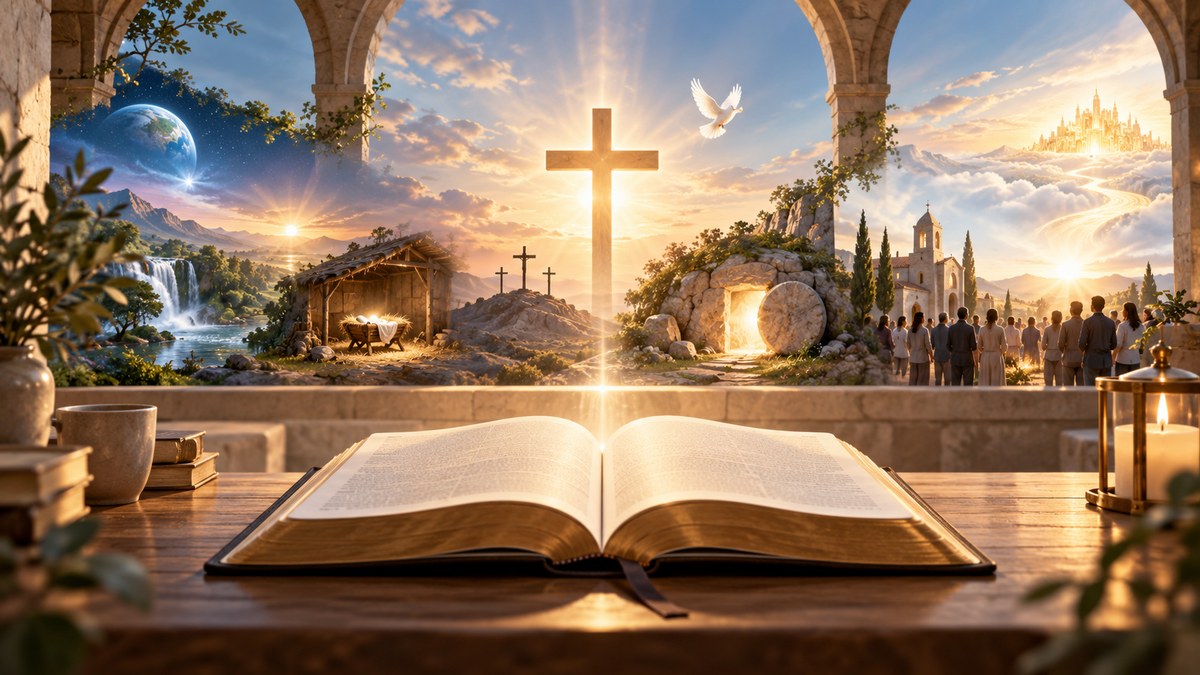
The Apostles’ Creed is one of the oldest summaries of Christian faith. It was not written by the apostles themselves, but it captures the essential teachings they passed down. For nearly two thousand years, believers have used it to affirm what they hold true. If you have ever heard it recited in church and wondered what each line really means, you are in the right place. This guide will walk through the Creed phrase by phrase, showing how it connects to the Bible and to your daily walk with God.
The Apostles’ Creed is a concise statement of Christian belief, built around the Trinity: God the Father, Jesus Christ the Son, and the Holy Spirit. It covers creation, the life and resurrection of Jesus, and the hope of eternal life. Understanding it helps believers ground their faith in historic, biblical truth shared by Christians worldwide.
Where the Creed Comes From
The Apostles’ Creed took shape in the early centuries of the church. Christians faced persecution and needed a clear way to teach new converts the core truths of the faith. They also needed a standard to guard against false teachings that were spreading at the time.
The creed we use today developed from an older statement called the Old Roman Creed, which dates back to around 150 AD. By the 8th century, it reached its current form. While the apostles did not write it themselves, the creed faithfully reflects the teachings found in the New Testament. It became the foundation for later creeds such as the Nicene Creed.
Breaking Down the Creed Line by Line
The Apostles’ Creed has three main sections, each focusing on one person of the Trinity: the Father, the Son, and the Holy Spirit. Let us look at each part.
I Believe in God, the Father Almighty, Creator of Heaven and Earth
This opening line establishes the most fundamental Christian belief: there is one God who made everything. The phrase “Father” points to a personal God who cares for us like a loving parent. It is not a distant force. It is a Creator who brought the universe into being and continues to sustain it.
Calling God “Almighty” means nothing is beyond His power. He made the heavens, the earth, and everything in them. This includes you. When you say this line, you are affirming that your life comes from a purposeful Creator, not from random chance.
And in Jesus Christ, His Only Son, Our Lord
Here we move to the second person of the Trinity. Jesus Christ is presented as the unique Son of God. He is not just a wise teacher or a prophet. He is the Son, and He is our Lord. This title “Lord” implies authority. Christians place Jesus at the center of their lives because they recognize Him as the one who leads and guides them.
If you want a deeper look at who Jesus is, check out our article on who is Jesus Christ.
Who Was Conceived by the Holy Spirit and Born of the Virgin Mary
This line teaches the doctrine of the Incarnation. Jesus did not begin His existence at birth. He was conceived through the power of the Holy Spirit, and Mary was the virgin mother who gave birth to Him. This miracle shows that Jesus is both fully divine and fully human.
The virgin birth is a sign of God’s direct involvement in history. It also fulfills Old Testament prophecies, such as the one in Isaiah 7:14, which spoke of a child born to a young woman. For more on how ancient prophecies point to Jesus, read about 7 Old Testament prophecies that point directly to Jesus.
He Suffered Under Pontius Pilate, Was Crucified, Died, and Was Buried
This is one of the most specific historical claims in the Creed. It ties the death of Jesus to a known Roman governor, Pontius Pilate, who ruled Judea from 26 to 36 AD. By naming a real person and a real event, the Creed anchors the story of Jesus in secular history.
Jesus suffered physically on the cross. He died, and He was buried. The Creed does not skip over the pain. It acknowledges that the Son of God experienced real human suffering. This death is central to Christian theology because it is the means by which our sins are washed away. For more on this, see our piece on what is the atonement and why is it central to Christian faith.
He Descended Into Hell
This phrase has puzzled many Christians. What does it mean that Jesus went to hell? The early church understood it as Jesus entering the place of the dead, not the place of eternal punishment. It shows that Jesus conquered death at its very source. He went into the darkness and came out victorious.
The third day he rose again from the dead. This is the cornerstone of Christian faith. The resurrection is not just a spiritual event. It was a physical rising from the tomb. The Creed emphasizes that it happened on the third day, matching the Gospel accounts. Without the resurrection, there would be no Christianity. For a fuller treatment of this event, read about the resurrection of Jesus and why it matters for your faith.
He Ascended Into Heaven and Is Seated at the Right Hand of God the Father
After the resurrection, Jesus did not simply disappear. He ascended into heaven in front of His disciples. Being “seated at the right hand” is a symbol of honor and authority. It means Jesus now rules alongside God the Father, interceding for us.
He Will Come Again to Judge the Living and the Dead
The Creed looks forward to the future. Jesus will return one day. When He does, He will judge everyone who has ever lived. This judgment is not just for the wicked. It applies to all people, including believers. It calls Christians to live with accountability, knowing that their actions matter in the eyes of God.
I Believe in the Holy Spirit
The third section of the Creed begins with the Holy Spirit. The Spirit is the presence of God active in the world today. He is the one who convicts us of sin, guides us in prayer, and empowers us to live holy lives. The Holy Spirit is not an impersonal force. He is a person within the Trinity, just as much as the Father and the Son.
For a closer look at how the Spirit works in believers, see our article on how the Holy Spirit works in the life of a believer.
The Holy Catholic Church
The word “catholic” here means universal, not the Roman Catholic Church specifically. This line affirms that there is one worldwide body of believers. The church is not a building or an institution. It is the community of all Christians, past and present, who share the same faith.
The Communion of Saints
This phrase refers to the spiritual bond between all Christians, both living and dead. It means you are not alone in your faith. You are connected to every believer who has gone before you and every believer who will come after you. It is a reminder that the church spans time and space.
The Forgiveness of Sins, the Resurrection of the Body, and the Life Everlasting
The Creed ends with three great hopes. First, God forgives our sins through Jesus. Second, our bodies will be resurrected at the end of time, just as Jesus was. Third, we will live forever in the presence of God. These promises give Christians a reason to face death without fear.
For more on these final topics, read about what happens after death from a Christian perspective.
How to Use the Creed in Your Personal Study
The Creed is not just for Sunday morning recitation. You can use it as a tool for personal growth. Here is a simple process to follow:
- Read the Creed slowly, one phrase at a time.
- Look up the Bible verses that support each phrase. For example, when you read “crucified, died, and was buried,” turn to Matthew 27:32-35.
- Write down one question you have about each section. Then find the answer in a study Bible or a trusted commentary.
- Pray through the Creed. After reading each line, pause and thank God for that truth.
- Discuss it with a friend or small group. Talking through the Creed helps you see it from different angles.
For a broader look at the core truths of the faith, see our guide on 5 core beliefs every Christian should understand.
Common Mistakes to Avoid When Studying the Creed
Many people misunderstand parts of the Creed. The table below shows some common errors and the correct view.
| Mistake | Correct Understanding |
|---|---|
| Thinking the apostles wrote the Creed | The Creed is based on apostolic teaching but was written later |
| Believing “catholic” means Roman Catholic | “Catholic” means universal, referring to the whole church |
| Assuming “descended into hell” means the place of punishment | It means the realm of the dead, not eternal torment |
| Treating the Creed as a complete theology | The Creed is a summary, not an exhaustive statement |
| Reciting the Creed without meaning | The Creed is meant to be believed and lived, not just repeated |
Why the Creed Still Matters Today
Some people think ancient creeds are outdated. That is not true. The Apostles’ Creed addresses the same questions people ask today. Who made the world? What happens after death? How should I live? The Creed gives clear, biblical answers.
It also unites Christians across denominations. Whether you are Baptist, Methodist, Presbyterian, or Catholic, you can say the Apostles’ Creed and mean the same core things. It is a bond that connects you to millions of other believers around the world and across history.
For a deeper look at the Trinity, which underlies the entire Creed, read our guide on understanding the Trinity for beginners.
Memorizing the Creed: A Practical Plan
Memorizing the Creed can deepen your faith. Here is a step by step plan.
- Week one: Learn the first three lines (Father, Son, virgin birth).
- Week two: Add the next three lines (suffering, death, resurrection).
- Week three: Learn the lines about ascension and judgment.
- Week four: Finish with the Holy Spirit, church, and final hopes.
Say the Creed aloud each morning or evening. After a month, you will have it memorized. Then you can carry it in your heart wherever you go.
A Final Word on Living the Creed
The Apostles’ Creed is not a test you pass. It is a foundation you build on. When you say “I believe,” you are not just reciting words. You are declaring your trust in God the Father, your faith in Jesus Christ, and your hope in the Holy Spirit. You are joining a community that stretches back to the first disciples and forward to generations not yet born.
Let the Creed shape how you pray, how you treat others, and how you face hard times. Let it remind you that you are part of something much bigger than yourself. And when you find yourself doubting, come back to these ancient words. They have held up the faith of millions before you. They can hold yours too.