
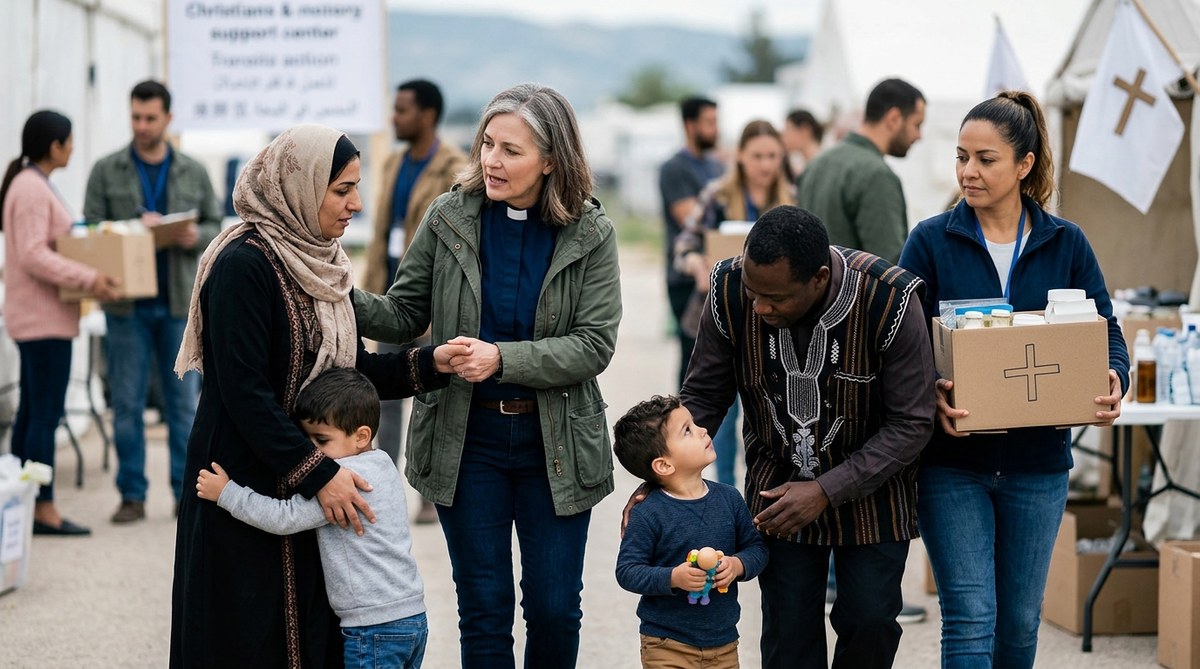
Christian leaders play a vital role in responding to the global refugee crisis. Their efforts are rooted in Christian teachings that emphasize compassion, justice, and love for the neighbor. As millions of people are forced to flee their homes because of conflict, persecution, and disaster, faith-based activism offers a powerful response. Christian leaders mobilize their communities to provide aid, advocate for justice, and embody Christ’s love in ways that inspire others to act. This article explores how Christian leaders support refugees, practical steps to get involved, and the faith principles guiding these efforts.
Christian leaders support refugees by mobilizing faith communities, advocating for justice, providing direct aid, and embodying Christ’s love. These efforts are grounded in biblical principles and inspire widespread compassion and action worldwide.
How Christian Leaders Support Refugees with Faith and Action
Christian leaders see caring for refugees as a core expression of their faith. Their support encompasses a broad range of activities, from advocacy and prayer to direct service. Many leaders leverage their influence to raise awareness about the plight of displaced persons and call their communities to respond with compassion. Their actions reflect the biblical mandate to love the stranger and show hospitality, which is central to Christian life.
Faith as the Foundation for Refugee Support
At the heart of Christian refugee support is a deep conviction that caring for displaced persons aligns with the teachings of Jesus Christ. Passages such as Matthew 25:35 remind believers that welcoming the stranger is equivalent to welcoming Christ himself. Christian leaders often cite these scriptures to motivate their communities to act.
Practical Ways Christian Leaders Mobilize Support
Christian leaders mobilize their communities in numerous ways. Their initiatives can be categorized into advocacy, direct aid, prayer, and community building.
1. Advocacy and Public Voice
Leaders advocate for policies that protect refugees and promote justice. They work with governments, NGOs, and international organizations to influence immigration policies and resettlement programs. Many Christian organizations actively lobby for increased refugee quotas and fair treatment.
2. Direct Service and Support
Faith communities often organize aid programs such as food drives, clothing donations, and housing assistance. Some churches and Christian NGOs establish refugee centers that offer language classes, legal aid, and counseling. These direct actions demonstrate Christ’s love in tangible ways.
3. Prayer and Spiritual Support
Prayer is central to Christian refugee efforts. Leaders encourage their communities to pray for refugees, for government leaders, and for peace in conflict zones. Prayer meetings and spiritual retreats focused on refugee issues help foster a sense of solidarity and hope.
4. Building Community and Partnerships
Christian leaders foster partnerships among churches, charities, and government agencies. These collaborations amplify their impact and create a united front in support of refugees. Community events, such as cultural festivals and informational seminars, raise awareness and foster understanding.
Practical Steps for Faith Communities to Support Refugees
If your church or faith group is inspired to participate, here are practical ways to get involved:
1. Educate and Raise Awareness
Start by learning about the refugee crisis. Read stories of displaced persons and understand their needs. Organize seminars or invite speakers to share insights. Use your platform to inform your community about the biblical call to care for refugees.
2. Partner with Existing Organizations
Connect with Christian NGOs or local refugee agencies. Many organizations provide training and resources to help volunteers support refugees effectively. Partnering ensures your efforts are coordinated and impactful.
3. Organize Support Initiatives
Coordinate donation drives for clothing, hygiene products, or school supplies. Offer language or job skills classes. Provide transportation or mentorship programs. Small acts of service can make a big difference.
4. Incorporate Prayer and Worship
Hold prayer vigils focused on refugees. Include specific prayers in worship services. Encourage personal reflection and intercession for those fleeing conflict and persecution.
5. Advocate for Justice
Engage with policymakers to promote compassionate immigration laws. Write letters, participate in campaigns, or host forums discussing refugee policies. Faith-based advocacy can influence public policy and foster societal change.
6. Foster Inclusive Communities
Create welcoming environments for refugees within your congregation. Offer cultural exchange events and language support. Building bridges between your faith community and refugee populations helps foster mutual understanding.
Techniques Christian Leaders Use to Support Refugees and Common Pitfalls to Avoid
Every effort can be strengthened by understanding effective techniques and common mistakes. Below is a simple table that clarifies techniques and errors.
| Techniques | Mistakes |
|---|---|
| Building genuine relationships with refugees | Assuming aid replaces the need for advocacy |
| Partnering with trusted local organizations | Overlooking cultural sensitivities |
| Offering holistic support (spiritual, emotional, practical) | Providing aid without listening to refugees’ needs |
| Advocating with biblical and moral authority | Ignoring legal and safety considerations |
| Encouraging prayer and spiritual support | Relying solely on donations without ongoing engagement |
“Christian leadership in refugee support is about embodying Christ’s love through action and advocacy. Combining faith with practical service creates lasting impact,” advises Rev. Sarah Johnson, a faith-based humanitarian leader.
Common Mistakes and How to Avoid Them
Many well-meaning efforts falter due to avoidable errors. Understanding these can help your community serve more effectively.
| Technique | Mistake |
|---|---|
| Listening to refugees’ voices | Imposing solutions without input |
| Providing culturally sensitive support | Ignoring refugees’ cultural backgrounds |
| Maintaining ongoing engagement | One-time support instead of sustained relationships |
| Ensuring safety for all involved | Overlooking legal or security issues |
Responding to the Biblical Call to Care for Refugees
The biblical narrative provides clear guidance. From the story of the Good Samaritan to the command in Hebrews 13:2 to show hospitality, scripture emphasizes active compassion. Christian leaders draw inspiration from these passages to motivate their communities.
“Caring for refugees is not just social work; it’s a spiritual act rooted in obedience to Christ’s commands,” emphasizes Dr. Michael Lee, a theologian specializing in social justice.
The Role of Prayer and Reflection
Prayer sustains the heart of faith-driven refugee support. Prayer meetings, Scripture meditation, and fasting help maintain spiritual focus and resilience. Reflection on biblical stories of hospitality and mercy can deepen commitment.
Advocacy as a Faithful Response
Standing for justice and speaking out on behalf of refugees aligns with biblical justice. Leaders encourage their communities to participate in advocacy that promotes dignity and respect for all human beings.
How Christian Leaders Inspire Lasting Change
Faith communities have the power to influence societal attitudes and policies. When Christian leaders publicly support refugee initiatives, they set an example for others to follow.
1. Leading by Example
Leaders participate in service projects, show humility, and demonstrate Christ’s love openly. Their actions inspire others to get involved.
2. Mobilizing Resources
Faith leaders can mobilize their communities to donate funds, goods, and time. They create opportunities for members to serve in practical ways.
3. Advocating for Policy Change
By engaging with policymakers, Christian leaders help shape laws that protect refugees and uphold human dignity. Their moral authority can influence public debates.
4. Building Inclusive Faith Communities
Creating welcoming churches and groups fosters a sense of belonging for refugees. Inclusive communities reflect Christ’s love and open the door for spiritual growth.
Moving Forward With Faith and Compassion
Supporting refugees is a response to Christ’s call to love our neighbors. Christian leaders serve as beacons of hope, reminding their communities that faith must be expressed through action. Whether through prayer, advocacy, or direct service, each effort contributes to a more compassionate world.
If you feel inspired, consider starting small. Educate your community, partner with organizations, or organize a prayer event. Remember, even small acts rooted in faith can lead to meaningful change.
Walking alongside refugees as a sign of Christ’s love
In the end, supporting refugees is about embodying the love of Christ in everyday life. By following the example set by Christian leaders, you can be part of a movement that offers hope, dignity, and belonging to those who need it most. Your faith can inspire others and create ripples of compassion that transform lives. Take that first step today and see how your community can become a beacon of hope for all who seek refuge.