
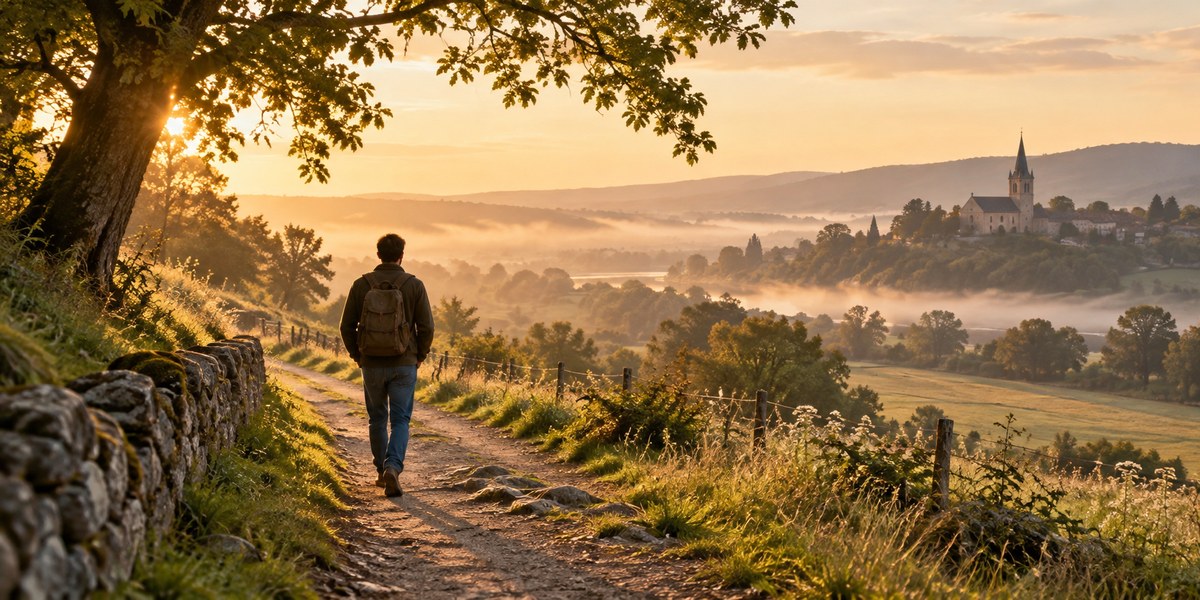
I remember the afternoon my faith felt like a dead battery. I was sitting in my car after a long day, scrolling through my phone, feeling completely disconnected from God. Church felt like a performance. Prayer felt like talking to myself. I needed something real, something simple. So I got out of the car and started walking. Not with a destination. Not with a podcast. Just walking. And something strange happened. The slower I walked, the more I felt God show up.
Walking slowly is not just exercise. It is a forgotten spiritual discipline that helps you hear God, calm your mind, and reconnect with your faith. This guide shows you how to turn a simple stroll into a sacred practice. No special gear. No complicated theology. Just one step at a time.
Why Your Faith Needs a Slower Pace
We live in a culture that values speed. Fast food. Fast internet. Fast answers. Even our faith often feels rushed. We cram prayer into five minutes. We speed-read a Bible verse before bed. We treat God like a drive-through window. But faith was never meant to be fast.
The Bible is full of people who walked. Abraham walked across deserts. The Israelites walked through the wilderness. Jesus walked everywhere. In fact, the early followers of Jesus were called people of “the Way.” Walking was their primary mode of spiritual life. They did not have podcasts or worship playlists. They had dirt roads and time.
When you walk slowly, you give your soul permission to catch up with your body. You stop performing and start being. You stop asking God for things and start noticing what God is already doing around you.
The Difference Between Walking and Walking Slowly
Walking for exercise is great. It gets your heart rate up and burns calories. But walking slowly is different. It is not about fitness. It is about presence.
Here is a table that shows the difference:
| Aspect | Walking for Exercise | Walking Slowly as Faith Practice |
|---|---|---|
| Pace | Brisk, steady, goal-oriented | Gentle, unhurried, meandering |
| Focus | Heart rate, distance, time | Senses, breath, surroundings |
| Mindset | Push through, get it done | Receive, notice, listen |
| Outcome | Physical health, endorphins | Spiritual clarity, connection with God |
| Typical gear | Running shoes, fitness tracker | Comfortable shoes, nothing else |
| Common mistake | Going too fast to notice anything | Getting distracted by phone or music |
Walking slowly is not lazy. It is intentional. It is a choice to resist the noise and step into the quiet.
How to Practice Walking Slowly for Spiritual Growth
You do not need a special trail or a retreat center. You can do this in your neighborhood, a local park, or even a parking lot. Here is a simple numbered process to get started.
-
Set your intention before you step out the door. Say a short prayer or just whisper, “God, I am here. I am listening.” This shifts your mind from autopilot to awareness.
-
Start walking at half your normal speed. If it feels awkward, you are doing it right. Let your arms hang loose. Take smaller steps. Feel the ground beneath your feet.
-
Use your senses as prayer. Notice the color of the sky. Feel the temperature of the air. Listen to the birds or the wind. Each sensation is a reminder that God is creating this moment right now.
-
Let your thoughts come and go without judgment. When your mind wanders to your to-do list, gently bring it back to your breath. Imagine each exhale releasing worry and each inhale drawing in peace.
-
End with gratitude. Before you go back inside, stand still for ten seconds. Thank God for one thing you noticed during your walk. It could be a flower, a cloud, or just the fact that you have legs to walk.
Common Mistakes People Make (And How to Fix Them)
Walking slowly sounds easy, but our habits fight against it. Here are the most common pitfalls and how to avoid them.
-
Checking your phone. That email can wait. The Instagram notification can wait. If you must, put your phone on airplane mode or leave it at home. The goal is to be present, not to document.
-
Walking too fast out of habit. Your body is used to a certain pace. Slow down on purpose. Count to ten with each step if you need to. Your legs will complain at first. Let them.
-
Trying to force a spiritual experience. Sometimes nothing profound happens. You might just feel the breeze and hear a dog bark. That is okay. God is not a vending machine. Trust the process.
-
Comparing your walk to someone else’s. Your neighbor might walk fast. Your friend might have a scenic trail. You do not need any of that. Your walk is yours. God meets you where you are.
What the Bible Says About Walking and Faith
The Bible does not have a verse that says “thou shalt walk slowly.” But it is full of passages that connect walking with spiritual truth.
“He has shown me what it is to walk with God. Not to walk behind him or before him, but to walk beside him.” (paraphrase of Genesis 5:24, the story of Enoch)
Enoch is a fascinating figure. The Bible says he “walked with God.” That phrase implies a slow, steady companionship. It is not about running ahead or lagging behind. It is about matching your pace to God’s pace.
The Psalms also use walking language. Psalm 119:105 says, “Your word is a lamp to my feet.” That image suggests that faith guides each step, one at a time. You cannot run with a lamp. You have to walk carefully.
Jesus himself said, “Follow me.” He did not say “race me” or “sprint to the finish.” He invited people to walk alongside him, at a human pace, on a human path.
A Simple Guide to Walking Slowly with Scripture
You can combine walking with Bible reading. This is not lectio divina in a chair. It is moving meditation with God’s words.
Here are a few ways to do it:
-
Memorize one short verse before you walk. Repeat it under your breath as you move. Let the rhythm of your steps match the rhythm of the words.
-
Take a single phrase from a Psalm with you. For example, “The Lord is my shepherd.” Say it on each exhale. Let it sink into your bones.
-
Walk a labyrinth if you have one nearby. Labyrinths are ancient Christian tools for walking prayer. You follow one path to the center and then back out. It is a physical way to pray without words.
If you want to go deeper into how Scripture can fuel your spiritual life, check out this guide on how to study the Bible effectively for beginners.
Why Walking Slowly Changes Your Relationship with God
When you walk slowly, you stop treating God like a problem to solve. You stop trying to figure out the “right” answer or the “correct” prayer. Instead, you just show up. You let God be God. You let yourself be human.
This practice also helps with spiritual dryness. If you feel disconnected from your faith, walking slowly can be a reset button. It does not require belief. It does not require a church building. It only requires your presence.
Think about it this way. Imagine you have a friend who always talks at you, always gives advice, always tries to fix you. That is exhausting. Now imagine a friend who just walks beside you in silence. That is comforting. That is God.
Practical Tips for Making This a Habit
You do not have to do this every day. Start with once a week. Here are some tips to make it stick:
-
Pick a consistent time. Early morning works well because the world is quiet. Evening works too, especially at sunset.
-
Choose a short route. Fifteen minutes is enough. You do not need to walk for an hour. The goal is depth, not distance.
-
Leave your headphones at home. Music and podcasts are wonderful, but they fill the silence. Let the silence be your companion.
-
Invite God into the walk. Before you start, say a simple prayer like, “Lord, walk with me.” You might feel silly at first. Keep doing it.
-
Journal afterward if you want. Write down one thing you noticed or one thought that came to you. This helps your brain register the experience as meaningful.
If you want to build more spiritual habits into your daily life, you might enjoy this article on 7 daily habits that will transform your prayer life.
The Deeper Truth About Walking and Waiting
Walking slowly teaches you something important about faith. Faith is not about arriving. It is about walking. It is about trusting that the path is enough, even when you cannot see the destination.
The Christian life is full of waiting. We wait for answers. We wait for healing. We wait for God to speak. Walking slowly trains you to wait with grace. It teaches you that the waiting itself is sacred.
In a world that tells you to hurry up, walking slowly is an act of rebellion. It is a way of saying, “I will not let the world rush my soul.”
How to Walk Slowly When Life Feels Hard
There will be days when you do not feel spiritual at all. You might be angry at God. You might be grieving. You might feel nothing. Walk anyway.
On hard days, do not try to pray or think deep thoughts. Just put one foot in front of the other. Let the movement carry you. Let the ground hold you. Sometimes the most honest prayer is just showing up.
If you are going through a season of spiritual dryness, this resource on breaking free from spiritual dryness might help.
Your First Step Starts Now
You do not need to wait for the perfect weather or the perfect trail. You can start right now. Step outside your front door. Take a breath. Walk slower than you think you should. Let God find you there.
This practice is not a magic fix. It is a gentle invitation. It is a way to remember that your body and your soul are connected. It is a way to remember that God walks with you, even when you feel alone.
So lace up your shoes. Leave your phone behind. Take a step. Then take another. And notice what happens when you finally slow down enough to pay attention.