
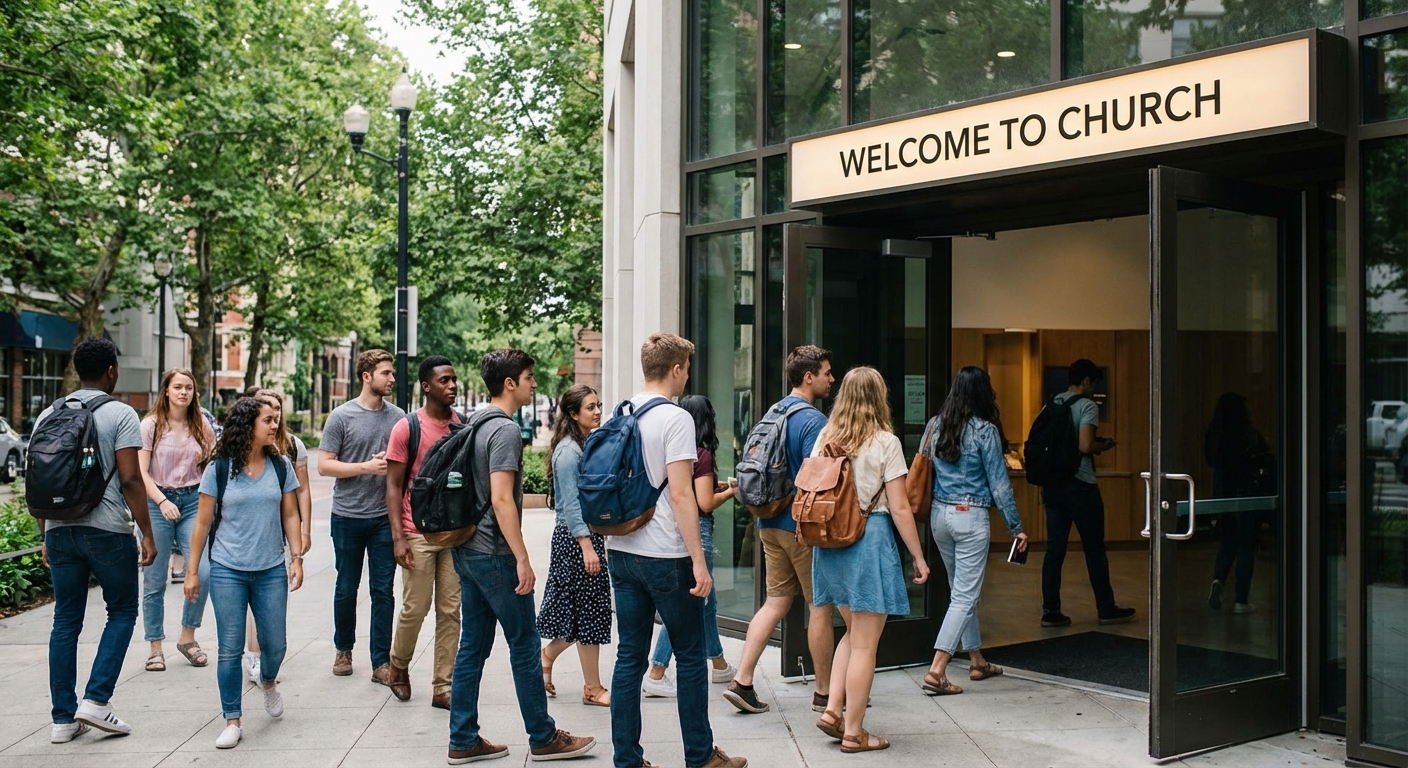
Something unexpected is happening in churches across the country. The pews are filling up again, but not with the usual crowd. Young adults, the generation everyone said had abandoned organized religion, are walking back through those doors.
Young adults returning to church represents a significant reversal of decades-long decline. Research shows Gen Z and Millennials are seeking authentic community, mental health support, and moral clarity in uncertain times. Churches adapting their approach to meet these needs are seeing the most growth, while those maintaining rigid traditional structures struggle to connect with younger attendees seeking meaningful engagement.
The numbers tell a surprising story
Church attendance among Americans under 30 dropped steadily for decades. By 2020, only about 20% of young adults attended religious services regularly.
Then something shifted.
Recent data from 2023 and 2024 shows a reversal. More young people are showing up on Sunday mornings. Some congregations report their 20-something attendance has doubled in just two years.
This isn’t happening everywhere. But it’s happening enough that pastors, researchers, and sociologists are paying attention.
The pattern appears strongest in urban areas and college towns. Places where you’d least expect a religious revival.
What changed their minds
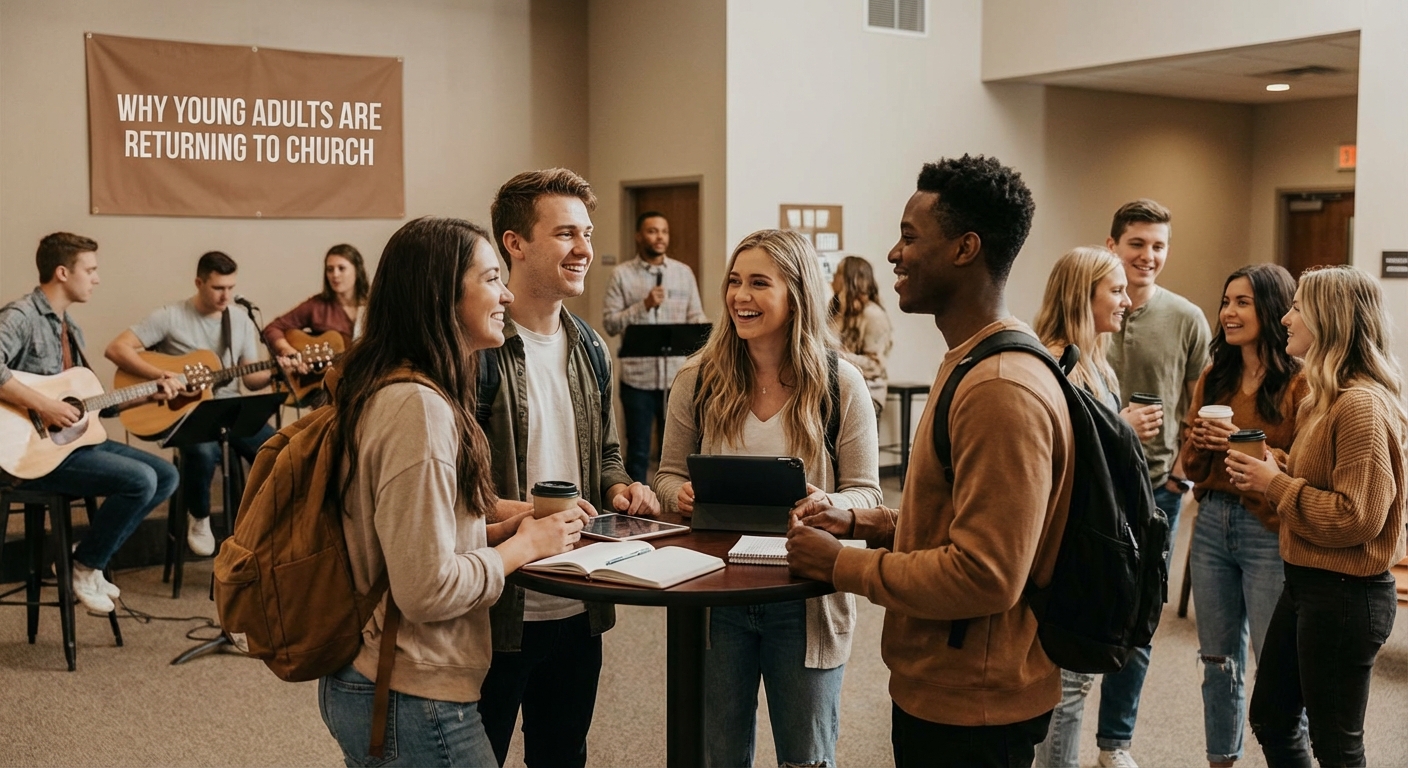
Young adults cite several reasons for returning. These aren’t the motivations their parents’ generation had.
Authentic community matters most. Dating apps feel hollow. Social media creates isolation dressed up as connection. Young people crave face-to-face relationships with depth.
Churches offer something rare: intergenerational friendships. A 24-year-old can sit next to a 70-year-old and actually talk. That doesn’t happen in most social spaces anymore.
Mental health struggles need support. Anxiety and depression rates among young adults reached crisis levels during the pandemic. Therapy helps, but it’s expensive and hard to access.
Faith communities provide emotional support networks at no cost. Small groups, prayer circles, and pastoral care fill gaps that healthcare systems can’t.
Moral clarity in confusing times. The world feels chaotic. Political polarization divides families. Climate anxiety weighs heavy. Economic uncertainty makes planning a future feel impossible.
Religious teaching offers frameworks for making sense of suffering. It provides answers to “why” questions that science and politics can’t address.
Purpose beyond career ambition. Hustle culture burned out an entire generation. The promise that working 80-hour weeks would lead to fulfillment turned out to be empty.
Churches emphasize service, compassion, and meaning that isn’t tied to productivity. That message resonates with people tired of defining themselves by their job titles.
The churches that are winning
Not all congregations are seeing growth. The ones attracting young adults share specific characteristics.
| What Works | What Doesn’t |
|---|---|
| Transparent about doubts and questions | Demands unquestioning belief |
| Addresses social justice issues directly | Avoids “controversial” topics |
| Creates space for discussion and debate | Lectures without dialogue |
| Integrates technology thoughtfully | Ignores digital engagement entirely |
| Welcomes LGBTQ+ individuals | Maintains exclusionary policies |
| Offers practical life skills teaching | Focuses only on abstract theology |
The successful churches don’t water down their beliefs. They present them honestly while making room for people who are still figuring things out.
They also meet practical needs. Financial literacy classes. Resume workshops. Meal sharing programs. Young adults appreciate faith that translates into tangible help.
The role of social media

This might sound contradictory, but online platforms are driving offline church attendance.
TikTok and Instagram feature countless accounts run by young Christians. They post about their faith journey, answer theological questions, and share church experiences.
These accounts normalize religious practice for a generation that grew up thinking church was irrelevant or judgmental. Seeing peers talk openly about spirituality makes it feel accessible.
Some viral moments have real impact. A pastor’s sermon clip gets millions of views. Comments fill with people saying “I might actually try going to church.”
Online communities also provide a testing ground. Someone can ask questions, express doubts, and learn about different denominations before ever setting foot in a building.
The digital presence matters, but it’s not replacing in-person gathering. It’s creating a pathway back to it.
What young returnees actually want
Religious leaders sometimes misunderstand what brings young adults back. Here’s what matters to them:
-
Genuine welcome without pressure. They want to attend without immediately joining committees or signing membership forms. Space to observe and decide matters.
-
Music that connects emotionally. This doesn’t necessarily mean contemporary worship bands. Some young people love traditional hymns. Others prefer gospel or acoustic folk. Quality and authenticity matter more than style.
-
Sermons that engage real life. Messages about managing student loans, navigating breakups, or dealing with difficult roommates land better than abstract theological concepts.
-
Service opportunities that make a difference. Volunteering at food banks, tutoring kids, or building homes provides hands-on ways to live out faith values.
-
Small groups for deeper connection. Sunday services introduce people, but real relationships form in smaller settings where actual conversation happens.
“I came back to church because I was lonely and anxious. I stayed because people actually cared about my life, not just whether I believed the right things. That surprised me.” — Sarah, 26, returned to church after eight years away
The parents and grandparents factor
Family influence plays a bigger role than many young adults admit initially.
Grandparents who prayed for years see prayers answered. Parents who kept faith quietly, without pushing, suddenly get calls asking about good churches in the area.
The approach matters enormously. Families who nagged, guilted, or threatened rarely see their adult children return. Those who modeled faith authentically and respected boundaries often do.
Young adults return on their own terms and timeline. They need to own the decision rather than feeling forced into it.
Many report that watching older family members face illness, loss, or death with faith-grounded peace made them reconsider religion’s value.
The spiritual but not religious shift
For years, “spiritual but not religious” was the dominant identity among young adults. That’s changing.
People are realizing that spirituality without community and structure often fizzles out. Meditation apps and manifestation journals don’t sustain practice long-term.
Religious traditions offer tested frameworks. Liturgical calendars create rhythm. Communal worship provides accountability. Ancient practices connect people to something larger than themselves.
This doesn’t mean young returnees accept everything uncritically. They bring questions and expect space for doubt. But they recognize value in organized religion that previous generations rejected entirely.
Challenges churches still face
The trend toward young adults returning to church faces real obstacles.
Institutional mistrust runs deep. Scandals involving abuse, financial mismanagement, and political manipulation damaged religious institutions’ credibility. Rebuilding trust takes time and transparency.
Theological differences create tension. Young adults hold progressive views on many social issues. Churches navigating these differences without compromising core beliefs or alienating seekers face difficult balancing acts.
Consistency matters. Young people can spot performative inclusion immediately. Churches that claim to welcome everyone but maintain discriminatory practices get called out fast.
Sustainability questions remain. Is this a temporary spike driven by post-pandemic loneliness? Or a genuine long-term shift? Only time will tell.
What this means for different groups
Religious leaders need to adapt without abandoning their traditions. The young adults showing up want authenticity, not pandering. They can tell when leaders fake relevance.
Church staff should create entry points that don’t require extensive religious knowledge. Assume nothing about biblical literacy or familiarity with church culture.
Sociologists and researchers are watching whether this trend continues and spreads. It challenges assumptions about secularization being inevitable and irreversible.
Journalists covering this story should avoid both cynicism and hype. Young adults returning to church is neither a full-scale revival nor a meaningless blip. It’s a nuanced shift worth understanding carefully.
Parents and community members can support young adults’ spiritual journeys by respecting their autonomy. Celebrate their choices without making them feel pressured to perform faith in specific ways.
The practical steps churches are taking
Congregations successfully attracting young adults implement specific strategies:
-
Start newcomer-friendly small groups. Create spaces specifically for people new to faith or returning after years away. Let them ask basic questions without embarrassment.
-
Train greeters in authentic hospitality. Teach volunteers to welcome without overwhelming. Give people space to attend anonymously if they prefer.
-
Offer multiple service times and styles. One size doesn’t fit all. Some young adults want traditional liturgy. Others prefer casual contemporary services.
-
Build robust online presence. Maintain active social media, stream services, and create digital resources. Make information easy to find for people researching before visiting.
-
Address justice issues directly. Don’t avoid difficult topics. Young adults respect leaders who engage with poverty, racism, environmental concerns, and human rights from a faith perspective.
-
Create mentorship programs. Pair young adults with older members for one-on-one relationships. These connections often prove more valuable than any program.
The broader cultural context
This trend doesn’t exist in isolation. Several cultural shifts create conditions for young adults returning to church.
Loneliness epidemic. Surgeon General reports identify isolation as a major public health crisis. Humans need in-person community. Churches provide it.
Meaning crisis. Material comfort hasn’t delivered happiness. Young adults question consumer culture and seek deeper purpose.
Political exhaustion. Many young people feel burned out by constant outrage and division. They want spaces that transcend political tribalism.
Wellness movement. Interest in meditation, mindfulness, and holistic health opens doors to spiritual practice. Some people follow these interests into religious communities.
Nostalgia and rootedness. In a rapidly changing world, traditions and rituals offer stability. Even young adults who didn’t grow up religious find comfort in ancient practices.
Common misconceptions to avoid
Several misunderstandings cloud discussions about this trend:
-
This isn’t about young people becoming more conservative. Many returning young adults hold progressive political views. They’re seeking spiritual depth, not political alignment.
-
It’s not driven by fear or trauma alone. While anxiety and uncertainty play roles, many young adults return from positions of strength, seeking growth rather than escape.
-
Not all churches benefit equally. Congregations that refuse to adapt or address legitimate concerns about inclusion and justice continue declining.
-
This doesn’t erase religious diversity. While some young adults return to Christianity, others explore Buddhism, Judaism, Islam, or other traditions. The broader trend is toward organized religion generally, not one faith specifically.
What makes someone stay versus leave again
Returning is one thing. Staying is another.
Young adults who remain active in churches long-term share common experiences:
- They find genuine friendships, not just acquaintances who only see them on Sundays
- They receive support during personal crises without judgment
- They discover ways to use their skills and passions in service
- They encounter teaching that challenges and grows them intellectually
- They see their questions and doubts treated as valid rather than threatening
Those who return briefly then leave again often cite feeling like outsiders, experiencing pressure to conform immediately, or encountering hypocrisy between stated values and actual behavior.
The first 90 days matter most. Churches that intentionally support newcomers during this window see much higher retention.
The ripple effects
When young adults return to church, effects extend beyond individual congregations.
Families reconnect across generational divides. Shared faith creates common ground for parents and adult children who struggled to relate.
Communities gain volunteers. Young adults bring energy and skills to service projects, youth mentoring, and social programs.
Theological conversations shift. Young people ask different questions and challenge assumptions, pushing religious communities to articulate beliefs more clearly.
Other young adults take notice. Seeing peers engage with faith makes it feel like a viable option rather than something only older people do.
Where this goes from here
Predicting the future is risky, but several possibilities seem likely.
If churches continue adapting thoughtfully, this trend could grow. More young adults might follow the path their peers are taking.
If congregations become complacent or revert to old patterns, the momentum could stall. Young adults will leave again if churches don’t deliver on the authentic community and meaningful engagement they seek.
Economic factors matter too. If financial pressures on young adults ease, they might have more capacity for community involvement. If conditions worsen, survival needs could crowd out spiritual seeking.
Cultural shifts around mental health, technology, and meaning-making will also shape whether this trend continues.
When faith meets real life
The young adults returning to church aren’t looking for escape from reality. They want help engaging with it more fully.
They need wisdom for navigating career decisions when every path feels uncertain. They want frameworks for building healthy relationships in a hookup culture. They seek guidance on using money ethically and generously despite financial stress.
Churches that address these concrete concerns while connecting them to deeper spiritual truths create lasting impact.
Those that stay focused only on abstract doctrine or afterlife concerns miss opportunities to meet people where they actually live.
Making space for the journey
Perhaps the most important thing to understand about young adults returning to church is that they’re on a journey, not arriving at a destination.
They’ll have good days and bad days. Sundays when faith feels real and meaningful, and others when they question everything.
They’ll wrestle with doubts. They’ll challenge teachings. They’ll push boundaries.
The communities that make space for this messy, honest process are the ones young adults stick with.
Those that demand certainty and conformity from day one drive people away.
Faith finds a new generation
Young adults returning to church represents more than a demographic trend. It’s a reminder that human needs for meaning, connection, and transcendence persist across generations.
The forms change. The questions evolve. The cultural context shifts. But the fundamental search for something beyond ourselves continues.
Religious communities that recognize this and respond with authenticity, humility, and genuine care will find themselves part of something significant. They’ll help shape how the next generation understands faith, community, and what it means to live a meaningful life.
The young adults walking back through church doors are writing the next chapter of a very old story. What happens next depends on how well faith communities listen to what they’re actually seeking and respond with wisdom rather than wishful thinking.