
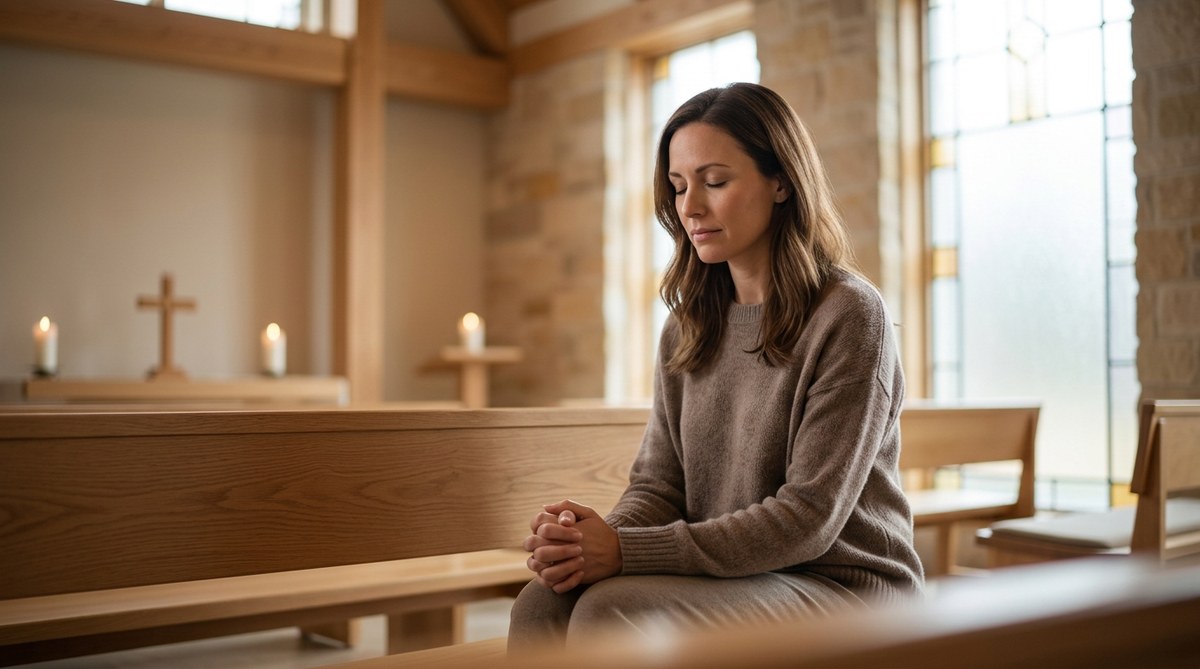
Silence in prayer is not empty time; it is sacred space where you stop talking and start listening. When you practice stillness before God, you create room for the Holy Spirit to speak, for your own heart to settle, and for your relationship with Christ to move from monologue to dialogue. This guide gives you biblical reasons, practical steps, and common pitfalls to avoid, so you can incorporate silence into your daily prayer life with confidence.
Most Christians know prayer as talking to God. You share your worries, ask for help, thank Him for blessings. That is good. But prayer was never meant to be a one-sided conversation. The Bible shows us that God speaks too. And to hear Him, you need to learn the discipline of silence in prayer.
Think about the prophet Elijah. After the wind, earthquake, and fire, God spoke in a gentle whisper (1 Kings 19:12). That whisper is still how God often communicates today, but we miss it because our minds are full of noise. We rush from one request to the next. We fill every second with words. We treat silence like an awkward pause instead of a divine invitation.
If you want a deeper prayer life, you must embrace silence. It is not about emptying your mind like some Eastern practices. It is about creating space for God to fill. You stop speaking so you can start listening. And when you do, you often find that the peace you were begging for was already there, waiting for you to be quiet enough to notice.
What the Bible Teaches About Silence in Prayer
Scripture is filled with examples of God’s people practicing stillness. Psalm 46:10 commands, “Be still, and know that I am God.” The word “still” there means to let go, to sink down, to cease striving. It is an active surrender, not passive laziness.
Jesus Himself modeled this. Mark 1:35 says, “Very early in the morning, while it was still dark, Jesus got up, left the house and went off to a solitary place, where he prayed.” He did not just talk. He went to a quiet place, likely in silence, to connect with the Father. If the Son of God needed silence, how much more do we?
The apostle Paul also understood this. In Romans 8:26, he writes that the Spirit intercedes for us with groans too deep for words. Sometimes our prayers go beyond language. Silence becomes the only fitting response when your heart is too full or too weary to form sentences.
Silence in prayer is not a new age trend. It is a biblical discipline. It has been practiced by monastics, mystics, and ordinary believers for centuries. It is simply the practice of resting in God’s presence without the need to perform or produce.
Why Silence Feels Uncomfortable at First
If you have tried to sit in silence before God, you probably felt restless. Your mind wandered to grocery lists, work deadlines, that awkward conversation from yesterday. You may have felt guilty for not praying “properly.” Or you may have thought, “Is anything even happening?”
That discomfort is normal. Our modern world trains us to avoid silence. We have podcasts in the car, background TV at home, social scrolling while waiting. Silence feels like a void. But in God’s kingdom, the void is where creation happens. Genesis 1:2 says the earth was formless and empty, and the Spirit of God was hovering over the waters. Silence is not absence. It is potential.
Here are some common feelings you may have when starting this practice:
- Anxiety that you are wasting time
- Boredom because nothing sensational happens
- Doubt that God is really there
- A strong urge to check your phone or get up
All of these are normal. The key is to push through them gently. Do not judge yourself. Just keep returning your attention to God.
A Step-by-Step Guide to Practicing Silence in Prayer
To help you get started, here is a numbered process you can follow. It works whether you have five minutes or an hour.
-
Find a quiet place and a comfortable position. You do not need a special room, but choose a spot where you are unlikely to be interrupted. Sit in a chair, kneel, or lie down. Do what helps you relax without falling asleep.
-
Take a few deep breaths and release tension. Inhale slowly, then exhale any stress you are carrying. Ask the Holy Spirit to quiet your mind. You can whisper a simple prayer like, “Lord, I am here. Help me be still.”
-
Read a short passage of Scripture to focus your heart. Pick one or two verses. Read them slowly. Let the words sink in. For example, Psalm 23:1 “The Lord is my shepherd, I lack nothing.” Sit with that truth.
-
Stop reading and simply rest in God’s presence. Put the Bible down. Do not try to pray out loud. Just be. Imagine yourself sitting at Jesus’ feet, like Mary of Bethany. You do not need to perform. He is glad you are there.
-
When your mind wanders, gently bring it back to God. Do not get frustrated. Think of it like training a puppy. You gently guide it back. You can silently repeat a word or phrase like “Jesus” or “Abba” to refocus.
-
End with a short closing prayer. After several minutes of silence, thank God for being with you. Ask Him to help you carry that peace into the rest of your day.
That is the whole practice. It is simple but not easy. Consistency matters more than duration. Even two minutes of intentional silence can transform your prayer life over time.
Techniques and Mistakes: A Helpful Table
To clarify what to do and what to avoid, here is a table:
| Right Technique | Common Mistake |
|---|---|
| Choose a consistent time each day | Try to fit silence in randomly whenever you remember |
| Start with short periods (2-5 minutes) | Attempt 30 minutes on the first try and give up |
| Use a Bible verse as a focal point | Try to empty your mind completely (that is not Christian meditation) |
| Let go of expectations and stay open | Expect dramatic visions or audible voices every time |
| Breathe slowly and relax your body | Tense your shoulders and hold your breath |
| End with gratitude | Rush off to the next task without acknowledging God |
The goal is not perfection. It is presence. You will have days where silence feels dry. That is okay. Your faithfulness matters more than your feelings.
Listening for God’s Voice in the Quiet
Many Christians wonder how to tell if what they are sensing is from God or just their own thoughts. This is a valid concern. Silence in prayer does not guarantee that every impression is divine. But it does create the conditions for discernment.
Here are some signs that God may be speaking:
- A sense of peace that does not depend on circumstances (Philippians 4:7)
- A thought that aligns with Scripture
- A gentle conviction that leads to repentance, not condemnation
- A specific direction that is confirmed by godly counsel
If you are unsure, wait. God is never in a hurry. You can learn more about discerning His voice in our guide on how to hear God’s voice in a noisy world.
“Silence is not the absence of sound, but the presence of God. When you stop speaking, you start sensing.” – Anonymous Christian writer
Some of the most profound moments in prayer come when you stop trying to control the conversation. You simply rest in the reality that you are loved. That alone can change your whole day.
Common Questions About Silence in Prayer
Is it okay to use worship music in the background?
Yes, soft instrumental worship music can help some people focus. But eventually try to move toward complete silence, even if just for a minute. External sounds can become a crutch.
What if I fall asleep?
Do not be hard on yourself. If you are exhausted, your body may need rest. God understands. You can try a different time of day or sit upright to stay alert.
How do I know if I am doing it right?
If you are intentionally placing yourself before God and seeking to be still, you are doing it right. The results are not measured by feelings but by your long-term spiritual growth.
Can I practice silence in a noisy environment?
Yes, you can practice interior silence even with external noise. Focus on your breath and your heart’s posture toward God. Some of the greatest saints learned to pray in the middle of bustling cities.
Building a Lasting Habit of Silent Prayer
Like any spiritual discipline, silence in prayer takes practice. Do not expect to master it in a week. Plan to gradually increase your silent time over months. Here are some tips to make it stick:
- Set a reminder on your phone with a gentle tone
- Pair it with another habit you already have, like morning coffee
- Keep a journal to jot down any thoughts or verses that come during silence
- Join a prayer group that values quiet listening, not just petitions
- Use a app that offers guided silent prayer prompts, but do not rely on it
Remember that silence is not the only way to pray. It complements other forms like intercession, thanksgiving, and confession. For more ideas, read about 7 biblical prayer methods every Christian should know.
How Silence Changes Your Whole Prayer Life
When you consistently practice silence in prayer, you will notice shifts. Your spoken prayers become less frantic and more trusting. You find yourself pausing in the middle of the day to check in with God. You experience a deeper sense of intimacy, like you are talking with a close friend rather than a distant boss.
Silence also helps you become more aware of God’s presence throughout the day. You carry the quiet with you. When stress hits, you remember the stillness you practiced, and you can return to it in your heart.
This discipline is not about earning God’s favor. You already have that through Christ. It is about opening the gift. Silence is the wrapping paper you set aside so you can hold the gift close.
Your Next Step in the Silence
If you have never tried silence in prayer, today is a good day to start. Find a quiet spot. Take a deep breath. Let go of your words. Give God five minutes of uninterrupted attention. You may be surprised by what you hear or feel. But even if you hear nothing, remember that being with God is never wasted time.
As you grow, continue learning. Read about why your prayers feel one-sided and how to experience God’s presence. That article will encourage you when silence feels empty.
Silence in prayer is not an escape from the world. It is a return to the source. It is where your soul recalibrates. It is where you remember that you are not the one holding everything together. God is.
Go ahead. Turn off the noise. Sit still. He is waiting.