

Prayer feels impossible when life gets busy. You want to connect with God daily, but your routine falls apart by day three. You’re not alone in this struggle.
A 30 day prayer challenge helps you build a consistent prayer habit through structured daily practice. Success comes from choosing realistic times, starting with short prayers, tracking your progress, and joining accountability partners. Most people fail by setting unrealistic expectations or skipping preparation. This guide provides a proven framework to make prayer a natural part of your daily routine that lasts beyond the initial month.
Why 30 Days Works for Building Prayer Habits
Thirty days gives your brain enough time to form new neural pathways. Research shows habit formation takes between 18 and 254 days, with an average of 66 days. But 30 days gets you past the hardest phase.
The first week feels exciting. Days 8 through 21 test your commitment. By day 22, prayer starts feeling normal instead of forced.
Your spiritual muscles need consistent training. Just like physical exercise, prayer gets easier with repetition. The challenge framework removes decision fatigue because you commit once instead of deciding daily.
Many believers struggle with 7 daily habits that will transform your prayer life because they lack structure. A 30 day challenge provides that missing framework.
Setting Up Your Challenge for Success

Preparation determines whether you finish strong or quit by day five. Here’s how to set yourself up properly.
Choose Your Prayer Time
Pick a time when interruptions are least likely. Early morning works for some people. Others pray during lunch breaks or before bed.
Consider your energy levels. If you’re not a morning person, don’t force 5 AM prayer sessions. You’ll resent the commitment.
Block this time on your calendar like any important appointment. Treat it as non-negotiable.
Select Your Prayer Location
Find a consistent spot that signals prayer time to your brain. This could be:
- A specific chair in your bedroom
- A corner of your living room
- A park bench during your commute
- Your car before work starts
The location matters less than consistency. Your brain will associate this place with prayer, making it easier to focus.
Gather Your Materials
Keep these items in your prayer space:
- Bible or Bible app
- Journal for recording prayers and answers
- Pen that writes smoothly
- Prayer list with specific requests
- Tissues (honest prayer brings tears sometimes)
Having everything ready eliminates excuses. You won’t skip prayer because you can’t find your Bible.
The 30 Day Prayer Challenge Framework
This structure adapts to beginners and experienced believers alike. Adjust the timing based on your current prayer life.
Days 1 to 10: Foundation Building
Start with five minutes daily. Yes, just five minutes.
Focus on these elements:
- Thank God for one specific thing from the past 24 hours
- Confess one area where you fell short
- Ask for help with one challenge you’re facing today
- Pray for one person by name
This simple structure prevents overwhelm. You can always pray longer, but five minutes is your minimum commitment.
Many people wonder how to pray when you don’t know what to say, especially when starting. These four elements give you a reliable framework.
Days 11 to 20: Expanding Your Practice
Increase to ten minutes. Add these components:
- Read one Psalm or five verses from another book
- Pray through the Lord’s Prayer phrase by phrase
- Include prayers for your church community
- Listen in silence for two minutes
The silence feels awkward at first. Your mind wanders. That’s normal. Gently redirect your thoughts back to God’s presence.
Days 21 to 30: Deepening Connection
Extend to fifteen minutes or more. Incorporate:
- Intercessory prayer for specific global needs
- Prayers of surrender about areas you’re controlling
- Worship through singing or reading psalms aloud
- Reflection on how God answered previous prayers
By now, prayer feels less like a task and more like conversation. You’ll notice yourself praying spontaneously throughout the day.
Common Mistakes That Derail Prayer Challenges
Learning from others’ failures saves you frustration. Here are the traps that catch most people.
| Mistake | Why It Fails | Better Approach |
|---|---|---|
| Starting with 60 minute prayers | Burnout hits by day three | Begin with 5 minutes and increase gradually |
| No specific time commitment | “I’ll pray sometime today” becomes never | Block exact calendar time daily |
| Perfectionism about “doing it right” | Fear of mistakes prevents starting | Accept messy, honest prayers over polished ones |
| Praying only when motivated | Motivation fades after week one | Commit regardless of feelings |
| No accountability | Easy to quit when no one knows | Tell someone your commitment |
| Skipping preparation | Friction prevents follow through | Set up space and materials in advance |
The biggest mistake is treating missed days as total failure. If you skip day 12, start again on day 13. The challenge isn’t ruined.
Tracking Your Progress Effectively
Measurement creates momentum. Here are practical tracking methods.
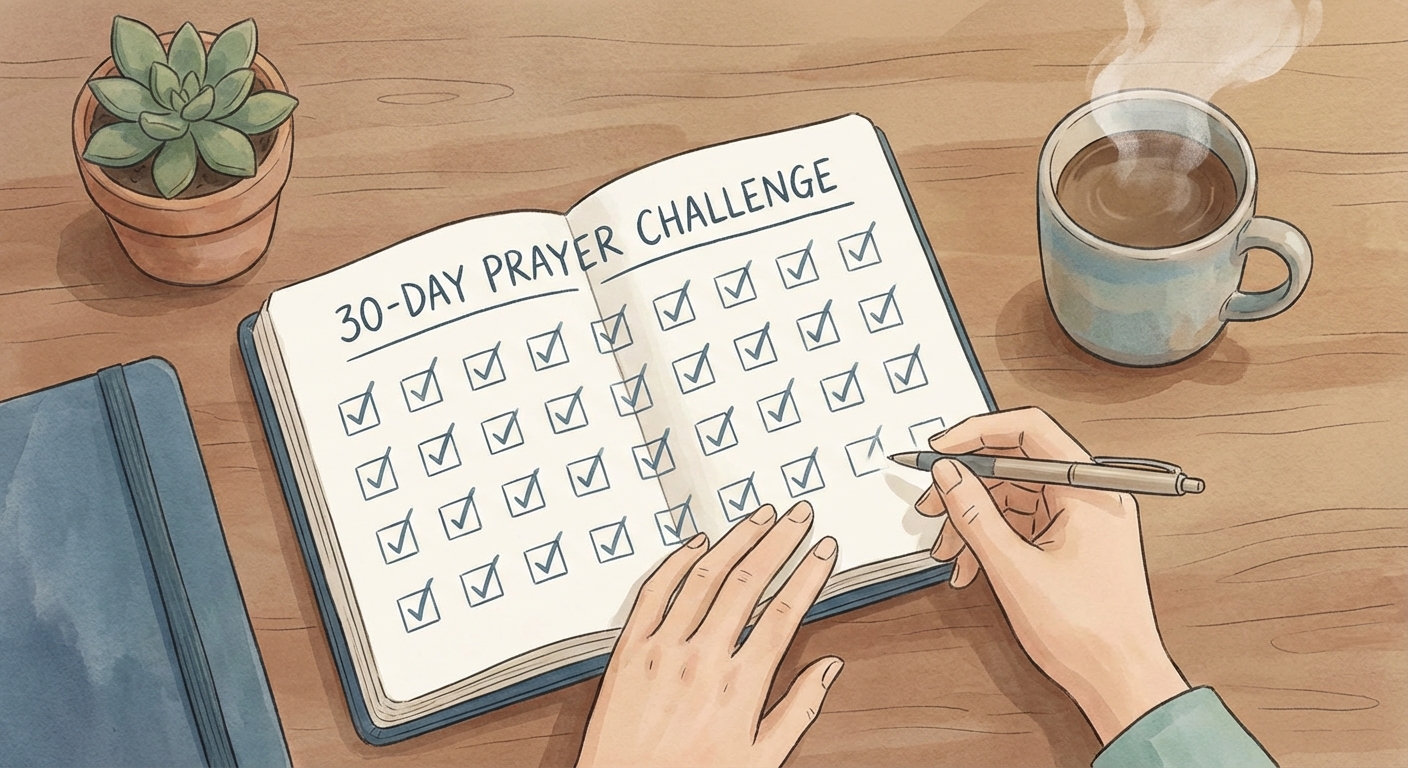
Create a simple chart with 30 boxes. Check each box after completing that day’s prayer time. Seeing your progress visually motivates you to maintain the streak.
Journal briefly after each prayer session. Write one sentence about:
- What you prayed about
- How you felt during prayer
- Any insights or impressions you received
This record becomes powerful when you review it later. You’ll see patterns in God’s faithfulness that strengthen your faith.
Some people use apps designed for habit tracking. Others prefer paper calendars. The method matters less than consistent use.
Handling Obstacles and Disruptions
Life throws curveballs during your 30 days. Here’s how to handle them.
Sick days: Pray from bed. Even two minutes counts. God doesn’t require perfect health for conversation.
Travel: Pray in airports, hotel rooms, or cars. Your location changes but your commitment doesn’t.
Emotional exhaustion: Sometimes you can only say “Help me, God.” That’s enough. Honest exhaustion is still prayer.
Spiritual dryness: Keep showing up even when prayer feels pointless. Feelings lie. Faithfulness matters more than feelings.
Major disruptions: If genuine emergencies derail multiple days, restart the 30 days. Don’t beat yourself up. Begin again.
“Prayer is not about feeling close to God. Prayer is about being obedient to God’s invitation to commune with Him, regardless of how we feel in the moment.” This truth from experienced prayer warriors reminds us that consistency trumps emotion.
Building Accountability Into Your Challenge
Solo challenges fail more often than shared ones. Here’s how to add accountability.
Find one person who will check in with you weekly. This could be a friend, family member, or someone from church. Share your commitment and ask them to text you every Sunday asking how the week went.
Join or create a small group doing the challenge together. Meet weekly to discuss struggles and victories. Knowing others are on the same journey reduces isolation.
Consider sharing updates on social media if that motivates you. Brief posts about what you’re learning can encourage others while keeping you accountable.
Some people benefit from building authentic community in your local church through shared spiritual practices like prayer challenges.
What to Pray About Each Day
Variety prevents boredom. Rotate through these focus areas:
Personal growth: Ask God to develop specific character qualities like patience, kindness, or self-control.
Relationships: Pray for family members, friends, coworkers, and even difficult people in your life. Include prayers about how to practice forgiveness when someone hurts you deeply.
Spiritual understanding: Request wisdom to understand Scripture better. If you’re also working on Bible study, learn how to study the Bible effectively for beginners.
Ministry and service: Pray for your church leaders, missionaries you support, and opportunities to serve others.
World events: Bring current news to God. Pray for justice, peace, and gospel advancement globally.
Gratitude: Thank God for answered prayers, unexpected blessings, and His constant presence.
Extending Prayer Beyond 30 Days
The challenge ends but your prayer life shouldn’t. Here’s how to maintain momentum.
On day 30, evaluate honestly. What worked? What felt forced? Adjust your routine based on these insights.
Set a new goal for the next 30 days. Maybe increase time, add new prayer methods, or focus on specific prayer types like intercession.
Consider starting how to pray together as a family without making it awkward if you have household members who might join you.
Many people find that after 30 days, not praying feels stranger than praying. You’ve rewired your brain and spirit.
Prayer Methods to Try During Your Challenge
Variety keeps prayer fresh. Experiment with these approaches throughout your 30 days.
Praying Scripture: Read a passage and pray it back to God in your own words. Psalms work especially well for this method.
Written prayers: Journal your prayers instead of speaking them. This helps focus wandering thoughts.
Walking prayers: Pray while moving. Physical activity can enhance spiritual focus for some people.
Breath prayers: Choose a short phrase like “Jesus, help me” and repeat it with each breath. This ancient practice centers your mind.
Praying in different postures: Try kneeling, standing with raised hands, lying face down, or sitting. Physical position affects spiritual receptivity.
Spiritual Growth Beyond Prayer
Prayer connects with other spiritual disciplines. As you build your prayer habit, you might notice growth in understanding what does it really mean to be born again or deeper theological concepts like what does the Trinity really mean for Christians today.
Prayer also motivates practical faith expression. You might find yourself more interested in how Christian churches are responding to natural disasters across America or other ways to live out your beliefs.
The challenge isn’t just about talking to God. It’s about becoming someone who naturally turns to God throughout the day.
When Prayer Feels Dry or Difficult
Not every prayer time will feel meaningful. Some days feel like talking to the ceiling. This doesn’t mean you’re doing it wrong.
Spiritual dryness serves purposes we don’t always understand. It tests whether we’ll remain faithful when feelings fade. It pushes us past emotional dependence into genuine trust.
During dry seasons, focus on obedience rather than experience. Show up. Say the words. Trust that God hears even when you feel nothing.
Sometimes dryness signals needed rest or indicates areas where we’re trying to control outcomes. Ask God to reveal if your prayers have become demanding rather than surrendering.
Other times, dryness is simply a season with no deeper meaning. Keep going. The feelings return eventually.
Making Prayer Personal and Authentic
Avoid religious language that doesn’t reflect how you actually talk. God wants authentic conversation, not performance.
Drop phrases you don’t use in normal speech. If you never say “thee” or “thou” in daily life, don’t use them in prayer.
Tell God exactly how you feel, even if it’s angry, confused, or disappointed. The Psalms model this brutal honesty. David complained, questioned, and even accused God at times.
Share mundane details. God cares about your work stress, your child’s school struggles, and your anxiety about money. Nothing is too small.
Ask bold questions. Wonder aloud about things you don’t understand. God isn’t threatened by your doubts.
Your Next 30 Days Start Now
You have everything you need to begin. Pick your start date. Set up your space. Tell one person about your commitment.
The perfect time doesn’t exist. Start messy. Start uncertain. Just start.
Thirty days from now, you’ll be someone who prays daily. Not because you’re more disciplined, but because you took the first step and then the next and the next.
Your relationship with God is about to deepen in ways you can’t predict. The challenge isn’t about perfection. It’s about showing up consistently and letting God do the transforming work.
Begin tomorrow morning. Or tonight before bed. Wherever you are right now, that’s the perfect starting point.