

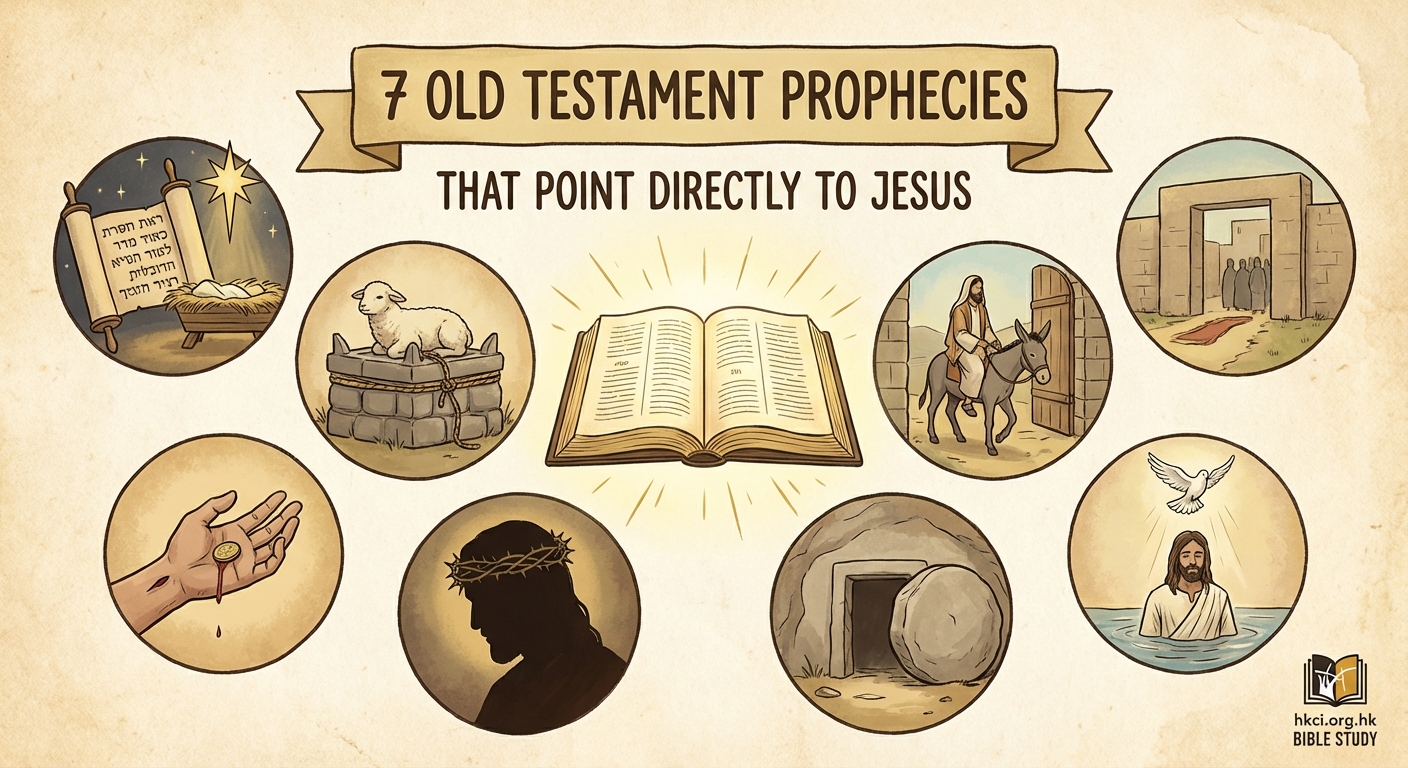
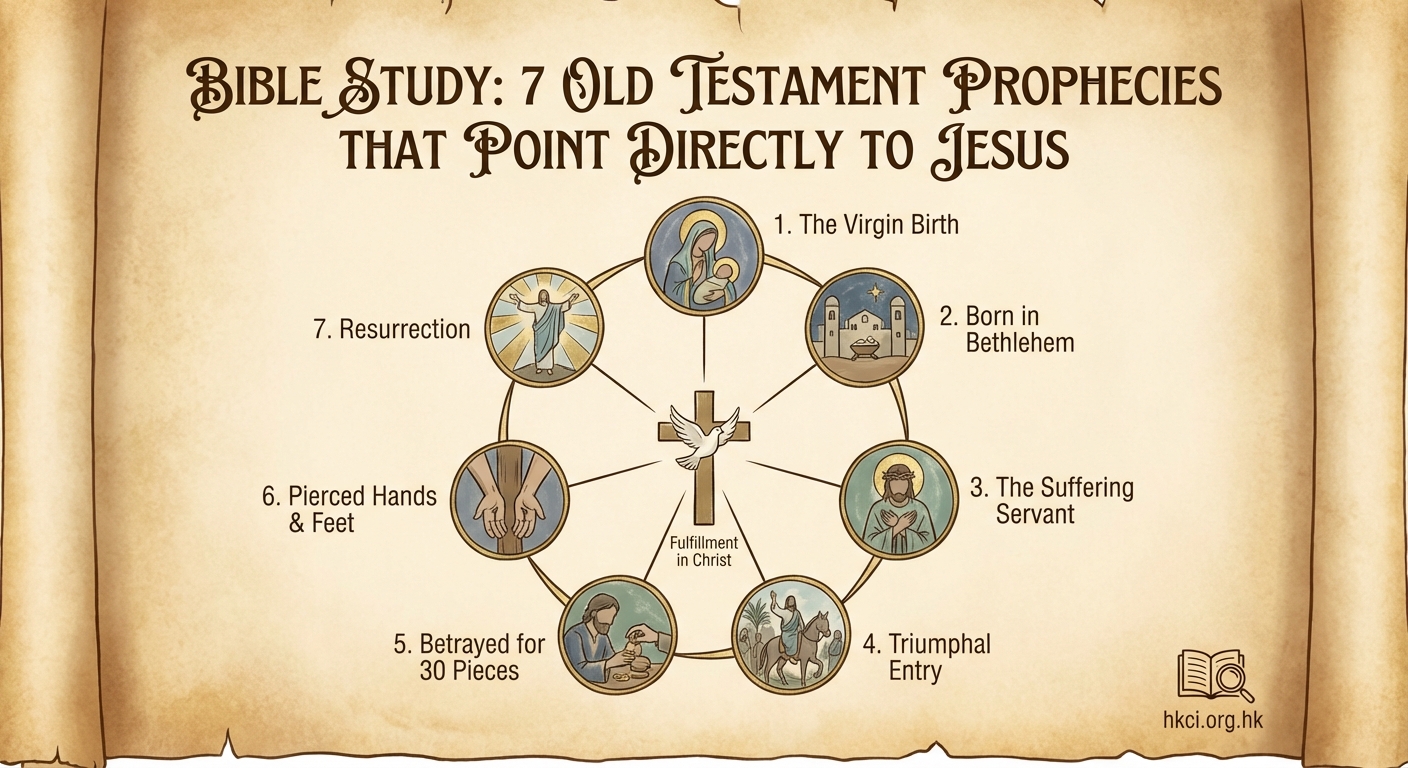
The connection between ancient Hebrew scriptures and the life of Jesus Christ stands as one of the most compelling aspects of Christian faith. Written hundreds of years before His birth, specific prophecies described details about the Messiah that would later match Jesus’ life with remarkable precision.
Old Testament prophecies about Jesus include predictions written 400 to 1,000 years before His birth, detailing His birthplace, lineage, manner of death, and resurrection. These prophecies provide scriptural evidence that strengthens faith and demonstrates the continuity between Hebrew scriptures and the Gospel accounts. Understanding these connections helps believers see God’s redemptive plan unfolding across centuries.
The Prophetic Foundation of Faith
Biblical prophecy serves as a bridge between the Old and New Testaments. These predictions weren’t vague suggestions or general statements. They contained specific details that would be impossible to fake or manipulate.
The prophets who wrote these texts lived during different periods of Israel’s history. Some wrote during times of prosperity. Others penned their words during exile or national crisis. Yet their messages about a coming Messiah remained consistent.
What makes these prophecies particularly powerful is their specificity. They named exact locations, described particular circumstances, and outlined events that would unfold centuries later. No human could orchestrate such fulfillment across generations.
Born in Bethlehem
Micah 5:2 predicted the Messiah would be born in Bethlehem Ephrathah. This wasn’t Jerusalem, the capital city. It wasn’t a major population center. Bethlehem was a small town in Judah.
The prophecy was written around 700 BC. Jesus was born in Bethlehem around 4 BC, fulfilling this prediction exactly. Matthew 2:1 and Luke 2:4-7 both confirm this birthplace.
The circumstances of His birth there add another layer of meaning. Mary and Joseph lived in Nazareth. They only traveled to Bethlehem because of a Roman census. This government decree, ordered by Caesar Augustus, brought them to the exact location Micah had predicted seven centuries earlier.
Descended from David’s Line
Multiple prophecies established that the Messiah would come from King David’s family line. Isaiah 11:1 spoke of a shoot coming from the stump of Jesse, David’s father. Jeremiah 23:5 described a righteous Branch from David’s line.
Both Matthew and Luke trace Jesus’ genealogy back to David. Matthew 1:1-17 presents the legal line through Joseph. Luke 3:23-38 likely traces Mary’s lineage. Both confirm Davidic descent.
This wasn’t a minor detail. Jewish people expected their Messiah to be David’s descendant. The prophecies made this requirement clear. Jesus met this criterion through both His earthly parents.
Entering Jerusalem on a Donkey
Zechariah 9:9 painted a specific picture. The king would come to Jerusalem riding on a donkey, specifically a colt, the foal of a donkey. This prophecy combined humility with royalty.
Jesus fulfilled this prophecy during what Christians now call Palm Sunday. Matthew 21:1-11 describes how He sent disciples to find a donkey and her colt. He rode into Jerusalem while crowds spread palm branches and cloaks on the road.
The symbolism matters deeply. Kings typically rode horses into battle or chariots in victory parades. A donkey represented peace and humility. Jesus came as a different kind of king.
Betrayed for Thirty Silver Pieces
Zechariah 11:12-13 contains an unusual prophecy. The Messiah would be valued at thirty pieces of silver. That money would then be thrown into the house of the Lord and given to a potter.
Judas Iscariot betrayed Jesus for exactly thirty silver coins, as Matthew 26:14-15 records. After Jesus’ arrest, Judas regretted his actions. He tried to return the money to the chief priests.
They refused to take it back. Judas threw the coins into the temple. The priests then used that blood money to buy a potter’s field for burying strangers. Matthew 27:3-10 describes this sequence, fulfilling both parts of Zechariah’s prophecy.
Pierced Hands and Feet
Psalm 22 contains vivid descriptions of suffering that match crucifixion. Verse 16 says, “They pierced my hands and my feet.” David wrote this psalm around 1,000 BC.
Crucifixion wasn’t practiced in Israel during David’s time. The Romans later developed it as an execution method. Yet the psalm describes this specific form of death centuries before it existed in that region.
John 20:25-27 confirms that Jesus’ hands and feet bore these wounds after His resurrection. Thomas insisted on seeing and touching these marks. Jesus invited him to do exactly that.
Suffering Servant Prophecy
Isaiah 53 stands as one of the most detailed messianic prophecies. Written around 700 BC, it describes a suffering servant who would bear the sins of many.
The chapter outlines specific details:
- He would be despised and rejected
- He would carry our sorrows and grief
- He would be pierced for our transgressions
- He would be oppressed and afflicted
- He would be led like a lamb to slaughter
- He would be assigned a grave with the wicked
- He would be buried with the rich
- He would see the light of life after suffering
Each detail matches Jesus’ crucifixion and resurrection. He faced rejection from religious leaders. He carried humanity’s sin on the cross. Roman soldiers pierced His side. He remained silent before His accusers. Crucifixion was reserved for criminals. Joseph of Arimathea, a wealthy man, provided His tomb. He rose on the third day.
Rising from the Dead
Psalm 16:10 contains a promise: “You will not abandon me to the realm of the dead, nor will you let your faithful one see decay.” This verse points toward resurrection.
Peter referenced this prophecy in Acts 2:25-32. He explained that David wasn’t speaking about himself, since David’s tomb was still among them. David was prophesying about the Messiah who would rise from death before His body could decay.
Jesus was crucified on Friday and rose on Sunday morning. His body didn’t remain in the tomb long enough to decompose. The prophecy found its fulfillment in His resurrection.
Understanding Prophetic Patterns
| Prophecy Element | Old Testament Reference | New Testament Fulfillment | Time Gap |
|---|---|---|---|
| Born of a virgin | Isaiah 7:14 | Matthew 1:22-23 | ~700 years |
| Born in Bethlehem | Micah 5:2 | Matthew 2:1 | ~700 years |
| Flight to Egypt | Hosea 11:1 | Matthew 2:14-15 | ~700 years |
| Betrayal price | Zechariah 11:12 | Matthew 26:15 | ~500 years |
| Silent before accusers | Isaiah 53:7 | Matthew 27:12-14 | ~700 years |
| Crucifixion details | Psalm 22:16-18 | John 19:23-24, 34 | ~1,000 years |
These prophecies weren’t written as a connected narrative. Different authors in different centuries contributed pieces of the messianic picture. Yet they fit together with precision.
Why Prophecy Matters for Faith
Biblical prophecy serves several purposes for believers. First, it demonstrates God’s sovereignty over history. He announced events centuries before they occurred.
Second, prophecy validates Jesus’ identity as Messiah. The odds of one person fulfilling even a handful of these prophecies by chance are astronomically small. Mathematical analyses suggest the probability of fulfilling just eight prophecies would be 1 in 10^17.
Third, fulfilled prophecy strengthens confidence in unfulfilled prophecies. If God kept His promises about the Messiah’s first coming, believers can trust His promises about future events.
“The testimony of Jesus is the spirit of prophecy.” This principle from Revelation 19:10 reminds us that all prophecy ultimately points toward Christ and His redemptive work.
Common Questions About Messianic Prophecy
Some skeptics argue that Gospel writers simply crafted stories to match prophecies. This theory faces several problems.
Many fulfillments involved circumstances beyond Jesus’ control. He couldn’t choose His birthplace, ancestry, or betrayal price. He couldn’t orchestrate a Roman census or Judas’ specific actions.
Other critics suggest Christians misinterpret Old Testament passages by reading Jesus into texts about something else. Yet Jewish scholars before Jesus already understood many of these passages as messianic. The Dead Sea Scrolls and other ancient Jewish writings confirm this interpretation predated Christianity.
Some prophecies have dual fulfillments. Isaiah 7:14 about a virgin birth had an immediate context in Isaiah’s time. Yet Matthew 1:23 shows it also pointed toward Jesus. This pattern of near and far fulfillment appears throughout prophetic literature.
Prophecy and Jewish Understanding
Jewish people in Jesus’ time expected a Messiah based on these prophecies. They anticipated someone from David’s line who would restore Israel’s kingdom. Many expected a military leader who would overthrow Roman occupation.
Jesus fulfilled the prophecies but not always in expected ways. He came as a suffering servant before He will return as a conquering king. This two-part fulfillment confused many first-century Jews.
The disciples themselves struggled to understand. Even after Jesus explained His mission, they asked about restoring the kingdom to Israel in Acts 1:6. They expected immediate political deliverance.
Understanding prophecy requires recognizing God’s timeline differs from human expectations. His plans unfold across centuries and millennia, not just years or decades.
Practical Steps for Studying Prophecy
- Read Old Testament prophecies in their original context first
- Compare the prophecy with New Testament fulfillment passages
- Note specific details that match between prediction and fulfillment
- Consider the time gap between prophecy and fulfillment
- Reflect on what each prophecy reveals about God’s character
- Apply lessons about God’s faithfulness to your current circumstances
This approach prevents cherry-picking verses while maintaining focus on Jesus as the central figure of scripture.
Types of Messianic Prophecy
Biblical scholars identify different categories of prophecy about Jesus. Direct predictions explicitly describe the Messiah’s characteristics or actions. Isaiah 53 fits this category.
Typological prophecies use Old Testament people, events, or institutions as patterns that point toward Jesus. The Passover lamb, for instance, foreshadowed Christ’s sacrifice. The bronze serpent Moses lifted in the wilderness prefigured Jesus being lifted on the cross.
Thematic prophecies develop ideas across multiple books that find their fulfillment in Christ. The concept of a new covenant appears in Jeremiah 31:31-34 and finds completion in Jesus’ words at the Last Supper.
All three types work together to create a comprehensive prophetic picture of the Messiah.
Responding to Fulfilled Prophecy
Understanding these prophecies should produce more than intellectual agreement. They invite personal response and transformation.
For seekers, fulfilled prophecy offers evidence that faith rests on historical and textual foundations. Christianity makes verifiable claims about real people and events.
For believers, prophecy deepens appreciation for God’s detailed planning. He prepared the way for redemption through centuries of careful orchestration.
For doubters, prophecy presents a challenge. Explaining away multiple specific fulfillments requires more faith in coincidence than accepting divine inspiration.
Prophecy Points Beyond Itself
These Old Testament prophecies about Jesus don’t exist merely to prove a point. They reveal God’s heart and His plan for humanity.
Each prophecy shows another facet of who Jesus is and what He came to accomplish. The suffering servant passages highlight His sacrifice. The royal prophecies emphasize His authority. The resurrection predictions celebrate His victory over death.
Together, they paint a portrait of a Messiah who is fully God and fully human, who came to save rather than condemn, who died to bring life, and who will return to complete what He started.
The Continuing Story
Prophecy didn’t end with Jesus’ first coming. Scripture contains predictions about His return, final judgment, and the restoration of all things. These unfulfilled prophecies stand on the same foundation as those already completed.
The pattern established by fulfilled messianic prophecy gives confidence about future promises. God keeps His word across centuries and millennia. What He has promised, He will accomplish.
Faith Built on Solid Ground
Old Testament prophecies about Jesus provide a foundation that goes beyond wishful thinking or blind faith. They offer concrete evidence of divine planning and perfect timing. When you read Isaiah describing crucifixion centuries before Romans invented it, or Micah naming Bethlehem as the Messiah’s birthplace, you’re seeing God’s fingerprints across history. These prophecies invite you to trust that the same God who fulfilled ancient promises remains faithful today. Your faith stands on the solid ground of His proven word.