

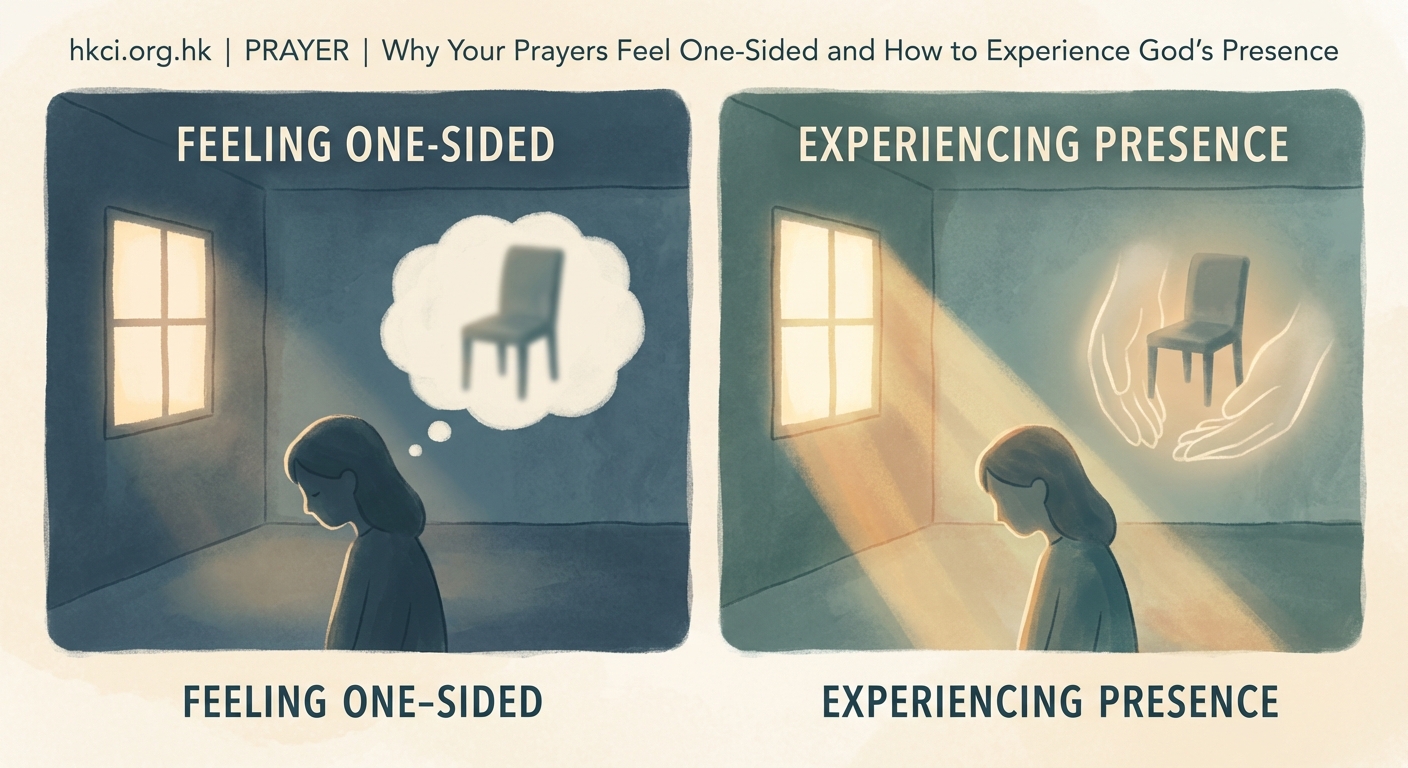
You talk, but no one seems to be listening. You pour out your heart in prayer, but the silence afterward feels heavier than before you started. If your prayers feel one sided, you’re not alone. Many Christians walk through seasons where God feels distant, and their conversations with Him seem to echo into empty space.
One sided prayers often stem from unconfessed sin, unrealistic expectations, lack of Scripture engagement, or spiritual dryness rather than God’s absence. By adjusting your approach through confession, listening prayer, biblical meditation, and patient persistence, you can restore authentic two way communion with God and experience His presence more tangibly in your daily life.
Understanding why prayers feel like monologues
Prayer becomes one sided when we treat it like a wish list instead of a relationship. We present our requests, say amen, and move on without creating space for God to respond. But God speaks in whispers, not shouts. He rarely interrupts our busy schedules with audible voices.
The problem often starts with our expectations. We expect immediate answers, clear signs, or emotional highs. When those don’t come, we assume God isn’t there. But His presence doesn’t depend on our feelings. A parent doesn’t stop loving their child just because the child can’t sense that love in a particular moment.
Sin creates static in our communication with God. Unconfessed wrongdoing builds walls between us and Him. David wrote in Psalm 66:18 that if he had cherished sin in his heart, the Lord would not have listened. That doesn’t mean God abandons us when we mess up. It means our awareness of His presence dims when we’re hiding parts of our lives from Him.
Sometimes the issue is simpler. We’re doing all the talking. Imagine calling a friend and speaking non-stop for ten minutes, then hanging up and complaining they never share anything with you. Prayer works both ways. God wants to speak, but we need to stop and listen.
Common mistakes that make prayer feel disconnected

Many Christians fall into patterns that guarantee their prayers will feel hollow. Recognizing these mistakes is the first step toward fixing them.
| Mistake | Why It Hurts Prayer | Better Approach |
|---|---|---|
| Praying only during crises | Treats God like emergency services | Build daily conversation habits |
| Using repetitive phrases | Becomes autopilot, not authentic | Speak honestly from your heart |
| Ignoring Scripture | Misses how God typically speaks | Read Bible before and during prayer |
| Expecting instant answers | Creates disappointment and doubt | Trust God’s timing and wisdom |
| Praying alone always | Misses corporate spiritual power | Join others in prayer regularly |
Vague prayers produce vague results. “Bless my day” doesn’t invite God into specific areas of your life. He wants details. Tell Him about the difficult conversation you’re dreading, the financial pressure keeping you awake, or the relationship that’s falling apart.
Another common trap is treating prayer like a performance. We use fancy religious language we’d never use in normal conversation. God doesn’t need King James English or theological jargon. He wants you, not a religious character you’re playing.
Distraction kills prayer life faster than almost anything else. We bow our heads, close our eyes, and immediately our minds wander to grocery lists, work deadlines, or that embarrassing thing we said three years ago. Building focus takes practice, but it’s worth the effort.
Practical steps to experience God’s presence in prayer
Changing your prayer life requires intentional shifts in how you approach your time with God. These aren’t magic formulas, but they create conditions where you’re more likely to sense His presence.
-
Start with confession and gratitude before making requests. Spend the first few minutes acknowledging specific sins and thanking God for specific blessings. This reorients your heart and clears the communication channel.
-
Read a passage of Scripture before you pray. Let God speak first through His Word. Then respond to what you’ve read. This naturally creates dialogue instead of monologue.
-
Write your prayers in a journal. Something about putting words on paper slows us down and helps us process what we’re actually saying. It also creates a record you can look back on to see how God has answered over time.
-
Practice listening prayer by sitting in silence after you’ve spoken. Set a timer for five minutes. Don’t fill the space with more words. Pay attention to thoughts, impressions, or Scripture verses that come to mind.
-
Pray with other believers regularly. God often speaks through the prayers of others. Their words might address something you’ve been struggling with, or their faith might strengthen yours during a dry season.
“Prayer is not monologue, but dialogue. God’s voice in response to mine is its most essential part.” — Andrew Murray
The 7 daily habits that will transform your prayer life provide additional structure for building consistency. But remember, the goal isn’t perfect execution. It’s genuine connection.
Recognizing how God actually responds
God rarely answers prayers the way we expect. We’re looking for burning bushes, but He’s already speaking through circumstances, other people, Scripture, and that persistent inner prompting we keep dismissing.
Sometimes His answer is “wait.” That feels like silence, but it’s actually an invitation to trust. Abraham waited 25 years for the son God promised. Joseph spent years in prison before his dreams came true. Waiting doesn’t mean God isn’t working. It often means He’s preparing you for what’s coming.
Other times His answer is “no,” which feels even worse than silence. But a loving parent says no when the child asks for something harmful. God sees the whole picture. What looks like a perfect solution to us might be a disaster He’s protecting us from.
Pay attention to patterns in your life. When the same opportunity or challenge keeps appearing, God might be trying to get your attention. When a specific Scripture keeps showing up in different contexts, He might be speaking through that passage.
God also speaks through peace or unease. That settled sense of rightness about a decision, or the nagging discomfort that won’t go away, often reflects the Holy Spirit’s guidance. Learning to recognize His voice takes time and practice.
Dealing with spiritual dryness and doubt
Every Christian walks through seasons where God feels absent. The spiritual giants of faith all experienced this. Mother Teresa’s private journals revealed decades of feeling disconnected from God, yet she continued serving faithfully.
Dryness doesn’t mean you’re doing something wrong. Sometimes God allows these seasons to deepen our faith. It’s easy to follow Him when we feel close to Him. It takes real trust to keep praying when the heavens feel like brass.
During dry seasons, focus on obedience over feelings. Keep showing up for prayer even when it feels pointless. Keep reading Scripture even when it seems like words on a page. Keep serving others even when you don’t feel spiritual. Faith isn’t a feeling. It’s a choice to trust God’s character regardless of your emotions.
Doubt is different from unbelief. Doubt asks honest questions and wrestles with God. Unbelief refuses to engage. God can handle your doubts. Bring them to Him. Tell Him you’re struggling to sense His presence. Ask Him to reveal Himself in new ways.
Learning how to study the Bible effectively for beginners can help during dry seasons. Sometimes we need to approach Scripture differently to hear God’s voice again.
Consider whether physical factors are affecting your spiritual life. Exhaustion, stress, poor health, or major life changes all impact our ability to sense God’s presence. Taking care of your body isn’t unspiritual. You’re not just a soul. You’re an embodied person, and your physical state affects your spiritual receptivity.
Building a foundation that sustains two way prayer

Sustainable prayer life doesn’t happen by accident. It requires building habits and structures that support ongoing conversation with God.
Create a consistent time and place for prayer. Your brain forms associations. When you regularly meet God in the same spot at the same time, that space becomes sacred. You train your mind to shift into prayer mode when you enter it.
Vary your prayer methods to prevent staleness. Try praying while walking, using prayer beads, praying through the Psalms, or practicing breath prayers where you inhale and exhale short phrases. Different methods engage different parts of your brain and keep prayer fresh.
Connect your prayers to your daily life instead of separating them. Pray about the meeting before you walk into the conference room. Thank God for the sunset you notice on your drive home. Ask for patience when your kids are testing your limits. This turns your whole day into ongoing conversation with God.
Track answered prayers. Keep a list of specific requests and note when and how God responds. This builds your faith and helps you recognize His activity in your life. During future dry seasons, you can look back and remember His faithfulness.
Join a prayer group or find a prayer partner. Corporate prayer has power that individual prayer doesn’t. When you’re struggling to pray, others can carry you. When they’re struggling, you can carry them.
The practice of praying together as a family without making it awkward strengthens both your personal prayer life and your relationships with those closest to you.
Addressing specific barriers to sensing God’s presence
Some obstacles to prayer require direct attention. Ignoring them won’t make them disappear.
Unforgiveness blocks prayer. If you’re holding grudges or refusing to reconcile with someone, that affects your relationship with God. Jesus was clear about this. If you’re bringing your gift to the altar and remember someone has something against you, go make it right first. Understanding how to practice forgiveness when someone hurts you deeply is essential for maintaining clear communication with God.
Pride creates distance. When we think we have life figured out, we stop genuinely seeking God. Humility opens us to hearing Him. The tax collector who beat his chest and said “God, have mercy on me, a sinner” went home justified. The Pharisee who listed his religious accomplishments didn’t.
Busyness crowds out God’s voice. We fill every moment with noise, activity, and stimulation. God doesn’t typically shout over our podcasts and notifications. Creating margin in your schedule isn’t optional if you want to hear from Him.
Wrong theology distorts expectations. If you believe God only speaks through dramatic supernatural experiences, you’ll miss the ordinary ways He communicates daily. If you think He’s angry and distant, you won’t approach Him with confidence. What you believe about God’s character shapes how you pray.
Isolation weakens faith. Christianity isn’t meant to be practiced alone. When you disconnect from other believers, you lose perspective and accountability. Your doubts grow larger, and your faith grows smaller. Finding ways to build authentic community in your local church provides support for your prayer life.
When you don’t know what to say to God
Sometimes the problem isn’t that God seems silent. It’s that we don’t know how to start the conversation. We sit down to pray and our minds go blank.
Start with honesty. Tell God you don’t know what to say. Tell Him prayer feels hard right now. Tell Him you’re frustrated, confused, or numb. He already knows. Saying it out loud breaks the ice.
Use the Psalms as a prayer guide. These ancient prayers express every human emotion from rage to ecstasy. Find a psalm that matches your current state and pray it back to God. Let the psalmist’s words give voice to your feelings.
Pray through the Lord’s Prayer slowly. Jesus gave us this model for a reason. Take each phrase and expand on it. “Give us today our daily bread” becomes a conversation about your specific needs and God’s provision.
Guidance on how to pray when you don’t know what to say offers additional strategies for those moments when words won’t come.
The Holy Spirit helps us in our weakness. Romans 8:26 tells us that when we don’t know what to pray, the Spirit intercedes for us with groans too deep for words. You don’t have to have perfect prayers. You just need to show up.
Moving from information to transformation
Knowing why your prayers feel one sided doesn’t automatically fix the problem. Information without application changes nothing. The real work happens when you close this article and decide what you’ll do differently tomorrow morning.
Start small. Don’t try to overhaul your entire prayer life overnight. Pick one thing from this article and implement it this week. Maybe that’s five minutes of silence after you pray. Maybe it’s confessing one specific sin you’ve been avoiding. Maybe it’s texting a friend to ask if they’ll pray with you once a week.
Expect awkwardness at first. New habits feel uncomfortable. Your mind will wander during silent prayer. You’ll forget to read Scripture before praying. You’ll feel silly writing in a journal. That’s normal. Keep going anyway.
Give God time to work. You didn’t develop one sided prayer patterns overnight, and you won’t fix them overnight either. Rebuilding intimacy with God is a process. Some days will feel like breakthroughs. Other days will feel like you’re back at square one. Both are part of the journey.
Remember that God wants this relationship more than you do. He’s not hiding from you or making it difficult on purpose. He’s already moving toward you. Your job is to remove the obstacles on your end and create space to notice His presence.
Prayer is relationship, not transaction
The heart of the matter is this: prayer isn’t about getting things from God. It’s about being with God. When we approach prayer as a transaction, we’ll always feel disappointed. When we approach it as relationship, everything shifts.
Relationships require time, honesty, listening, and patience. They go through seasons of closeness and distance. They involve misunderstandings that need clearing up. They grow deeper through both joyful moments and difficult conversations.
Your prayer life will never be perfect. You’ll have days when you sense God’s presence powerfully and days when you feel nothing. That’s normal. Keep showing up. Keep talking to Him. Keep listening for His voice. Keep trusting that He’s there even when you can’t feel Him.
The one sided feeling in your prayers isn’t permanent. God is already at work, drawing you closer to Him. As you implement these practices and adjust your expectations, you’ll begin to recognize His voice more clearly. The conversation you’ve been longing for is possible. It starts with your next prayer.