

Have you ever wondered what makes Christians so certain about Jesus being divine? It’s not just faith without foundation. Christians point to specific historical events, biblical prophecies, and the words of Jesus himself as evidence for this belief. Understanding these reasons helps make sense of Christianity’s central claim.
Christians believe Jesus is the Son of God because He claimed divine authority, fulfilled Old Testament prophecies, performed miracles, rose from the dead, and was worshiped by His followers. These elements combine to form the foundation of Christian faith in Jesus’s divine nature, supported by eyewitness testimony and historical documentation in the New Testament writings.
Jesus claimed to be God’s Son
Jesus didn’t leave room for middle ground. He made specific statements about His identity that were either true or blasphemous.
When religious leaders asked Him directly, Jesus said He was the Messiah and that they would see Him “sitting at the right hand of the Mighty One and coming on the clouds of heaven.” This claim got Him executed for blasphemy. The charge was clear: He was claiming equality with God.
Jesus also said things like “I and the Father are one” and “Anyone who has seen me has seen the Father.” These weren’t metaphorical statements about feeling close to God. In the Jewish context, these words had one meaning: divine identity.
He accepted worship from His followers. When Thomas called Him “My Lord and my God,” Jesus didn’t correct him. He blessed him for believing. Throughout Jewish history, prophets and holy men always rejected worship. Jesus accepted it as His right.
His opponents understood exactly what He was claiming. They picked up stones to kill Him multiple times, not because He was teaching good morals, but because He was “making himself God.”
The resurrection changed everything
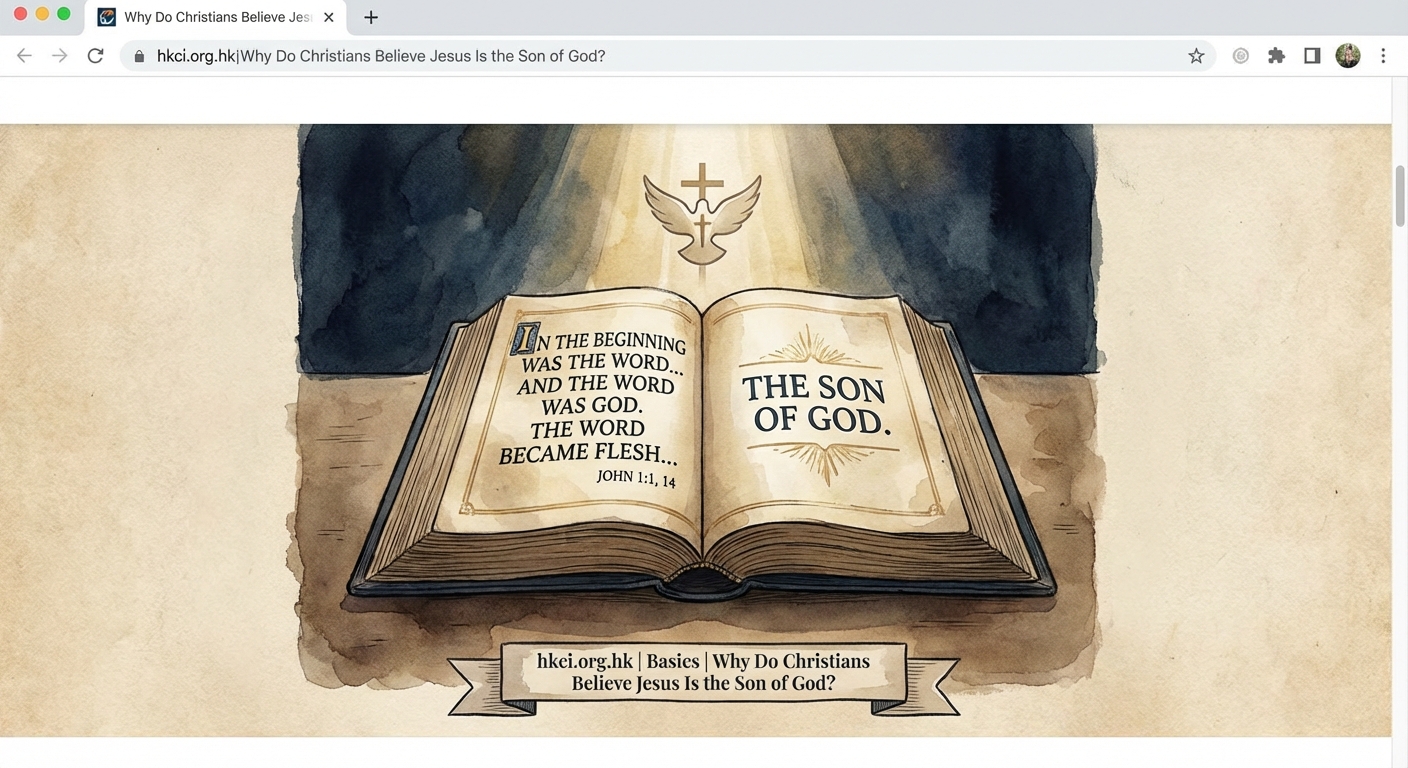
The resurrection stands as the cornerstone of Christian belief. Without it, Christianity doesn’t exist.
The disciples went from hiding in fear to boldly proclaiming Jesus’s resurrection, even facing death for this message. People don’t die for something they know is a lie. They might die for something they believe is true but isn’t. But the disciples were in a position to know whether Jesus actually rose or not.
The empty tomb was never disputed by Jesus’s enemies. They could have easily disproven the resurrection by producing the body. Instead, they claimed the disciples stole it. This admission that the tomb was empty actually supports the Christian account.
Over 500 people claimed to see Jesus alive after His crucifixion. Paul wrote about this when many of these witnesses were still alive and could be questioned. He was essentially saying “Go ask them yourself if you don’t believe me.”
The transformation of the disciples provides powerful evidence. Peter denied Jesus three times out of fear. Yet weeks later, he was publicly proclaiming the resurrection to the same people who crucified Jesus. What could cause such a dramatic change except actually seeing Jesus alive?
Women were the first witnesses to the resurrection. In first-century Jewish culture, women’s testimony wasn’t considered reliable in court. If you were making up a story, you would never choose women as your primary witnesses. This detail suggests the Gospel writers were reporting what actually happened, not crafting a convincing tale.
Prophecies pointed to His coming
The Old Testament contains hundreds of specific prophecies about the coming Messiah. Jesus fulfilled them in ways that were beyond human control.
His birthplace was prophesied 700 years before He was born. Micah predicted the Messiah would be born in Bethlehem. Jesus’s parents lived in Nazareth, but a Roman census brought them to Bethlehem right when Mary was due to give birth.
The manner of His death was described centuries before crucifixion was even invented. Psalm 22 describes hands and feet being pierced. Isaiah 53 predicts a suffering servant who would be “pierced for our transgressions.”
His betrayal price was prophesied. Zechariah predicted the Messiah would be betrayed for 30 pieces of silver. That’s exactly what Judas received.
The timing of His coming was predicted in Daniel’s prophecies. Daniel 9 gives a timeline that points to Jesus’s era for the Messiah’s appearance and death.
“But you, Bethlehem Ephrathah, though you are small among the clans of Judah, out of you will come for me one who will be ruler over Israel, whose origins are from of old, from ancient times.” This prophecy, written 700 years before Jesus, shows the specific nature of messianic predictions.
These weren’t vague predictions that could apply to anyone. They were specific details that came together in one person at one point in history.
His miracles demonstrated divine power

Jesus’s miracles weren’t just impressive magic tricks. They were signs pointing to His identity.
He had power over nature. Calming storms, walking on water, and multiplying food showed authority over creation itself. Only the Creator would have such control.
He healed incurable diseases. Leprosy, blindness from birth, paralysis. These weren’t psychosomatic conditions. They were physical ailments that disappeared instantly at His word.
He raised the dead. Not just recently deceased people who might have been in a coma. Lazarus had been dead for four days. The decomposition process had begun. Jesus called him out of the tomb alive.
His miracles were public and undeniable. Even His enemies didn’t dispute that He performed miracles. They just attributed the power to demonic sources. This admission shows that something supernatural was clearly happening.
The miracles had purpose. They weren’t done for show or personal gain. Each one demonstrated compassion and pointed people toward God. They authenticated His message and identity.
Early Christians worshiped Him as God
The earliest Christian communities, made up of strict monotheistic Jews, worshiped Jesus alongside God the Father. This shift happened immediately, not gradually over centuries.
The New Testament letters, written within 20 years of Jesus’s death, already contain hymns and prayers directed to Jesus. Philippians 2 describes Jesus as having “equality with God” and being worthy of worship. This wasn’t a later development.
Baptism was performed in the name of the Father, Son, and Holy Spirit from the beginning. This formula places Jesus on the same level as God the Father.
The disciples prayed to Jesus. Stephen, as he was being stoned to death, prayed “Lord Jesus, receive my spirit.” This prayer language was previously reserved for God alone.
The title “Lord” was applied to Jesus. In the Greek Old Testament, “Lord” was used to translate God’s personal name. When Christians called Jesus “Lord,” they were making a divine claim.
Here’s how Christian belief developed compared to other religious movements:
| Aspect | Christianity | Typical Religious Development |
|---|---|---|
| Worship of founder | Immediate, within months | Gradual, over generations |
| Divine claims | Made by Jesus himself | Added by later followers |
| Eyewitness accounts | Written within one generation | Written centuries later |
| Monotheistic context | Jews worshiping a man as God | Polytheistic cultures adding gods |
| Willingness to die | Disciples died for their claims | Followers died for received tradition |
The New Testament documents provide evidence
The historical reliability of the New Testament supports Christian belief about Jesus’s identity.
The Gospels were written within the lifetime of eyewitnesses. This timing matters because false claims could have been easily corrected by people who were actually there.
Multiple independent sources confirm the same basic facts about Jesus. Matthew, Mark, Luke, John, Paul, Peter, and James all testify to Jesus’s divine nature. These weren’t people copying from each other. They were independent witnesses.
The manuscript evidence is stronger than for any other ancient document. We have thousands of Greek manuscripts, some dating to within a few decades of the originals. By comparison, most ancient historical works survive in only a handful of copies made centuries later.
The documents include embarrassing details that wouldn’t be included if the writers were making things up. The disciples arguing about who was greatest, Peter’s denial, the disciples’ slowness to believe. These details suggest honest reporting.
Archaeological discoveries continue to confirm New Testament accuracy on historical and geographical details. Luke’s Gospel, once questioned for its historical references, has been repeatedly vindicated by archaeological findings.
Understanding the Trinity concept
Christians believe Jesus is the Son of God within the framework of the Trinity. This concept can be confusing but is central to understanding Christian belief.
God exists as three persons: Father, Son, and Holy Spirit. Yet there is only one God. This isn’t three gods or one person playing three roles.
The Father is God. The Son is God. The Spirit is God. But they are not three separate gods. They are three distinct persons sharing one divine nature.
Jesus being the “Son” doesn’t mean God had a child or that Jesus had a beginning. It describes the eternal relationship within the Godhead. The Father has always been Father. The Son has always been Son.
This doctrine developed as Christians tried to make sense of what the Bible teaches. Jesus claimed to be God. The Father is clearly God. Yet Jesus prayed to the Father. The only way to hold all these truths together is the Trinity.
Here are the key reasons Christians believe Jesus is the Son of God:
- Jesus explicitly claimed divine identity and authority
- He rose from the dead, validating His claims
- He fulfilled specific Old Testament prophecies about the Messiah
- His miracles demonstrated power over nature, disease, and death
- The earliest Christians, despite being monotheistic Jews, worshiped Him as God
- Multiple eyewitness accounts document His life, death, and resurrection
Common questions about Jesus’s divine nature
Many people wonder why Jesus had to be both God and man. Christians believe only God could pay the penalty for human sin. But only a human could represent humanity. Jesus had to be both.
Some ask why Jesus prayed if He was God. The Trinity explains this. The Son communicated with the Father. Jesus’s prayers show His human nature and the relationship within the Godhead.
Others question why Jesus didn’t know certain things if He was God. During His earthly life, Jesus voluntarily limited the use of some divine attributes. He experienced genuine human limitations while remaining fully divine.
The question of why God would become human puzzles many people. Christians believe God became human to rescue humanity. He came to show us what God is like, to teach us how to live, and ultimately to die in our place.
Different Christian traditions emphasize various aspects of Jesus’s identity:
- Eastern Orthodox churches focus on Jesus as the incarnate Word who transforms humanity
- Catholic tradition emphasizes Jesus as both priest and sacrifice
- Protestant churches often highlight Jesus as personal Savior and Lord
- All agree on His full divinity and humanity
The personal dimension of belief
Christian belief about Jesus isn’t just intellectual agreement with historical facts. It involves personal trust and relationship.
Christians believe Jesus is alive today, not just a historical figure who lived 2,000 years ago. The resurrection means He continues to interact with people.
Faith involves trusting Jesus’s claims about himself. It means believing He has authority to forgive sins, power to change lives, and the right to be worshiped.
The experience of millions of Christians throughout history adds another dimension. People from every culture and era have reported transformed lives through relationship with Jesus. This consistent testimony across time and geography supports the truth of His identity.
Christianity stands or falls on whether Jesus is who He claimed to be. If He’s just a good teacher, Christianity is false. If He’s the Son of God, everything changes.
Why this belief matters for everyone
Understanding why Christians believe Jesus is the Son of God helps make sense of the entire Christian faith. This isn’t a minor doctrinal detail. It’s the foundation everything else builds on.
If Jesus is truly God’s Son, then His teachings carry divine authority. His death wasn’t just a tragedy but a cosmic rescue mission. His resurrection wasn’t just survival but victory over death itself.
This belief explains Christian confidence in eternal life. If Jesus conquered death, His promise of resurrection for His followers becomes credible. If He’s just a man, that promise dies with Him.
The claim that Jesus is the Son of God remains as controversial today as it was 2,000 years ago. But Christians point to the same evidence that convinced the first disciples: His words, His works, His death, and His resurrection. These form the foundation for faith that has endured for two millennia and continues to shape billions of lives today.