

You sit down to pray and nothing comes. Your mind goes blank. The words feel forced or fake. Maybe you’re hurting too much to speak, or maybe life just feels numb right now.
This isn’t failure. It’s actually a common experience among believers, and there are real, practical ways to move forward when prayer feels impossible.
When you don’t know what to say in prayer, you can use Scripture as your words, pray with honest silence, borrow prayers from others, or simply say “help.” God values your presence more than your eloquence. The Holy Spirit intercedes for you even when words fail, and showing up matters more than saying the right things.
Why words sometimes fail us
Prayer isn’t always easy. Sometimes grief leaves us speechless. Other times, confusion makes it hard to form coherent thoughts. Depression can steal our ability to feel anything at all.
You might be angry at God and unsure if you’re allowed to say so. Or maybe you’ve prayed the same thing so many times that the words feel empty now.
The Bible acknowledges this struggle. Romans 8:26 says the Spirit helps us in our weakness because we don’t know what we ought to pray for. Even Jesus, in the garden before his crucifixion, repeated the same simple prayer three times. He didn’t have elaborate words either.
Your wordlessness doesn’t disqualify you from God’s presence.
Start with Scripture itself
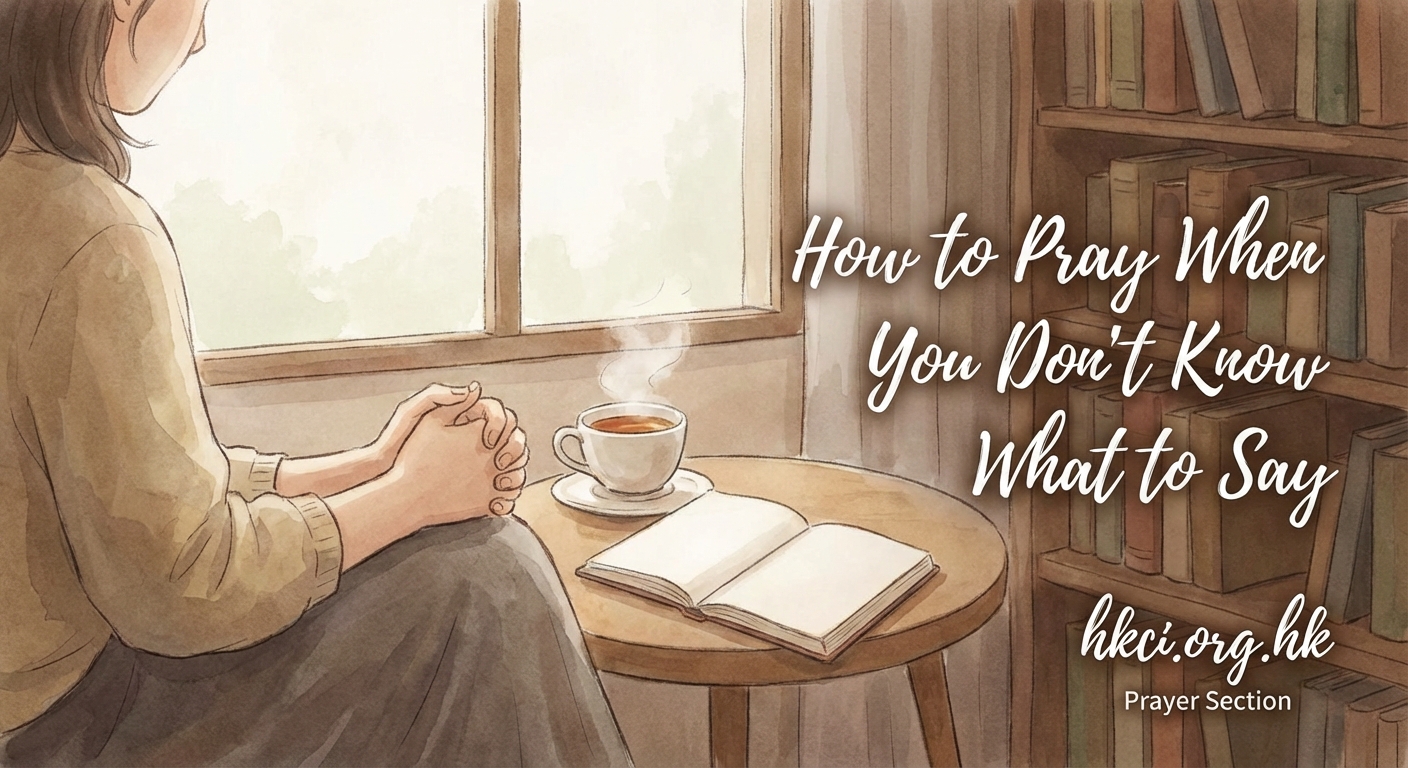
One of the most reliable ways to pray when your own words dry up is to use the Bible’s words instead.
The Psalms work especially well for this. They cover every human emotion: rage, despair, joy, confusion, gratitude, and doubt. You can read them aloud as your own prayer.
Try Psalm 13 when you feel forgotten. Read Psalm 23 when you need comfort. Use Psalm 139 when you need to remember God sees you.
You’re not cheating by doing this. You’re letting God’s word shape your conversation with him.
Other passages work too:
- Pray through the Lord’s Prayer in Matthew 6:9-13, one line at a time
- Use Paul’s prayers in Ephesians 1 or Philippians 1
- Pray the words of Mary’s Magnificat in Luke 1:46-55
This approach takes pressure off you to be creative or articulate. The words are already there.
Practice honest silence
Sometimes the best prayer is no words at all.
Sit in God’s presence without speaking. Let the silence be your prayer. This isn’t giving up. It’s showing up.
God knows what you’re feeling even when you can’t name it. He sees the confusion, the hurt, the exhaustion. Your silent presence communicates more than you think.
“Be still, and know that I am God.” This instruction from Psalm 46:10 isn’t just poetic. It’s permission to stop striving for the right words and simply be.
You can set a timer for five minutes. Sit somewhere comfortable. Breathe slowly. Let your mind wander if it needs to. Don’t force anything.
This kind of prayer acknowledges that relationship matters more than performance.
Borrow prayers from others

Christians have been praying for two thousand years. Many have written down their prayers, and you can use them.
The Book of Common Prayer contains structured prayers for morning, evening, and specific situations. You can read these word for word.
Other written prayers come from:
- Ancient church liturgies
- Hymns and worship songs
- Prayer books by authors like Valley of Vision or Phyllis Tickle
- Prayers written by saints like St. Francis or Julian of Norwich
Using someone else’s words isn’t lazy. It’s joining a community of faith across time. Their words can carry you when yours can’t.
Simple one-word prayers work
You don’t need complete sentences to pray.
“Help” is a full prayer. So is “thanks” or “please” or “mercy.”
When you’re overwhelmed, one word captures everything. It’s honest. It’s real. God understands.
Jesus told a parable about a tax collector who prayed just eight words: “God, have mercy on me, a sinner.” Jesus said this man went home justified.
Length doesn’t impress God. Your heart does.
Let your body pray
Prayer isn’t only verbal. Your physical posture can express what words can’t.
Try these:
- Kneel to show humility or need
- Lie face down when you’re desperate or grieving
- Raise your hands to express surrender or worship
- Walk while you pray, letting movement help your thoughts
- Sit with open palms to symbolize receiving
Your body can pray even when your mind goes blank.
Some people find that physical acts like lighting a candle, holding a cross, or looking at an icon help them focus. These aren’t magic, but they can anchor your attention.
Pray the news or your surroundings
When you don’t know what to say about your own life, pray about what’s in front of you.
Look out your window. Pray for your neighbors. Watch the news and pray for people affected by those events. Scroll through your contacts and pray for one person at a time.
This shifts focus away from finding perfect words about your own situation. It lets you participate in prayer without the pressure.
You can also pray through your day:
- Thank God for your morning coffee
- Ask for patience before a difficult meeting
- Pray for the cashier at the grocery store
These small prayers count. They keep you connected to God throughout ordinary moments.
Practical methods compared
Different approaches work for different people and situations. Here’s how they compare:
| Method | Best for | Challenge | Benefit |
|---|---|---|---|
| Praying Scripture | When emotions overwhelm your thoughts | Finding the right passage | Words are already true and tested |
| Silent prayer | When you’re too tired or numb to speak | Feeling like you’re not doing enough | Removes pressure to perform |
| Written prayers | When you need structure | Feeling disconnected from old language | Connects you to wider church history |
| One-word prayers | Crisis moments or deep distress | Wondering if it’s sufficient | Cuts to the core of your need |
| Physical prayer | When your mind won’t focus | Self-consciousness | Engages your whole person |
| Praying for others | When your own problems feel too heavy | Avoiding your own needs | Breaks self-focused paralysis |
No single method works for everyone all the time. You can switch between them as needed.
Common mistakes to avoid
Even when prayer feels hard, some approaches make it harder:
- Waiting for the right feeling: Prayer isn’t about emotion. It’s about showing up. Pray even when you feel nothing.
- Thinking longer is better: God isn’t impressed by length. Five honest seconds beats thirty empty minutes.
- Comparing yourself to others: Someone else’s prayer life isn’t the standard for yours. Your relationship with God is unique.
- Believing silence means absence: God’s silence doesn’t mean he’s not listening. Sometimes he’s just present without speaking.
- Forcing fake positivity: You don’t have to pretend everything is fine. God can handle your real feelings.
Authenticity matters more than polish.
What the Bible says about wordless prayer
Scripture repeatedly acknowledges that we struggle to pray well.
Romans 8:26-27 explains that the Spirit intercedes for us with wordless groans when we don’t know what to pray. This means someone is praying for you even when you can’t.
Hebrews 4:15-16 reminds us that Jesus understands our weaknesses. We can approach God’s throne with confidence, not because we have great words but because we have a great high priest.
Matthew 6:7-8 warns against babbling like pagans who think they’ll be heard for their many words. God knows what you need before you ask.
These passages free you from the burden of eloquence.
Building a practice when words are scarce
You can develop habits that help when prayer feels impossible:
- Set a time, not a goal: Commit to five minutes of prayer, not to saying certain things. Show up and see what happens.
- Keep a prayer list: Write down names or situations. When you don’t know what to say, read the list. That’s prayer.
- Use a prayer app or guide: Tools like Lectio 365 or Pray As You Go provide structure when you need it.
- Pray with someone else: Ask a friend to pray with you. Their words can carry you both.
- Return to the same prayer: Repeat one prayer for a week or a month. Let familiarity create space for honesty.
Consistency matters more than creativity.
When doubt makes prayer feel pointless
Sometimes you can’t find words because you’re not sure anyone is listening.
Doubt doesn’t disqualify your prayers. Many biblical characters questioned God. Job demanded answers. David asked why God had abandoned him. Thomas needed proof.
God didn’t reject any of them.
If doubt is stealing your words, you can pray about the doubt itself. “I’m not sure you’re there, but I’m here anyway” is a valid prayer.
Showing up despite uncertainty is actually a profound act of faith.
Signs your wordless prayer is working
You might wonder if prayer without words accomplishes anything. Here are signs it does:
- You feel less alone, even if nothing else changes
- You notice small moments of peace during the day
- Your perspective shifts slightly over time
- You keep showing up, even when it’s hard
- You become more aware of God’s presence in ordinary moments
Growth in prayer often happens slowly. You might not notice it day to day.
Adjusting expectations
We often think prayer should feel a certain way: warm, connected, clear. When it doesn’t, we assume we’re doing it wrong.
But prayer is relationship, and relationships go through seasons. Sometimes you talk for hours with a friend. Other times you sit together in comfortable silence.
Both are real connection.
Your prayer life will have dry seasons. That’s normal. It doesn’t mean God is distant or you’ve failed.
Keep showing up. Use the tools available. Trust that God hears even what you can’t say.
When to seek additional support
If you’ve been unable to pray for a long time and it’s accompanied by other symptoms, consider talking to someone:
- A pastor or spiritual director can help you process what’s happening spiritually
- A counselor can address underlying depression, anxiety, or trauma
- A trusted friend can pray with you and for you
Struggling in prayer sometimes signals deeper needs. There’s no shame in asking for help.
Moving forward without pressure
Prayer doesn’t have to be complicated. It doesn’t require special language or perfect conditions.
You can pray while washing dishes. You can pray in the car. You can pray by sitting quietly for two minutes before bed.
God isn’t grading your prayers. He’s listening to your heart.
When words won’t come, use someone else’s. When even that feels impossible, just be present. Your showing up matters more than your eloquence.
The goal isn’t to pray perfectly. It’s to stay connected to God through whatever season you’re in, even when that connection feels thin.
Your next conversation with God
Prayer will feel hard sometimes. That’s part of being human. But you have more options than you might think.
You can borrow ancient words, sit in silence, pray one syllable, or let your body speak. You can pray the news, read a Psalm aloud, or simply say “I’m here.”
None of these require you to be articulate or spiritually mature. They just require you to show up.
Start today with whatever feels possible. Set a timer for three minutes. Open your Bible to any Psalm. Say one word. Light a candle and sit.
God meets you where you are, not where you think you should be. Your wordless prayers matter just as much as eloquent ones. Maybe more, because they’re stripped of pretense.
You don’t need to know what to say. You just need to keep talking to the One who already knows.