

The foundations of Christian doctrine didn’t appear overnight. Between the first and eighth centuries, a group of theologians, bishops, and scholars wrestled with scripture, debated heresy, and crafted the beliefs that billions hold today. These thinkers, known as the early church fathers, built the framework for everything from the Trinity to the nature of salvation.
The early church fathers influence on Christian doctrine shaped core beliefs through theological writings, ecumenical councils, and responses to heresy. Their work established doctrines like the Trinity, biblical canon, and sacramental theology that remain central to Christianity. Understanding their contributions helps believers grasp why modern churches teach what they do and how ancient debates still matter today.
Who Were the Early Church Fathers
The term “church fathers” refers to influential Christian writers and leaders from roughly 100 to 750 AD. These weren’t just pastors or teachers. They were bishops who defended congregations, theologians who clarified confusing passages, and apologists who argued against critics.
We typically divide them into three groups. The Apostolic Fathers wrote immediately after the apostles died, around 100 to 150 AD. Figures like Clement of Rome and Ignatius of Antioch knew people who had walked with Jesus. Their letters and teachings bridge the New Testament and later theology.
The Ante-Nicene Fathers came next, writing before the Council of Nicaea in 325 AD. Justin Martyr, Irenaeus, Tertullian, and Origen belong here. They faced persecution, debated Greek philosophy, and fought early heresies like Gnosticism.
The Post-Nicene Fathers arrived after Constantine legalized Christianity. Athanasius, Basil the Great, Gregory of Nazianzus, John Chrysostom, Augustine of Hippo, and Jerome shaped doctrine during a time when the church could finally meet openly and hold large councils.
Each generation faced different challenges. But all of them asked the same question: what does scripture actually teach?
How They Established Core Doctrines
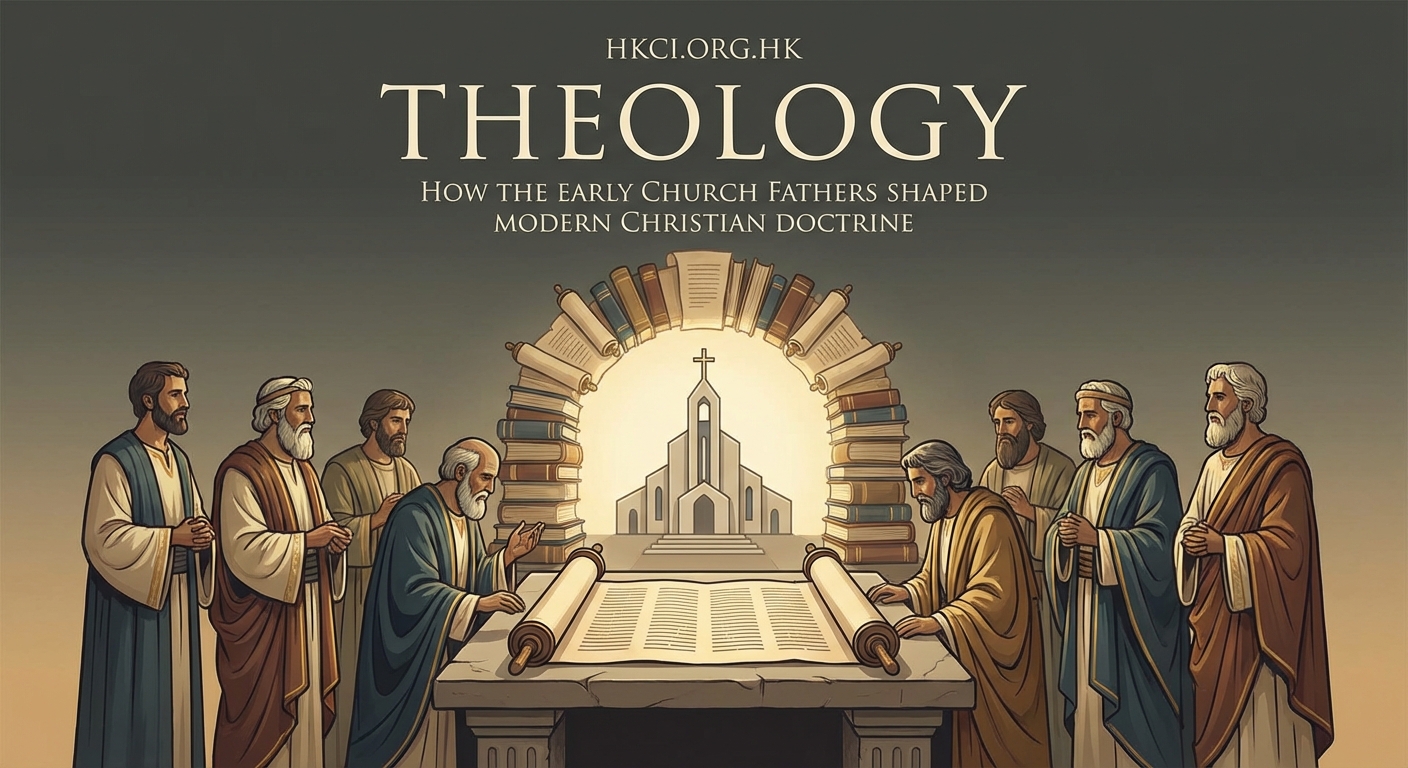
The early church fathers didn’t invent theology out of thin air. They read scripture intensively, prayed constantly, and argued passionately. Their method combined biblical exegesis, philosophical reasoning, and pastoral concern.
The Doctrine of the Trinity
No doctrine shows their influence more clearly than the Trinity. The New Testament calls Jesus “Lord” and “God,” mentions the Holy Spirit as a person, and insists there’s only one God. But it never uses the word “Trinity” or explains how three persons share one divine nature.
Arius, a priest in Alexandria, taught that Jesus was the first and greatest creation but not eternal like the Father. This seemed logical to many believers. But Athanasius saw the problem: if Jesus isn’t fully God, he can’t save us. Only God can bridge the infinite gap between humanity and divinity.
The Council of Nicaea in 325 AD declared that the Son is “of the same substance” as the Father. Athanasius spent decades defending this decision, enduring five exiles. His writings clarified that Father, Son, and Spirit are three distinct persons sharing one divine essence.
The Cappadocian Fathers (Basil, Gregory of Nazianzus, and Gregory of Nyssa) refined this further. They distinguished between “ousia” (essence) and “hypostasis” (person), giving us the language to say “one God in three persons” without contradiction.
The Nature of Christ
Another debate erupted over how divinity and humanity unite in Jesus. Nestorius emphasized the distinction so strongly that he seemed to describe two separate persons. Eutyches went the opposite direction, claiming Christ’s humanity dissolved into his divinity like a drop of honey in the ocean.
The Council of Chalcedon in 451 AD settled the matter. Christ is one person with two natures, fully God and fully human, without mixture, confusion, separation, or division. Leo the Great’s Tome provided the theological foundation for this formula.
This wasn’t abstract philosophy. If Christ isn’t fully human, he can’t represent us. If he isn’t fully God, he can’t save us. The early church fathers influence on Christian doctrine protected both truths.
The Biblical Canon
Christians today open their Bibles without wondering which books belong inside. We have the early church fathers to thank for that clarity.
By the late second century, four Gospels circulated widely, along with Paul’s letters and other apostolic writings. But Gnostic groups promoted alternative gospels with radically different theologies. Marcion rejected the Old Testament entirely and edited the New Testament to remove Jewish elements.
Irenaeus argued that only writings from apostles or their close associates carried authority. He defended the four Gospels we know today and rejected texts like the Gospel of Thomas. Athanasius listed the 27 books of our New Testament in his Easter letter of 367 AD. The Councils of Hippo (393) and Carthage (397) affirmed this canon.
Their criteria included apostolic origin, widespread acceptance in churches, and consistency with the “rule of faith” (the core beliefs passed down from the apostles). This process wasn’t arbitrary. It recognized which books the Spirit had already used to build up the church.
Three Ways Their Work Shapes Modern Christianity
The early church fathers influence on Christian doctrine touches nearly every aspect of faith today. Here’s how their legacy continues:
-
Creeds and confessions used in worship come directly from their councils. The Nicene Creed, recited in Catholic, Orthodox, and many Protestant churches, emerged from the debates Athanasius fought. When you affirm “God from God, Light from Light, true God from true God,” you’re speaking fourth-century theology.
-
Theological education builds on their foundation. Seminary students study systematic theology organized around topics the fathers clarified: God’s attributes, Christ’s person and work, the Spirit’s role, salvation, and the church. Modern theologians still reference Augustine on grace, Athanasius on incarnation, and Chrysostom on scripture interpretation.
-
Pastoral ministry applies their wisdom. When pastors explain the Trinity to new believers, counsel someone struggling with sin, or defend orthodox teaching against error, they use frameworks the fathers developed. Their commentaries on scripture still guide preachers preparing sermons.
Practical Methods They Used to Develop Doctrine
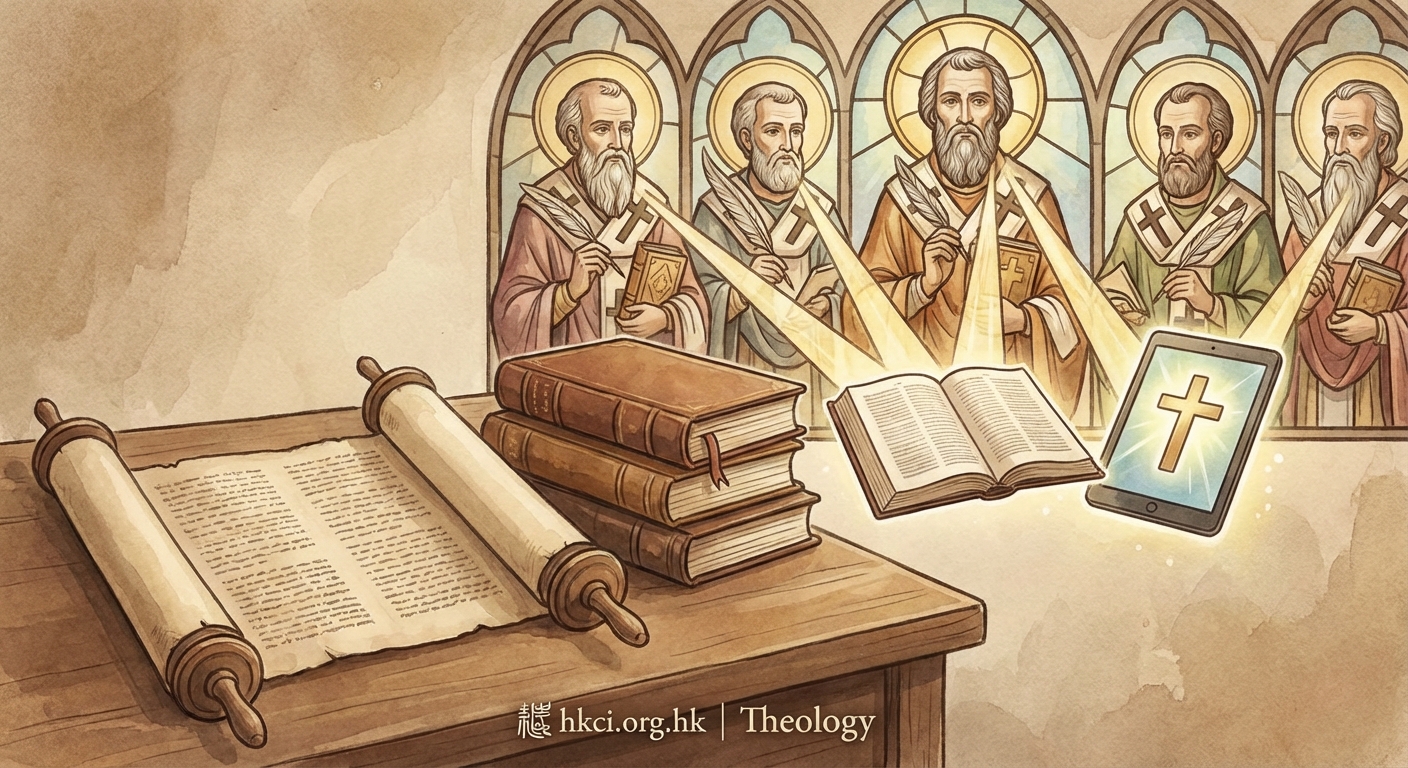
Understanding how the early church fathers worked helps us appreciate their lasting impact. They followed consistent methods that combined scholarship with spiritual devotion.
Biblical Interpretation
The fathers took scripture seriously as God’s word. They memorized vast portions, quoted it constantly, and measured every teaching against it. Origen alone wrote commentaries on nearly every book of the Bible.
They used multiple levels of interpretation. The literal or historical meaning came first. Then they looked for moral applications and spiritual or allegorical meanings pointing to Christ. This method, refined by Augustine and others, helped them see the unity of Old and New Testaments.
Engagement with Philosophy
Greek philosophy dominated education in the Roman Empire. The fathers didn’t reject it entirely. Justin Martyr argued that philosophy prepared pagans for the gospel, like the law prepared Jews. Clement of Alexandria called philosophy a “schoolmaster” leading Greeks to Christ.
But they also critiqued philosophy sharply when it contradicted revelation. Tertullian famously asked, “What has Athens to do with Jerusalem?” He warned against letting human wisdom corrupt divine truth.
This balanced approach let them use philosophical terms to explain Christian doctrine while maintaining biblical authority.
Response to Heresy
Heresy forced the fathers to clarify what scripture teaches. When Gnostics claimed matter was evil and salvation meant escaping the body, Irenaeus defended creation and bodily resurrection. When Pelagius denied original sin and taught people could earn salvation through effort, Augustine articulated grace and human inability.
Each heresy prompted deeper reflection. The fathers asked: what does this teaching imply about God, Christ, humanity, and salvation? If the implications contradicted scripture or undermined the gospel, they rejected it.
Councils and Community
The fathers didn’t work alone. They gathered in councils, large and small, to debate and decide together. The seven ecumenical councils addressed major controversies and produced statements the whole church could accept.
This communal process reflected their conviction that the Spirit guides the church corporately, not just individuals. Truth emerges through dialogue, prayer, and consensus among faithful believers.
Common Mistakes About the Early Church Fathers
Many misconceptions surround these historical figures. Clearing them up helps us appreciate their actual contribution.
| Mistake | Reality |
|---|---|
| They invented new doctrines | They clarified what scripture taught, using new language to express old truths |
| They all agreed on everything | They debated vigorously and sometimes disagreed, but found unity on core doctrines |
| They replaced the Bible with tradition | They elevated scripture as the ultimate authority and used tradition to interpret it |
| Only Catholics should study them | Protestant Reformers quoted them extensively and saw themselves as returning to patristic teaching |
| Their work is irrelevant now | Modern theological debates often replay ancient controversies they already addressed |
Key Figures You Should Know
Some church fathers stand out for their lasting influence on doctrine.
Irenaeus of Lyons (c. 130-202) fought Gnosticism and defended apostolic tradition. His “Against Heresies” preserved what we know about early heretical movements and articulated the doctrine of recapitulation: Christ reversed Adam’s disobedience.
Tertullian (c. 155-220) coined theological terms still used today, including “Trinity” and “person.” He developed legal and philosophical language to express Christian truth, though his later rigorism led him into the Montanist movement.
Origen (c. 184-253) pioneered biblical scholarship and systematic theology. His allegorical interpretations influenced Eastern Christianity. Some of his speculative ideas (like universal salvation and the pre-existence of souls) were later condemned, but his exegetical method shaped generations.
Athanasius (c. 296-373) defended Nicene orthodoxy against Arianism at great personal cost. His “On the Incarnation” remains a classic explanation of why God became human.
Augustine of Hippo (354-430) towers over Western theology. His “Confessions” and “City of God” explored grace, sin, predestination, and the relationship between church and world. Both Catholics and Protestants claim him as a theological ancestor.
John Chrysostom (c. 347-407) earned his nickname “golden mouth” through powerful preaching. His homilies on scripture combined careful exegesis with practical application, modeling expository preaching.
“The glory of God is a human being fully alive, and the life of humanity is the vision of God.” – Irenaeus of Lyons
This famous quote captures the fathers’ pastoral heart. They didn’t pursue theology as an academic exercise. They wanted people to know God and experience the life Christ offers.
The Lasting Impact on Different Traditions
The early church fathers influence on Christian doctrine extends across denominational lines, though different traditions emphasize different aspects.
Eastern Orthodox churches see the fathers as authoritative interpreters of scripture and tradition. They give special weight to the seven ecumenical councils and patristic consensus. Orthodox theology is essentially patristic theology continued.
Roman Catholic teaching builds on patristic foundations, adding medieval scholasticism and ongoing magisterial development. The fathers are venerated as saints and doctors of the church. Catholic scholars study them intensively in seminary.
Protestant Reformers appealed to the fathers against what they saw as medieval corruptions. Luther quoted Augustine on justification by faith. Calvin cited Chrysostom and other fathers in his biblical commentaries. The Anglican tradition especially values patristic theology.
Evangelical Christians sometimes neglect the fathers, jumping from the New Testament to modern times. But growing numbers recognize their value for understanding scripture and defending orthodoxy against contemporary heresies.
All these traditions agree: you can’t understand Christian doctrine without understanding the fathers who shaped it.
Why Theology Students Need This Foundation
If you’re studying theology formally or informally, the early church fathers offer irreplaceable benefits.
They show you how to read scripture carefully. Their commentaries model close attention to the text, asking what the original audience understood and how passages fit the Bible’s larger story.
They teach you to think systematically. When you see how they connected doctrines (creation, fall, redemption, consummation), you learn to build coherent theological frameworks.
They warn you about old heresies in new clothes. Many contemporary theological errors simply repackage ancient mistakes. Recognizing the pattern helps you respond wisely.
They demonstrate courage under pressure. These men often suffered for their convictions. Athanasius endured exile. Chrysostom died in exile. Their example encourages faithfulness when truth costs something.
They connect you to the global, historical church. Christianity isn’t a recent American invention or a Western export. It’s a two-thousand-year movement spanning continents and cultures. The fathers remind you that you belong to something bigger than your local congregation or denomination.
Resources for Deeper Study
Ready to read the fathers themselves? Start with accessible works.
Athanasius’s “On the Incarnation” is short, clear, and profound. It explains why God became human in language any educated Christian can follow.
Augustine’s “Confessions” combines autobiography with theology. You’ll meet a brilliant man wrestling with God, sin, and grace.
The Nicene and Post-Nicene Fathers series, available free online, provides English translations of major works. It’s extensive but searchable.
Modern introductions help navigate patristic thought. Look for books that excerpt key passages with commentary explaining historical context and theological significance.
Many seminaries offer courses on church history and patristic theology. Online options make this education accessible even if you’re not pursuing a degree.
How Ancient Debates Still Matter Today
You might wonder if fourth-century controversies about Greek philosophical terms have any relevance now. They do, and here’s why.
Modern cults and heresies often revive ancient errors. Jehovah’s Witnesses teach a form of Arianism, denying Christ’s full divinity. Modalism (the idea that Father, Son, and Spirit are just modes or masks God wears) keeps reappearing in popular teaching.
When you understand how the fathers refuted these errors, you can respond effectively. You don’t have to reinvent the wheel. You can apply their biblical arguments to contemporary situations.
Cultural pressures also mirror ancient challenges. The fathers faced a pluralistic society that worshiped many gods and practiced diverse spiritualities. They had to explain why Christianity was different and true. That sounds a lot like our context.
Their method of engaging culture without compromising truth offers a model. They learned Greek philosophy to communicate effectively. They used common language to express biblical concepts. But they never diluted the gospel to make it more palatable.
Building on a Solid Foundation
The early church fathers influence on Christian doctrine gave us the theological foundation we build on today. They clarified what the apostles taught, defined core beliefs, and protected truth against distortion.
Their work wasn’t perfect. They were human, limited by their time and culture. Some held views we now reject (like Augustine’s harsh view of unbaptized infants). But on the central doctrines of the faith, they achieved remarkable consensus guided by scripture and the Spirit.
When you affirm the Trinity, read the Bible they canonized, or explain salvation through Christ alone, you’re standing on their shoulders. Understanding their contribution deepens your faith and equips you to defend it. Take time to read their works, appreciate their struggles, and apply their wisdom. The church fathers aren’t relics of the past. They’re teachers who still have much to offer students of theology today.