
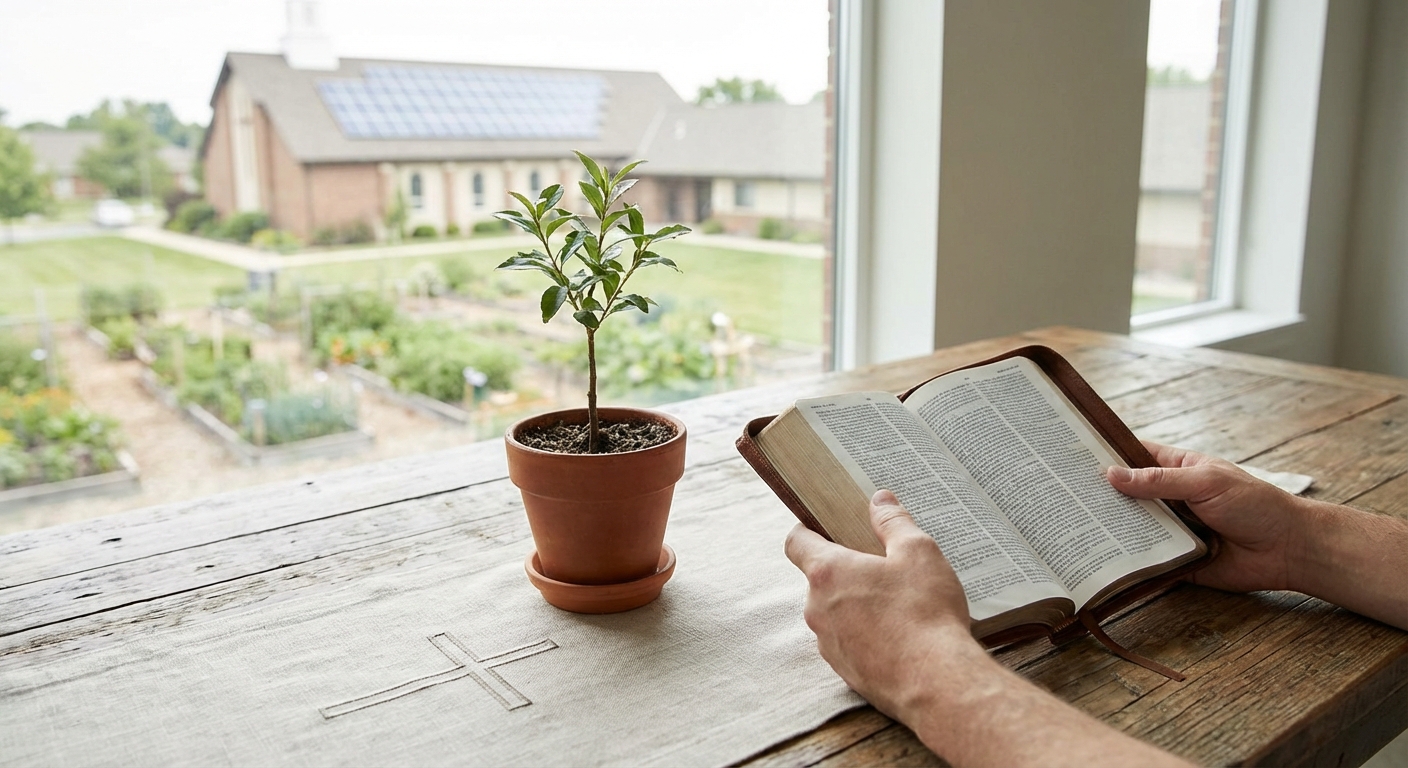
Creation care isn’t a political agenda. It’s a biblical mandate that many Christians overlook or misunderstand. The conversation around environmental stewardship has become so polarized that believers often feel stuck between ignoring the issue entirely or compromising their faith to join secular movements. But there’s a third path rooted in Scripture, theological consistency, and practical wisdom.
Christians and climate change can align through biblical stewardship principles found in Genesis and throughout Scripture. Caring for creation honors God as Creator, protects vulnerable populations, and reflects Christian values without requiring acceptance of secular ideologies. Believers can take meaningful environmental action while maintaining theological integrity and focusing on eternal truths that transcend political movements.
What Scripture Actually Says About Creation
The Bible opens with God creating the heavens and the earth. Genesis 1 shows a deliberate, ordered process where God calls His creation “good” repeatedly. After creating humanity, God gives Adam a specific job: tend and keep the garden.
The Hebrew words used here matter. “Tend” (abad) means to work or serve. “Keep” (shamar) means to guard, protect, or preserve. God didn’t tell Adam to exploit the garden or use it carelessly. He commanded active stewardship.
This mandate didn’t disappear after the Fall. Romans 8:19-22 describes creation itself groaning, waiting for redemption. The physical world matters to God, not just human souls.
Psalm 24:1 reminds us that “the earth is the Lord’s, and everything in it.” We’re managers, not owners. That distinction changes everything about how we treat natural resources.
Why Many Christians Hesitate
Fear of compromise keeps many believers silent on environmental issues. They worry that caring about climate change means accepting evolution, denying God’s sovereignty, or joining forces with movements that oppose Christian values.
These concerns aren’t baseless. Secular environmentalism often promotes worldviews incompatible with biblical Christianity. Some climate activists treat nature as sacred rather than created. Others push population control measures that devalue human life.
But rejecting environmental stewardship because of these associations is like refusing to feed the hungry because some humanitarian organizations promote unbiblical ideas. We can separate the biblical mandate from the cultural baggage.
Another barrier is end-times theology. Some Christians believe earth’s destruction is inevitable and imminent, making environmental care pointless. But this thinking contradicts the stewardship command. God never told Noah to stop farming because a flood was coming. He told him to build an ark and preserve life.
We don’t know God’s timeline. Until Christ returns, we’re called to faithful stewardship of what He’s entrusted to us.
Biblical Reasons to Care
Caring for creation isn’t peripheral to Christian faith. It flows directly from core theological truths.
1. Worship of the Creator
When we protect and preserve what God made, we honor Him. Destroying creation carelessly shows contempt for the Artist’s work. A painter would feel disrespected if someone slashed their canvas. How much more does God care about the world He spoke into existence?
2. Love for Neighbors
Climate impacts hit the poor hardest. Rising sea levels threaten coastal communities in developing nations. Droughts destroy crops for subsistence farmers. Extreme weather events devastate those without resources to rebuild.
Jesus commanded us to love our neighbors. That includes protecting them from preventable harm. If our consumption patterns or waste habits contribute to suffering elsewhere, we have a moral obligation to change.
3. Protection of the Vulnerable
Proverbs 31:8-9 calls believers to “speak up for those who cannot speak for themselves.” Future generations can’t vote or lobby for their interests. They depend on current stewards to leave them a livable world.
This isn’t about apocalyptic predictions. It’s about basic responsibility. Would you trash a house you’re renting because you’re moving out next month? Of course not. We’re temporary residents here, accountable to the Owner.
Practical Steps for Christian Stewardship

Theory matters, but action matters more. Here’s how to engage with environmental care from a biblical perspective.
1. Start With Gratitude
Before making any changes, spend time thanking God for His creation. Walk outside. Notice details. Read Psalms that celebrate nature’s beauty and purpose.
Gratitude transforms obligation into worship. When you genuinely appreciate what God made, caring for it becomes natural, not burdensome.
2. Reduce Waste Intentionally
Americans throw away massive amounts of food, clothing, and resources. This isn’t just environmentally problematic. It’s poor stewardship of God’s provision.
Buy what you’ll actually use. Repair items instead of replacing them immediately. Choose quality over quantity when possible.
These habits save money while reducing environmental impact. They also combat the consumerism that chokes spiritual growth.
3. Support Ethical Companies
Your purchasing power is a vote. Research companies before buying. Do they treat workers fairly? Do they minimize environmental harm? Do they operate with integrity?
This takes effort, but it aligns spending with values. You don’t need perfection, just progress.
4. Advocate Wisely
Christians can support environmental policies without endorsing every aspect of climate activism. Focus on issues with clear biblical support: protecting clean water, reducing pollution that harms health, preserving habitats.
Contact representatives. Vote with environmental stewardship in mind alongside other biblical values. Join or support organizations that approach conservation from a Christian perspective.
5. Educate Your Community
Many churches ignore environmental issues entirely. Others embrace them uncritically. Your church needs balanced, biblically grounded teaching on creation care.
Suggest sermon series or small group studies. Share resources that connect Scripture with stewardship. Model sustainable practices without self-righteousness.
Common Objections Addressed
Let’s tackle the pushback you’ll likely encounter.
“Climate science is uncertain and politically motivated.”
Science is a tool for understanding God’s creation. Yes, it has limitations and biases. But rejecting scientific consensus entirely isn’t wise stewardship.
You don’t need absolute certainty to act responsibly. If there’s reasonable evidence that human activity harms creation, prudence suggests making changes. The precautionary principle applies here.
“Individual actions don’t matter compared to corporate pollution.”
This creates a false choice. Personal stewardship and systemic change both matter. You can reduce personal waste while advocating for corporate accountability.
Besides, individual choices shape culture. When Christians model sustainable living, it influences families, churches, and communities.
“Environmentalism distracts from evangelism.”
Creation care doesn’t compete with gospel proclamation. It complements it. When Christians demonstrate love for neighbors and responsibility for God’s gifts, it makes the gospel more credible.
Actions speak. A church that cares about its community’s water quality or air pollution shows that Christian faith addresses real-world concerns, not just abstract theology.
Balancing Priorities
Environmental stewardship matters, but it’s not the ultimate priority. Here’s how to keep perspective.
| Priority Level | Focus | Application |
|---|---|---|
| Primary | Gospel and eternal souls | Share Christ, make disciples, worship God |
| Secondary | Love of neighbor | Care for poor, protect vulnerable, practice justice |
| Tertiary | Creation stewardship | Reduce waste, advocate responsibly, model sustainability |
This hierarchy prevents environmental concerns from becoming idolatrous while maintaining their biblical importance. Souls matter more than trees. But caring for trees can demonstrate love for the God who made them and the people who depend on them.
“The earth is the Lord’s, and everything in it, the world, and all who live in it.” This simple truth from Psalm 24:1 reframes everything. We’re not fighting to save “our” planet. We’re caring for God’s property. That shifts motivation from fear to faithfulness, from activism to worship.
Avoiding Common Mistakes
Christians entering environmental conversations face several pitfalls. Here’s what to watch for.
- Adopting secular frameworks uncritically: Not every climate solution aligns with biblical values. Evaluate each proposal through Scripture.
- Ignoring economic impacts on the poor: Some environmental policies hurt the very people they claim to help. Consider unintended consequences.
- Making creation care a litmus test: Don’t divide the body of Christ over secondary issues. Maintain unity on gospel essentials.
- Becoming self-righteous: Stewardship isn’t about superiority. Avoid judging others while ignoring your own inconsistencies.
- Neglecting spiritual disciplines: Environmental activism can’t replace prayer, Bible study, and fellowship. Keep first things first.
Teaching the Next Generation
Children naturally love nature. They notice bugs, collect rocks, and ask questions about animals. This curiosity is a gift that points toward the Creator.
Parents and churches should nurture this wonder while connecting it to biblical truth. Take kids outside. Let them get dirty. Teach them plant names and animal behaviors. Then show them Scriptures that celebrate God’s creative power.
Garden together. Compost. Recycle. Explain why these practices honor God. Make stewardship normal, not exceptional.
When children see adults caring for creation as an act of worship, they’ll carry that perspective into adulthood. You’re shaping the next generation’s theology and practice simultaneously.
Resources for Deeper Study
Several organizations approach environmental stewardship from a Christian worldview. The Cornwall Alliance offers resources on faith and environmental economics. A Rocha focuses on Christian conservation. The Evangelical Environmental Network connects biblical faith with creation care.
Books like “Serving God, Saving the Planet” by J. Matthew Sleeth and “The Green Bible” provide scriptural foundations for environmental engagement. Read critically, but don’t dismiss these resources because they challenge comfortable assumptions.
Engage with perspectives different from your own. Conservative Christians can learn from progressive believers about environmental justice. Progressive Christians can learn from conservatives about economic realities and unintended consequences.
Truth isn’t partisan. Scripture transcends political categories.
Moving Forward With Confidence
You don’t need to become an environmental expert or climate scientist. You just need to be faithful with what God has given you.
Start small. Change one habit this month. Learn one new fact about local ecosystems. Have one conversation about biblical stewardship.
Progress compounds. Small faithful actions accumulate into significant impact over time. More importantly, they shape your character and witness.
The relationship between Christians and climate change doesn’t require choosing between faith and responsibility. It requires applying timeless biblical principles to contemporary challenges. God created the world, called it good, and commanded us to care for it. That mandate remains until Christ returns.
Faithful Stewards Until He Returns
Environmental stewardship isn’t about saving the planet. God will handle that in His timing. It’s about faithfully managing what He’s entrusted to us while we’re here.
This perspective removes anxiety while maintaining responsibility. We work without panic, care without worship of creation, and act without compromise of biblical truth.
The earth belongs to the Lord. We’re just the tenants. Good tenants take care of the property, not because they fear eviction, but because they respect the Owner. Let that truth guide your engagement with environmental issues. Honor God by caring for what He made. Love your neighbor by protecting their wellbeing. Point others to the Creator through responsible stewardship of His creation.