
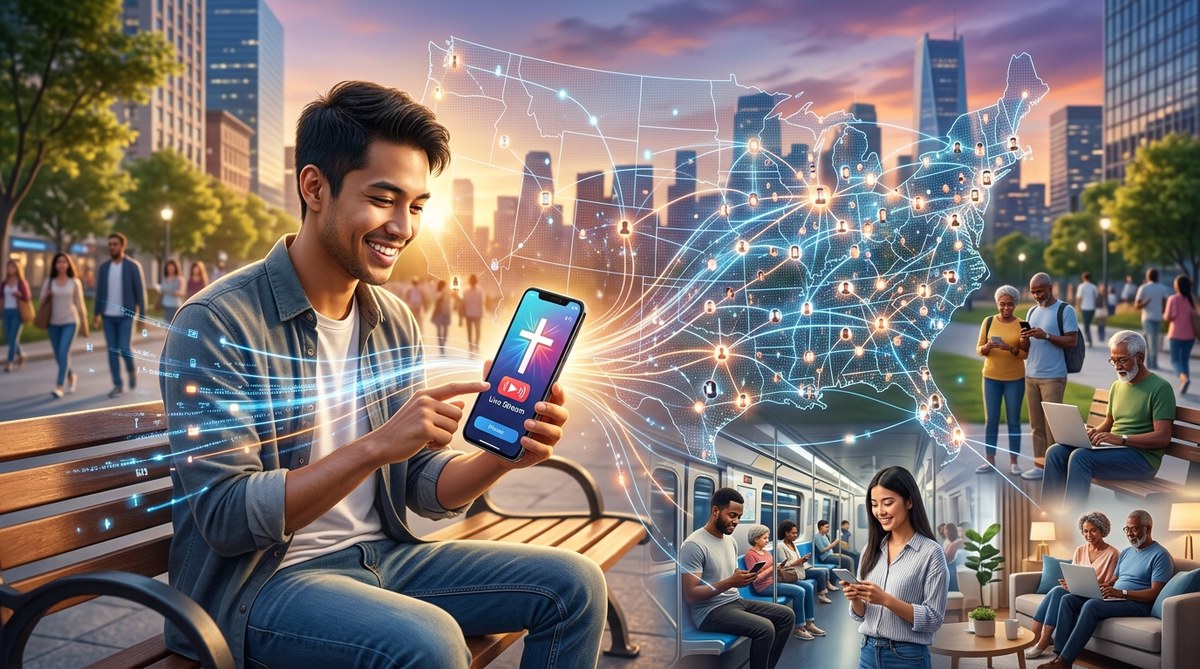
The American church is changing faster than most pastors realize. By the time you finish reading this sentence, another person will have searched online for answers about God, faith, or the meaning of life. And they probably won’t find it through a church website. In 2026, the gap between people who are spiritually curious and people who walk through your church doors has never been wider. But here is the good news: that gap is also more bridgeable than ever.
Church trends 2026 show a clear pattern: 76 million unchurched Americans are spiritually open but digitally unreached by traditional congregations. Pastors who adopt digital first outreach, create genuine online community, and meet people where they already spend their time will see growth. Those who wait risk being left behind as the spiritual landscape shifts permanently.
The Numbers That Should Wake Every Church Leader
Barna Research dropped a statistic in 2025 that still echoes through every strategy meeting: 76 million American adults say they are spiritually open but never attend church. That number has not shrunk. If anything, it has grown.
Let that sink in for a moment. That is more people than the entire population of California, Texas, and Florida combined. And they are not hostile to faith. They are simply disconnected from the way most churches do ministry.
The biggest church trends 2026 reveal a few critical shifts:
- People under 40 prefer text based conversations over phone calls.
- 63% of unchurched Americans say they would engage with a church if it offered clear, non judgmental answers to their faith questions online.
- The average person spends over 6 hours per day on digital platforms.
- Most churches still spend less than 5% of their budget on digital outreach.
The math does not add up. The harvest is ready, but the tools are not being used.
How Digital Ministry Is Reaching Millions in 2026
You might think digital ministry means livestreaming your Sunday service. That is a small piece of the puzzle, but it is not the whole picture.
The most effective digital ministries in 2026 do something different. They go where the people are. They do not wait for people to come to them.
Here is what that looks like in practice:
-
Create content that answers real questions. People search for “Why does God allow suffering?” far more often than they search for “church near me.” Start there. Answer the hard questions with honesty and grace. If you need a starting point, check out this guide on why does God allow suffering?.
-
Build a presence on platforms people actually use. That might be YouTube, Instagram, TikTok, or even WhatsApp groups. The platform matters less than the consistency of your presence.
-
Use short form video as a front door. A 60 second video answering a common question can reach more people in one week than a church service reaches in a month.
-
Follow up with warmth, not pressure. When someone engages with your content, send them a personal message. Ask what they are struggling with. Offer a free resource like a guide on how to read the Bible for the first time.
-
Track what works and double down. Use analytics to see which topics get the most engagement. Then create more content on those topics.
Common Mistakes Churches Make With Digital Outreach
Many well intentioned churches try digital ministry but get disappointing results. Here is a breakdown of what typically goes wrong versus what works.
| Mistake | Why It Fails | Better Approach |
|---|---|---|
| Posting only sermon clips | Low engagement, feels like advertising | Create content that answers questions people are actually asking |
| Using corporate language | Feels cold and impersonal | Write like you talk, use “I” and “you” naturally |
| Ignoring comments and DMs | People feel ignored | Respond to every message within 24 hours |
| Focusing only on one platform | Misses huge audiences | Test 3 platforms, then focus on the top 2 |
| No follow up system | People slip away | Build an email or SMS list for ongoing connection |
“The biggest mistake I see churches make is treating digital ministry like a bulletin board. They post and hope. But digital ministry is a conversation. It requires listening first, then responding.” — Carey Nieuwhof, church leadership author and podcaster.
What Gen Z and Young Adults Actually Want From Church
One of the most surprising church trends 2026 is the return of young adults to faith communities. But they are not coming back the way their grandparents did.
They want:
-
Authenticity over polish. They would rather watch a shaky phone video of a pastor admitting they don’t have all the answers than a professionally produced service that feels scripted.
-
Community before content. Young adults join because they find a small group or a friend first. The sermon is secondary.
-
Clear teaching on core beliefs. Many young adults grew up with little to no religious education. They need basics. A resource like 5 core beliefs every Christian should understand can be a great starting point for your outreach content.
-
Opportunities to serve. They want to know their faith makes a difference in the real world. They care about justice, poverty, and loneliness.
-
Permission to doubt. Young adults are skeptical of certainty. They respond well to leaders who say “I don’t know, but let’s figure it out together.”
The Role of AI and Automation in Church Growth
Artificial intelligence sounds like a scary term for a lot of pastors. But in 2026, AI is simply a tool. Used well, it can free up your time for what matters most: people.
Here are practical ways churches are using AI in 2026:
-
Chatbots for first contact. When someone visits your website at 2 AM with a question about baptism, a chatbot can offer a warm, helpful response. It can even connect them to a real person the next morning.
-
Content repurposing. AI tools can turn a 30 minute sermon into 5 social media posts, a blog article, and a discussion guide. This saves hours each week.
-
Personalized follow ups. AI can help segment your email list so new believers get different content than long time members. Someone who just learned about what it means to be born again should not get the same email as someone who has been a Christian for 30 years.
-
Translation and accessibility. AI can translate your content into multiple languages, making your church accessible to a wider audience.
But remember: AI should never replace human connection. It should only make human connection more possible by handling the repetitive tasks.
How to Start a Digital Ministry Without a Big Budget
You do not need a film crew or a six figure budget. Some of the most effective digital ministries started with a single smartphone and a lot of heart.
Here is a simple plan to begin:
-
Pick one platform. Do not try to do everything at once. Choose YouTube, Instagram, or TikTok. Master one before adding another.
-
Commit to consistency. Post three times per week for 90 days. Most churches give up after 2 weeks. The ones who stick with it see results.
-
Answer one question per post. Use the search bar on Google or YouTube to find what people are asking. Type in “Why does…” and see what autocomplete suggests. Those are real questions from real people.
-
Invite conversation. End every post with a question. “Have you ever wondered about this?” or “What do you think?” Then actually respond to the comments.
-
Connect digital to physical. When someone engages with you online, invite them to a low pressure event. A coffee meetup. A small group. A Q&A session. Do not invite them to a Sunday service first. Build trust slowly.
The Future of Sunday Morning
Does this mean Sunday services are dying? Not at all. In person worship is still the heart of the church. But its role is shifting.
In 2026, Sunday morning is becoming the destination, not the front door. People discover your church online, build trust through your content, connect with a small group, and then eventually show up on Sunday.
This is a reversal of the old model where Sunday was the entry point. Now, Sunday is the place where relationships deepen, not where they begin.
Church leaders who understand this shift are seeing growth. Those who keep treating Sunday as the only way in are watching their numbers decline.
A Practical Roadmap for 2026
Let me give you a straightforward plan you can implement this week.
| Timeframe | Action | Expected Outcome |
|---|---|---|
| Week 1 | Audit your current digital presence. What platforms are you on? What content is working? | Clear picture of where you stand |
| Week 2 | Choose one platform and create a content calendar for 30 days | Consistency begins |
| Week 3 | Start answering one faith question per day on social media | Increased engagement |
| Week 4 | Set up a simple follow up system (email list or SMS) | People stop slipping away |
| Month 2 | Launch a small group that meets online first, then in person | New community forms |
| Month 3 | Review analytics and adjust | Growth becomes measurable |
Why This Moment Matters More Than You Think
The church trends 2026 are not just statistics. They represent real people. People who are lonely, searching, and hoping someone will meet them where they are.
Your congregation likely has members who are already doing this informally. They share faith content on their personal pages. They answer friends’ questions about God over text message. They invite coworkers to small groups.
The question is: are you equipping them? Are you giving them content they can share? Are you making it easy for them to invite others?
If you want to go deeper on the theology behind the message you are sharing, this article on the gospel message explained in simple terms can help you clarify your core teaching.
The One Thing That Changes Everything
If you take nothing else from this article, take this: start a conversation.
Stop broadcasting. Stop waiting for people to find your building. Go where they are. Listen to their questions. Answer with honesty. Invite them into real relationship.
The 76 million unchurched Americans are not the problem. They are the mission field. And in 2026, the tools to reach them are in your hands.
Your Next Step Starts Today
You do not need permission. You do not need a committee. You do not need a perfect plan.
You just need to start.
Record a 60 second video answering one question someone asked you this week. Post it. See what happens.
You might be surprised at who is listening.