
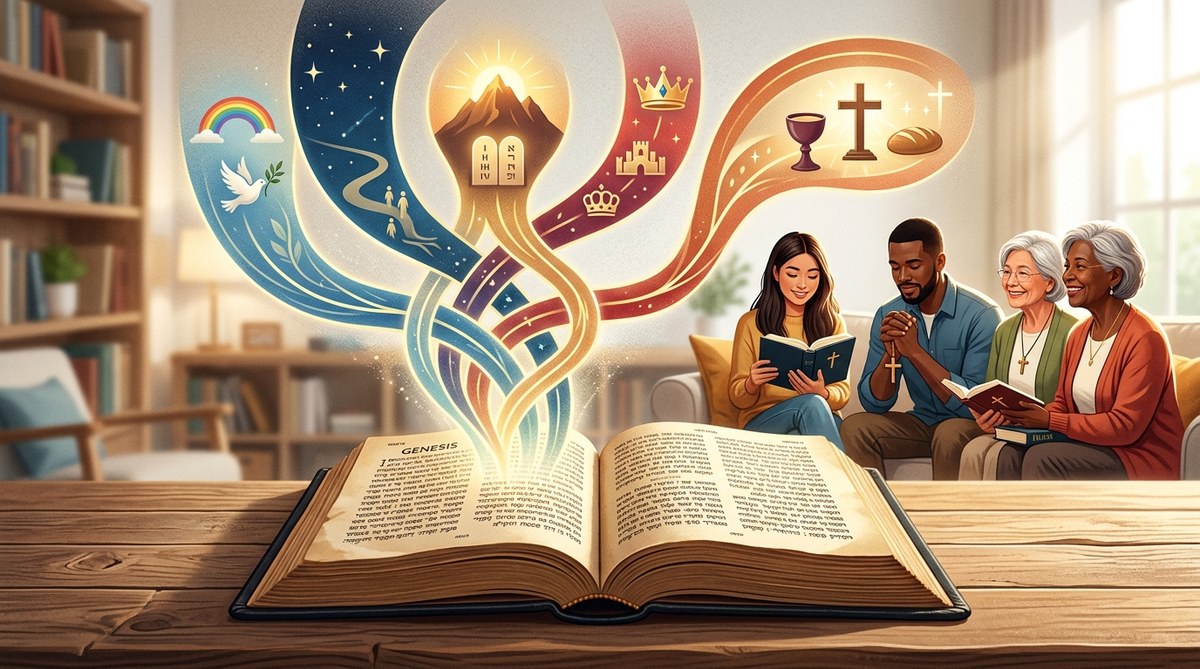
The Bible can feel like a long, sprawling story. You have kings, prophets, poems, and letters. But underneath it all runs a strong thread that holds everything together. That thread is the biblical covenants. A covenant is a solemn agreement, but in Scripture it is much more than a contract. It is God’s way of binding himself to his people with promises, signs, and lasting commitment. When you understand these covenants, the whole Bible starts to make sense. You see God’s plan unfolding from Eden to the cross, and you realize how deeply your own faith is connected to promises made thousands of years ago.
Biblical covenants are God’s binding promises that reveal his character and his plan for humanity. The six major covenants (Adamic, Noahic, Abrahamic, Mosaic, Davidic, and New Covenant) form the backbone of Scripture. Each one builds toward Jesus, showing how God remains faithful even when people fail. Recognizing these covenants helps you read the Bible with clarity and trust God’s promises in your daily life.
What Are Biblical Covenants?
A covenant is more than a handshake. In the ancient world, a covenant was a life-shaping agreement between two parties, often sealed with a ceremony and a visible sign. When God makes a covenant, he takes the initiative. He decides to relate to his creation in a specific way. Some covenants are conditional, requiring human obedience. Others are unconditional, relying entirely on God’s grace. All of them point forward to Jesus Christ, who fulfills every promise.
If you have ever read the Bible and felt lost in the details, the covenants give you a map. They mark the major turning points in the story. By learning the six key covenants, you can see how the Old Testament prepares for the New, and how your own life fits into God’s grand narrative.
The Six Key Covenants in Scripture
Below are the six major covenants that the Bible presents. Each one reveals something new about God and his relationship with people.
1. The Covenant with Adam (The Edenic Covenant)
Some theologians call this the Covenant of Works or the Covenant of Creation. In Genesis 1-2, God gives Adam and Eve a command to be fruitful, fill the earth, and rule over it. He places them in Eden and tells them not to eat from the tree of the knowledge of good and evil. The blessing of life is tied to obedience. When Adam breaks the covenant, sin and death enter the world. But even in judgment, God promises a future offspring who will crush the serpent’s head. This is the first hint of the gospel. The Edenic covenant sets the stage for everything that follows.
2. The Noahic Covenant
After the flood, God makes a covenant with Noah and every living creature. He promises never to destroy the earth by flood again. The sign is a rainbow. This covenant is unconditional and universal. It shows God’s mercy and his commitment to sustain the world despite human sin. The Noahic covenant assures us that God keeps his word, and it gives us a foundation for trusting him even when life feels chaotic. For more on how God’s mercy works in your life, check out this article on understanding sin, grace, and forgiveness.
3. The Abrahamic Covenant
God calls Abraham out of Ur and makes a stunning promise: he will give him a land, make him a great nation, and bless all the families of the earth through him. This covenant is unconditional and permanent. Abraham believes God, and it is credited to him as righteousness. The sign is circumcision. The Abrahamic covenant reveals God’s heart to bless not just one family but the whole world. It is the foundation for the nation of Israel and the coming of the Messiah. If you want to understand the core beliefs that flow from this promise, read about the 5 core beliefs every Christian should understand.
4. The Mosaic Covenant
At Mount Sinai, God gives the Law to Israel. This covenant is conditional: if Israel obeys, they will be a kingdom of priests and a holy nation. If they disobey, curses follow. The Law includes the Ten Commandments and many other rules. The Mosaic covenant shows God’s holy standards and exposes human sin. It is not a way to earn salvation; it points to the need for a perfect sacrifice. The tabernacle and the priesthood foreshadow Jesus, our High Priest. The Mosaic covenant teaches us that we cannot save ourselves and that grace is essential.
5. The Davidic Covenant
God promises King David that his throne will be established forever. His descendant will reign eternally. This covenant is unconditional and directly points to Jesus, the Son of David. The Davidic covenant gives hope that God will send a righteous king to rule with justice and peace. It reminds us that God’s kingdom is coming. Every time we pray “Your kingdom come,” we are echoing the promises made to David.
6. The New Covenant
The prophet Jeremiah foretells a new covenant, different from the one made at Sinai. God will write his law on hearts, forgive sins completely, and bring people into a personal relationship with him. Jesus inaugurates this covenant through his blood. The New Covenant is the fulfillment of all the previous ones. It offers salvation by grace through faith, available to Jew and Gentile alike. This is the covenant we live under today. It changes everything. For a deeper look at what it means to be part of this covenant, see what does it really mean to be born again.
How These Covenants Connect to Your Faith Today
Understanding covenants is not just an academic exercise. They shape how you read the Bible and how you trust God.
- You see God’s faithfulness: Each covenant shows that God keeps his promises, even when people fail.
- You recognize your need for a Savior: The Mosaic covenant reveals your sin; the New Covenant provides forgiveness.
- You find your identity: Through Abraham, you are part of God’s family by faith.
- You have hope for the future: The Davidic covenant assures you that Jesus will return to reign.
Here are three practical ways to live in light of the covenants:
- Read the Bible with covenant lenses. When you open Genesis, look for the covenant promises. Notice how each book builds on the previous ones. This will help you see the unity of Scripture.
- Rest in God’s unconditional promises. The New Covenant is based on what Jesus did, not on your performance. You do not have to earn God’s love. You can trust that he will finish what he started.
- Share the blessing. Abraham was blessed to be a blessing. You are part of that same commission. Look for opportunities to show God’s love to others, both in word and deed.
For a systematic way to study these truths, consider this guide on how to study the Bible effectively for beginners.
Common Misunderstandings About Biblical Covenants
People sometimes misunderstand covenants. The table below clears up a few common mistakes.
| Misunderstanding | Truth |
|---|---|
| Covenants are just old religious contracts. | Covenants are personal, binding relationships initiated by God. They reveal his character. |
| The Old Testament covenants are irrelevant today. | They lay the foundation for the New Covenant and teach us about God’s holiness, grace, and faithfulness. |
| The Mosaic covenant is still the way to be saved. | The Law was never meant to save; it pointed to our need for Christ. Salvation has always been by faith. |
| The New Covenant replaces the Old Testament completely. | It fulfills and transforms the previous covenants, but the Old Testament still contains valuable instruction and promises. |
| Only Jews are part of the covenants. | Through Christ, Gentiles are grafted into the promises made to Abraham and David. |
“The covenants are not just historical artifacts; they are the living structure of God’s relationship with his people. When you grasp them, you grasp the heart of the gospel.”
— Adapted from the teaching of N.T. Wright
Make God’s Covenants Personal
Knowing about the six key covenants is one thing. Letting them shape your faith is another. Start by thanking God for his faithfulness to Noah, Abraham, Moses, David, and finally to you. Ask the Holy Spirit to show you how each covenant speaks into your current situation. Maybe you need the assurance of the Noahic covenant when life feels unstable. Maybe you need the hope of the Davidic covenant when you feel powerless. Or maybe you need the grace of the New Covenant when guilt weighs you down.
The God of the covenants is still making and keeping promises today. He has not changed. The same God who spoke to Adam and Abraham, who gave the Law and the rainbow, who promised a King and then sent his Son, is your God. You can trust him.
Take a moment right now to reflect on one covenant promise that stands out to you. Write it down. Pray it back to God. Let it become a steady anchor for your faith. For more on building a daily habit of connecting with God, read about 7 daily habits that will transform your prayer life. The story is not over. You are part of it.