

The question of why humans consistently act against their own best interests has puzzled philosophers for millennia. We know we should be kinder, more patient, more honest. Yet we fail repeatedly. Christian theology offers a specific answer: original sin. This doctrine doesn’t just explain isolated moral failures. It presents a comprehensive framework for understanding human nature itself.
The doctrine of original sin explains human nature as fundamentally corrupted from birth, not through personal choice but through inherited spiritual condition. This theological framework accounts for universal moral failure, the gap between human ideals and actions, and why even well-intentioned people cause harm. It offers both diagnosis and hope through redemption narratives central to Christian thought.
What Original Sin Actually Means
Original sin refers to the theological concept that humanity inherited a corrupted nature from Adam and Eve’s disobedience in the Garden of Eden. This isn’t about individual wrongdoing. It’s about a spiritual condition present from birth.
The doctrine emerged primarily through Augustine of Hippo in the fourth and fifth centuries. He argued that Adam’s sin wasn’t just his own mistake. It fundamentally altered human nature for all descendants. Every person born after that moment carries this spiritual corruption.
Different Christian traditions interpret this differently. Roman Catholic theology teaches that baptism removes the guilt of original sin while leaving concupiscence (the tendency toward sin) intact. Protestant reformers like John Calvin emphasized total depravity, meaning every aspect of human nature became corrupted, though not to the maximum possible degree.
Eastern Orthodox Christianity takes a softer approach. They speak more of ancestral sin, focusing on mortality and separation from God rather than inherited guilt. The distinction matters because it changes how we understand human agency and moral responsibility.
How This Doctrine Explains Human Behavior
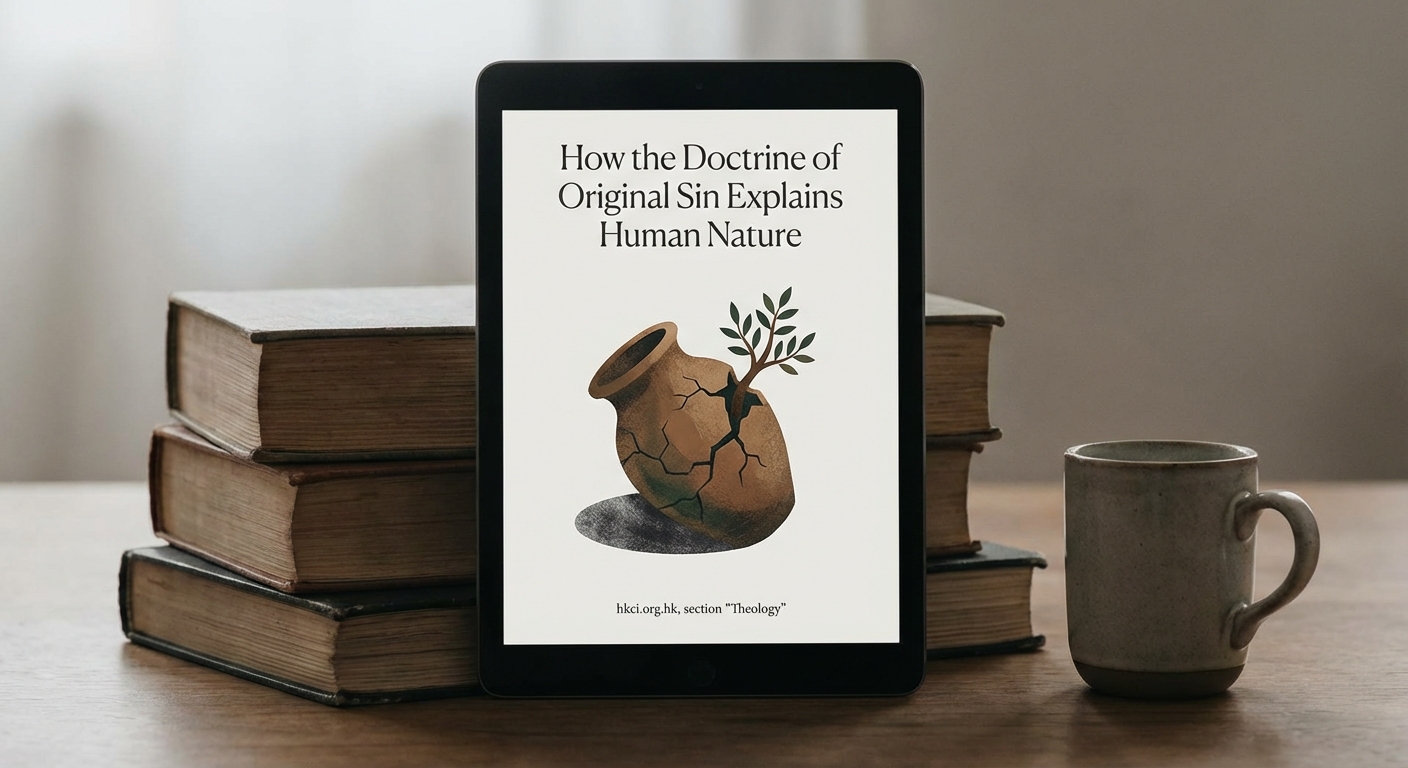
The doctrine of original sin provides explanatory power for patterns we observe constantly. Why do children lie without being taught? Why do societies repeatedly fall into cycles of violence despite knowing better? Why does self-interest so often override compassion?
Traditional moral philosophy struggles with these questions. If humans are basically good, or blank slates, or rational actors, why do we see such consistent patterns of selfishness, cruelty, and irrationality?
Original sin offers a different starting point. Humans aren’t neutral beings who sometimes choose evil. We’re beings with a built-in inclination toward it. This doesn’t eliminate free will or moral responsibility. It explains why moral effort feels like swimming upstream.
Consider these behavioral patterns the doctrine addresses:
- Universal presence of selfishness across all cultures and time periods
- The gap between knowing what’s right and doing it
- Why moral education alone doesn’t produce moral people
- The tendency to rationalize harmful actions
- How good intentions still produce destructive outcomes
- Why social reforms often fail to change human nature
The apostle Paul captured this internal conflict perfectly: “I do not understand what I do. For what I want to do I do not do, but what I hate I do.” This passage from Romans 7 resonates because it describes lived experience.
The Theological Logic Behind Inherited Corruption
How does one person’s sin transfer to billions of descendants? This question has generated enormous theological debate.
Federal headship theory suggests Adam acted as humanity’s representative. When he sinned, he did so on behalf of all future humans. His guilt became ours legally, like citizens bearing responsibility for their government’s actions.
Natural headship theory argues we were seminally present in Adam. Since all humans descend from him, we were “in him” when he sinned. This makes the guilt more directly ours, though still inherited rather than personally chosen.
Realist theories go further, suggesting human nature itself became corrupted. Sin isn’t just imputed or legally transferred. The very substance of what makes us human changed. We inherit a nature that’s oriented away from God.
These aren’t just abstract philosophical positions. They shape how Christians understand salvation, grace, and human potential. If the problem is legal guilt, legal pardon solves it. If the problem is corrupted nature, we need transformation.
Connecting Doctrine to Daily Experience
Theory becomes meaningful when it connects to lived reality. Here’s how original sin relates to common human experiences:
-
Moral knowledge doesn’t guarantee moral action. You know you should exercise, eat better, be more patient with your family. You genuinely want these things. Yet you consistently fail. The doctrine explains this gap not as weakness of will alone but as a deeper misalignment in human nature.
-
Good people do terrible things. History shows that educated, cultured, religious people participate in atrocities. The Holocaust wasn’t carried out solely by monsters. Ordinary people with families and hobbies systematically murdered millions. Original sin accounts for how moral corruption exists even in those who seem civilized.
-
Children display selfishness spontaneously. Parents don’t teach toddlers to grab toys or hit siblings. These behaviors emerge naturally. The doctrine suggests this isn’t just developmental psychology but evidence of innate moral corruption.
“The doctrine of original sin is the only empirically verifiable doctrine of the Christian faith.” This quote, often attributed to G.K. Chesterton, highlights how observable human behavior consistently confirms what the doctrine predicts.
Comparing Theological Perspectives
Different traditions emphasize different aspects of how original sin affects human nature:
| Tradition | View of Corruption | Transmission Method | Remedy |
|---|---|---|---|
| Catholic | Nature wounded, not destroyed | Through propagation | Baptism removes guilt; grace heals nature |
| Lutheran | Total corruption of will | Inherited guilt and nature | Faith alone; grace completely external |
| Calvinism | Total depravity of all faculties | Federal headship | Irresistible grace for the elect |
| Eastern Orthodox | Mortality and separation | Ancestral consequence | Theosis through participation in divine life |
| Arminian | Corruption but prevenient grace | Inherited tendency | Resistible grace; human cooperation |
These differences aren’t trivial. They determine whether humans retain any capacity to respond to God, whether salvation is universal or particular, and how grace functions.
Philosophical Objections and Responses
The doctrine faces serious philosophical challenges. Critics argue it’s unjust to hold people responsible for actions they didn’t commit. How can inherited guilt be fair?
Defenders respond several ways. Some argue we’re not punished for Adam’s sin but for our own sins, which flow inevitably from our corrupted nature. Others point out that we accept inherited benefits (genetic traits, cultural advantages) without complaint, so inherited liabilities aren’t categorically different.
Another objection: if sin is inevitable due to corrupted nature, how can we be morally responsible? Doesn’t this eliminate genuine choice?
Theological responses distinguish between necessity and compulsion. We necessarily sin because of our nature, but we’re not compelled against our will. We sin willingly, even eagerly. The corruption affects our desires themselves, not just our capacity to fulfill them.
The problem of infant mortality raises acute questions. If unbaptized infants carry original sin, what happens to them? Different traditions offer different answers, from limbo to universal infant salvation to insisting on baptism’s absolute necessity.
Psychological and Social Implications
The doctrine shapes how Christians view human potential and social reform. If human nature is fundamentally corrupted, what hope exists for moral progress?
Pessimistic readings suggest limited expectations. Humans will always be selfish, violent, and corrupt. Social reforms might manage these tendencies but can’t eliminate them. This view can justify political conservatism and skepticism about human perfectibility.
More optimistic readings emphasize redemption. Yes, humans are corrupted, but grace can transform. The same doctrine that diagnoses the problem points toward the solution. This creates space for both realism about human nature and hope for change.
Psychologically, the doctrine can function in healthy or unhealthy ways. Healthy appropriation acknowledges human limitations without excusing personal responsibility. It creates humility and compassion, recognizing that everyone struggles with moral failure.
Unhealthy appropriation uses the doctrine to excuse harmful behavior (“I’m just a sinner”) or to foster self-hatred (“I’m fundamentally worthless”). Proper theological understanding distinguishes between corrupted nature and human dignity as image-bearers of God.
Modern Scientific Perspectives
Evolutionary psychology and neuroscience offer alternative explanations for behaviors the doctrine addresses. Selfishness, violence, and moral inconsistency can be explained through evolutionary adaptation and brain function.
Does this make original sin obsolete? Not necessarily. Some theologians argue that evolutionary processes might be the mechanism through which original sin operates. The “how” of corruption doesn’t eliminate the theological “why.”
Others maintain that scientific and theological explanations operate at different levels. Science describes mechanisms; theology addresses meaning and purpose. Knowing the neurological basis for moral failure doesn’t answer whether that failure represents deviation from how humans should be.
Genetic research on behavioral tendencies raises interesting parallels. We inherit predispositions toward addiction, aggression, or mental illness. These aren’t chosen but profoundly shape behavior. Original sin functions similarly at a spiritual level.
The concept of epigenetics, where environmental factors affect gene expression across generations, provides a biological analog to inherited spiritual corruption. Trauma can be passed down through generations, affecting descendants who didn’t experience the original event.
Practical Applications for Understanding Ourselves
How does this doctrine help in daily life? Several practical implications emerge:
Self-awareness improves. Recognizing innate moral corruption prevents naive optimism about your own goodness. You’re capable of more selfishness and cruelty than you’d like to admit. This awareness creates vigilance.
Compassion for others increases. If everyone struggles with corrupted nature, moral failure becomes more understandable. This doesn’t excuse harmful behavior but provides context. The person who wronged you isn’t uniquely evil. They’re human.
Expectations become realistic. You won’t achieve moral perfection through effort alone. This prevents the despair that comes from repeated failure. Progress is possible, but it’s gradual and requires grace beyond human capacity.
Dependence on grace becomes central. If the problem is this deep, self-improvement strategies won’t solve it. You need transformation from outside yourself. This drives the Christian emphasis on divine grace rather than human achievement.
Why Human Nature Needs More Than Moral Instruction
Education assumes that knowledge produces virtue. Teach people what’s right and they’ll do it. But experience contradicts this constantly.
The most educated societies have committed terrible atrocities. Moral philosophy professors aren’t noticeably more ethical than others. Knowing the good doesn’t produce doing the good.
Original sin explains this gap. The problem isn’t ignorance but nature. We know we should be generous, patient, and honest. We fail not because we don’t know better but because we’re fighting against our own inclinations.
This doesn’t mean education is worthless. It means education alone is insufficient. Moral formation requires more than information. It requires transformation of desires, not just enlightenment of mind.
Classical virtue ethics recognized this partially. Aristotle knew that virtue required habituation, not just knowledge. But Christian theology goes deeper, arguing that even habituation can’t fully overcome corrupted nature without grace.
The Connection Between Personal and Corporate Sin
Original sin operates at both individual and collective levels. Each person inherits corrupted nature. But this corruption also manifests in social structures, cultural patterns, and institutional evil.
Racism, economic exploitation, and environmental destruction aren’t just collections of individual bad choices. They’re systemic patterns that transcend any single person’s decisions. Yet they emerge from and reinforce individual corruption.
The doctrine helps explain how good people participate in evil systems. You don’t have to be consciously malicious to benefit from injustice. Corrupted nature makes us naturally self-interested, and social structures channel that self-interest into collective harm.
This creates moral complexity. You’re responsible for your participation in unjust systems, but you’re also shaped by forces beyond your control. The doctrine holds both truths simultaneously: genuine responsibility and genuine limitation.
Living With Theological Realism
Understanding original sin and human nature creates a particular way of moving through the world. You expect people to be selfish, including yourself. You’re not surprised by moral failure. You don’t place ultimate hope in human progress.
This could produce cynicism. But properly understood, it produces something different: hopeful realism. You see human nature clearly without despairing because the same theological framework that diagnoses the problem offers redemption.
You work for justice while knowing perfect justice won’t arrive through human effort alone. You pursue personal growth while recognizing your ongoing need for grace. You love others while maintaining clear-eyed awareness of human capacity for harm.
The doctrine functions as both mirror and medicine. It shows you what you are: corrupted, limited, prone to evil. But it also points beyond yourself to transformation possible only through divine intervention.
This framework has sustained Christian thought for centuries because it matches lived experience. We are capable of remarkable goodness and terrible evil, often simultaneously. We aspire to transcendence while remaining bound to selfishness. We’re moral beings who consistently fail morally.
Original sin and human nature remain inseparable in Christian theology. Understanding one requires understanding the other. The doctrine isn’t just historical theology. It’s a lens for interpreting the human condition, explaining both our highest achievements and our worst failures. Whether you accept its truth claims or not, it offers a coherent explanation for patterns that demand explanation.