
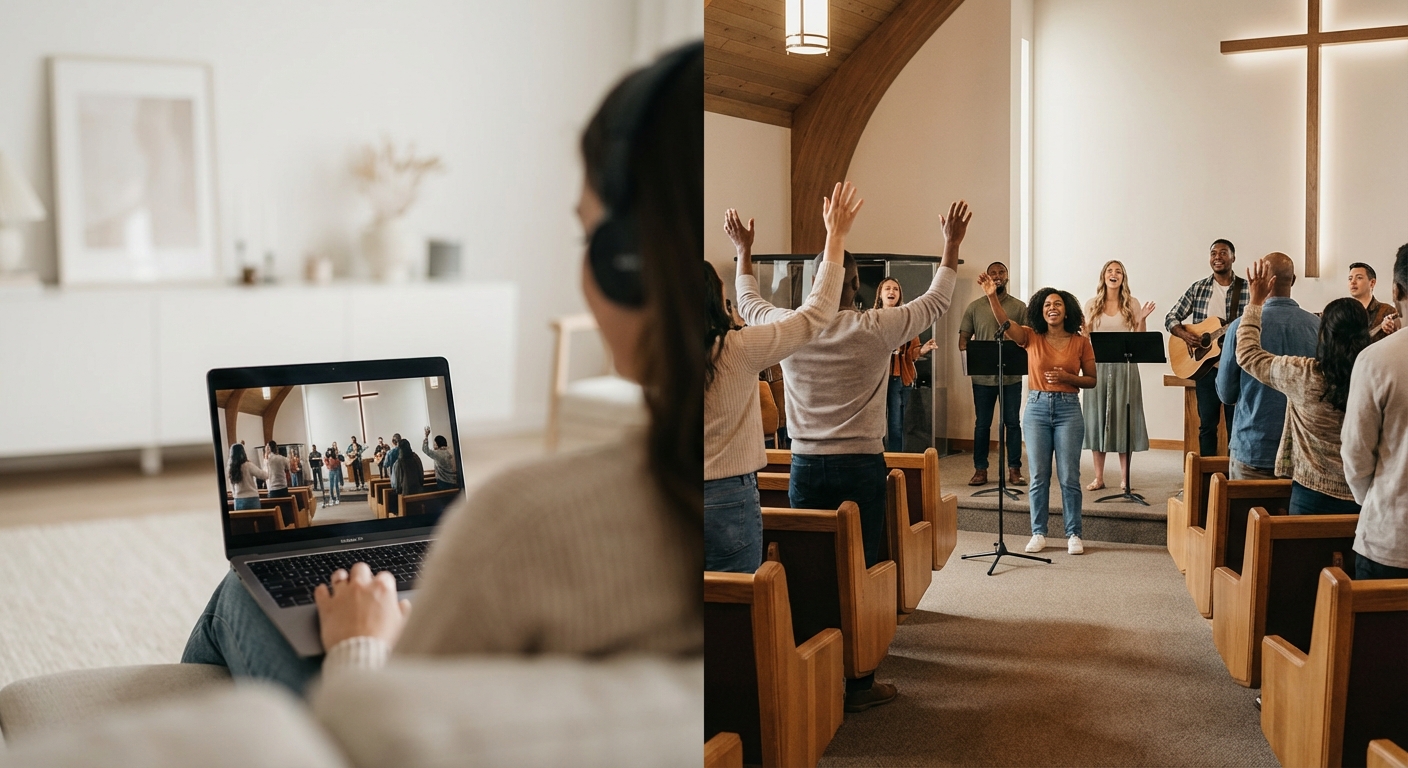
There’s something profound that happens when believers gather in the same room. The sound of voices joining together, the awareness of another person’s presence beside you, the shared silence before prayer begins. These elements create an experience that transcends what any screen can deliver.
Corporate worship matters because it builds authentic Christian community, provides mutual accountability, enables physical expressions of faith, and fulfills biblical mandates for gathering. While online services offer convenience, they cannot replace the spiritual formation that occurs through in-person fellowship. Physical presence creates bonds that strengthen individual faith and collective witness in ways virtual attendance simply cannot match.
Biblical foundations for gathering together
Scripture speaks clearly about the necessity of physical gathering. The writer of Hebrews instructs believers not to forsake “the assembling of ourselves together” (Hebrews 10:25). This wasn’t a suggestion for convenience. It was a command rooted in understanding how faith grows.
The early church met daily in homes and weekly in larger gatherings. They broke bread together, prayed face to face, and shared resources in person. Acts 2:42-47 paints a picture of believers who were “together” and had “all things in common.” That physical proximity wasn’t incidental to their faith. It was central to it.
Paul’s letters consistently address specific congregations meeting in specific places. He wrote to the church at Corinth, at Ephesus, at Philippi. These were real people gathering in real spaces. The New Testament assumes physical assembly as the normal pattern of Christian life.
When Jesus promised “where two or three are gathered together in my name, there am I in the midst of them” (Matthew 18:20), he spoke of actual gathering. Not virtual connection. Not simultaneous viewing from separate locations. Actual physical presence in a shared space.
What you lose through a screen
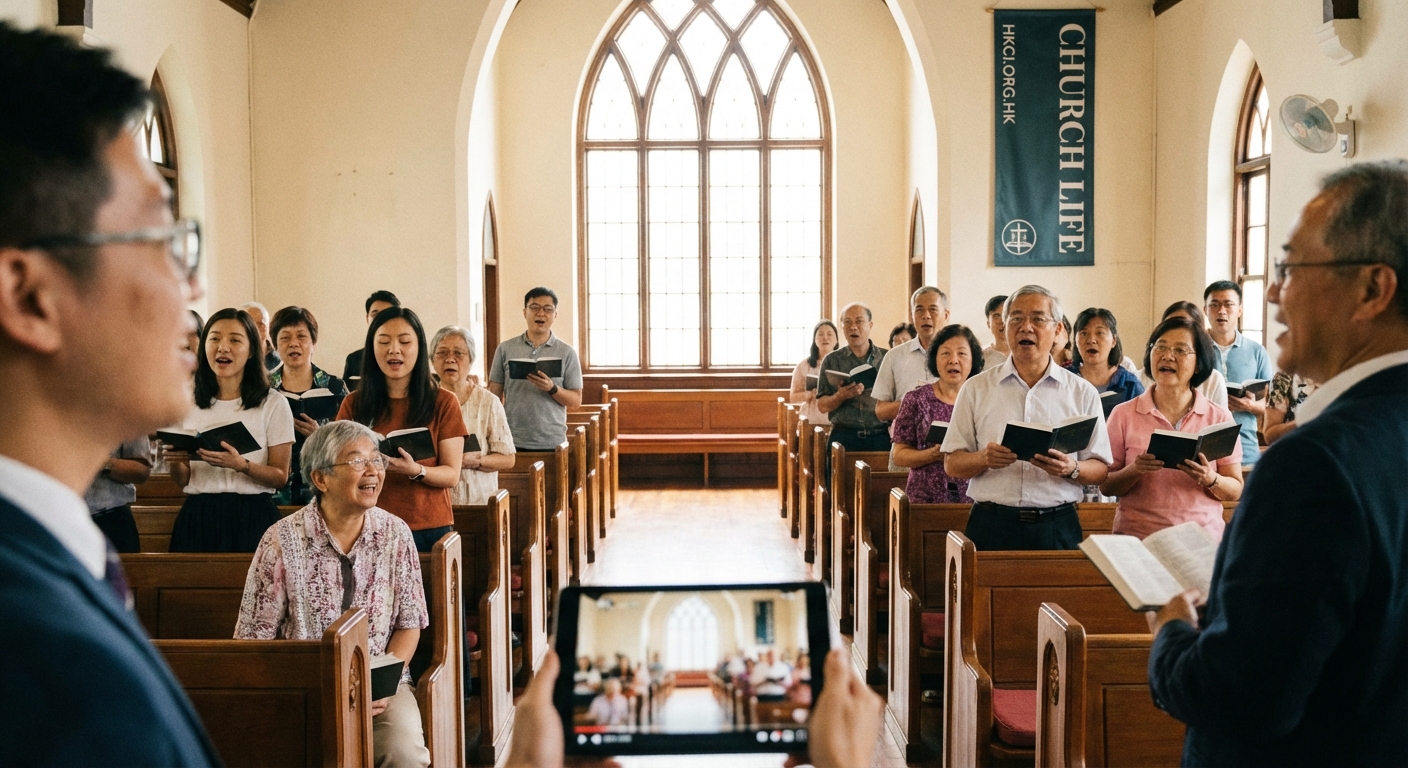
Online services provide access to teaching and music. They allow participation when distance or illness prevents attendance. But they cannot replicate several critical elements of corporate worship.
You lose the accountability that comes from being seen. When you attend virtually, no one knows if you’re truly engaged or scrolling through other content. No one notices if you skip communion or leave early. That accountability isn’t about judgment. It’s about the mutual care that happens when we know and are known by others.
You lose the spontaneous conversations that build community. The person who mentions a struggle after the service. The friend who offers to help with a practical need. The new believer who asks a question in the hallway. These interactions don’t happen through comment sections.
You lose the full sensory experience of worship. The smell of coffee brewing in the fellowship hall. The sound of children playing before service starts. The feeling of standing shoulder to shoulder during congregational singing. These physical elements anchor worship in embodied reality rather than digital abstraction.
You lose the opportunity to serve others physically. Greeting visitors, helping set up chairs, caring for children in the nursery. These acts of service form character and create bonds that virtual participation cannot match.
How physical presence shapes spiritual formation
Christian formation happens through repeated practices in community. You learn to worship by worshiping with others who model it. You develop prayer habits by praying alongside mature believers. You understand Scripture better through corporate study and discussion.
Physical presence creates natural mentoring relationships. Younger believers observe how older Christians handle trials, raise families, and make decisions. This happens organically when people share space over time. It rarely develops through digital interaction alone.
Corporate worship also trains us in submission and humility. You sing songs you didn’t choose. You listen to sermons on topics you didn’t request. You adjust your schedule to match the community’s rhythm. These small acts of deference to the body shape character in ways that consumer-oriented, on-demand content cannot.
The Lord’s Supper provides a clear example. Taking communion alone at home while watching a stream fundamentally changes the nature of the sacrament. The early church “came together” to break bread (1 Corinthians 11:20). The act was communal, not individualistic. Physical gathering preserves this communal dimension.
Practical benefits of in-person attendance
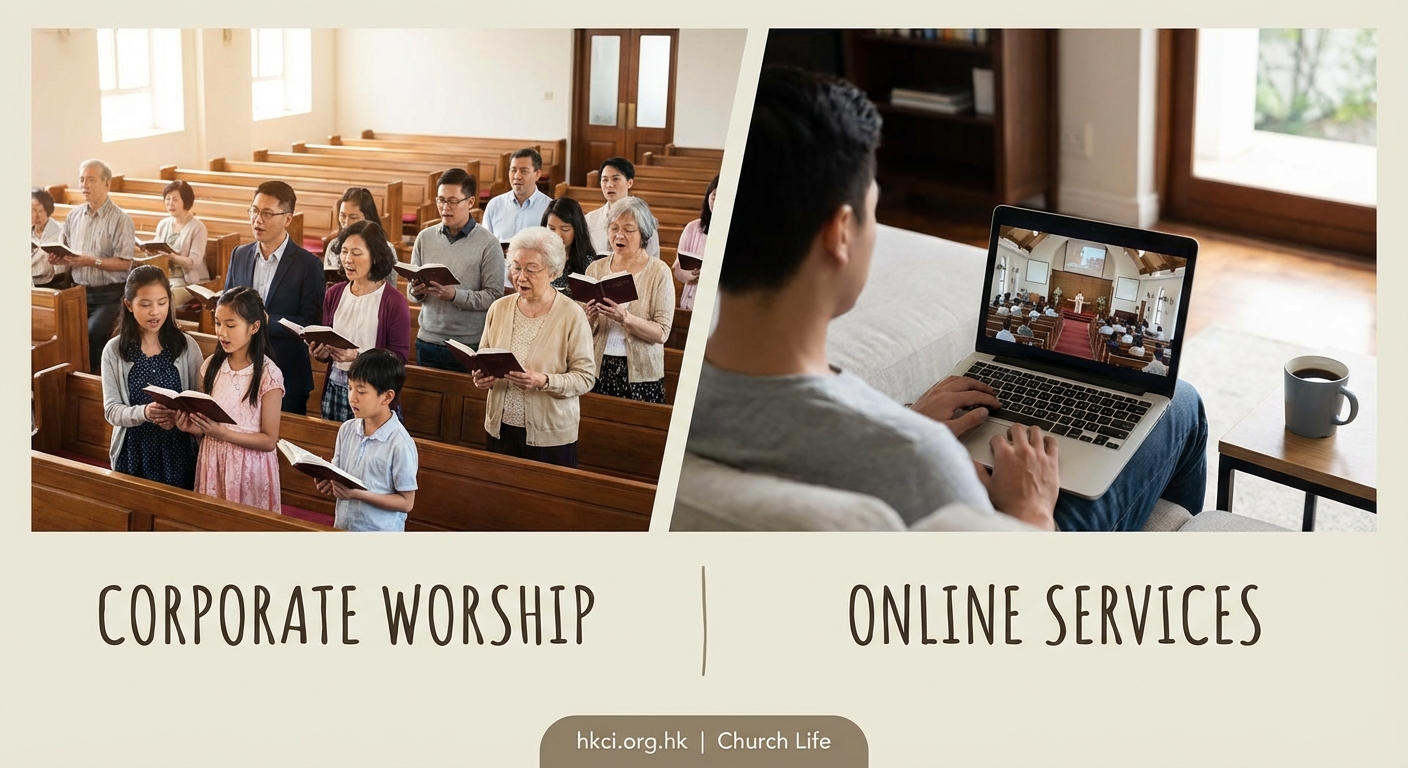
Beyond theological reasons, corporate worship offers practical advantages that matter for daily Christian life.
Stronger relationships: Face-to-face interaction builds trust faster and deeper than digital communication. You learn to read facial expressions, body language, and tone. You develop genuine friendships that sustain you through difficulty.
Better accountability: When people know your patterns, they notice changes. If you miss several services, someone reaches out. If you seem discouraged, someone asks how you’re doing. This care network functions best through regular physical contact.
Clearer communication: Misunderstandings happen less often in person. You can ask clarifying questions immediately. You can see when someone needs more explanation or support.
Natural discipleship: Spiritual growth accelerates when you’re around other believers regularly. You pick up habits, perspectives, and practices through observation and conversation.
Shared resources: Physical communities share more than information. They share meals, tools, time, and money. This practical generosity flows more naturally from in-person relationships.
Common objections addressed
Many people raise legitimate concerns about prioritizing in-person worship. Let’s address the most common ones.
| Objection | Response |
|---|---|
| I can worship God anywhere | True, but God commands corporate gathering for our benefit and mutual edification |
| Online is more convenient | Convenience isn’t the primary criterion for obedience or spiritual health |
| I get the same content online | Content is only one element; community, accountability, and service require presence |
| My schedule doesn’t allow it | Most schedules can accommodate what we truly prioritize |
| I feel closer to God at home | Feelings fluctuate; faithfulness to biblical patterns produces long-term growth |
| The church has hypocrites | Every church does, including the early church; that’s why we need community for sanctification |
Some situations genuinely prevent physical attendance. Severe illness, disability, or caregiving responsibilities create real barriers. Churches should provide online options for these members while recognizing that virtual attendance is a temporary accommodation, not the ideal.
But for most people, the shift to online worship stems from preference rather than necessity. We choose convenience over commitment. We prioritize comfort over community. We select what feels good over what forms us spiritually.
Building a culture that values gathering
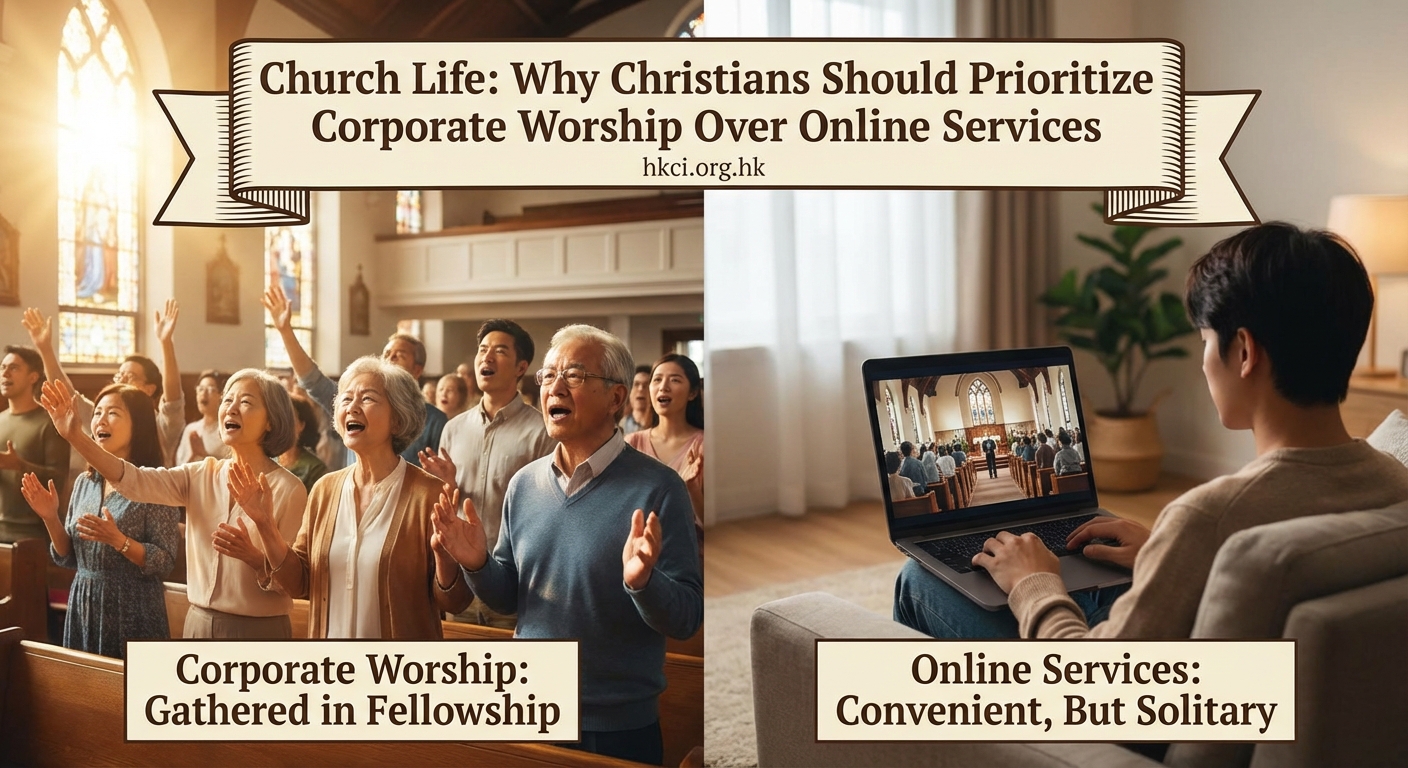
Church leaders play a critical role in shaping expectations around attendance. Here’s how to cultivate a culture that prioritizes physical presence:
-
Teach the theology clearly: Help members understand why gathering matters biblically, not just pragmatically. Ground the expectation in Scripture rather than tradition or preference.
-
Model consistent attendance: Leaders who frequently miss services signal that gathering isn’t truly important. Your presence communicates priority.
-
Create meaningful connection points: Don’t just hold services; build structures for relationship. Small groups, service teams, and fellowship meals give people reasons to show up beyond consuming content.
-
Celebrate in-person participation: Acknowledge and thank those who make the effort to attend. Share stories of how physical community has strengthened faith.
-
Address barriers thoughtfully: If transportation, childcare, or scheduling creates obstacles, work to remove them. Make attendance as accessible as possible without compromising the call to prioritize it.
-
Limit online options strategically: Provide streaming for those with genuine need, but don’t promote it as an equal alternative. Frame it as accommodation rather than preference.
“The church is not a building or a livestream. It’s a body. Bodies require physical presence to function properly. When we gather in person, we’re not just attending an event. We’re being the church, fulfilling our calling as members of Christ’s body on earth.”
What about technology’s role
Technology serves the church well when used appropriately. Online services help missionaries stay connected to home churches. They allow shut-ins to participate in worship. They provide resources for personal study and growth.
The problem comes when we treat technology as a substitute rather than a supplement. When we choose the screen over the sanctuary as our default. When we let convenience determine our commitment level.
Technology should enhance corporate worship, not replace it. A church might stream services for those who cannot attend while maintaining clear expectations that physical presence is the norm for able members. They might use apps to facilitate small group connection or prayer requests while emphasizing that digital tools support, rather than substitute for, face-to-face relationships.
The pandemic forced many churches online temporarily. That was appropriate for that season. But as restrictions lifted, some believers discovered they preferred the convenience of virtual attendance. They could stay in pajamas, skip the commute, and multitask during the sermon.
This preference reveals a consumer mentality toward worship. We approach church as a product to consume rather than a community to serve and a body to build. Physical attendance costs us something. Time, energy, and the discomfort of being around people different from us. But that cost produces spiritual maturity.
Restoring the priority of presence
If you’ve drifted toward primarily virtual attendance, here are practical steps to restore in-person worship as your priority:
-
Set a specific commitment: Decide to attend physically every Sunday for the next month, barring genuine emergency or illness. Treat it as non-negotiable.
-
Arrive early: Get there 15 minutes before service starts. Use that time to greet others, offer help, or simply sit in prayer. Early arrival shifts your posture from consumer to participant.
-
Stay after: Don’t rush out when the final song ends. Linger for conversation. Ask someone about their week. Offer encouragement to someone who seems discouraged.
-
Serve somewhere: Join a ministry team. Volunteer in the nursery. Help with setup or cleanup. Service creates investment and connection.
-
Invite accountability: Tell a friend or small group about your commitment. Ask them to check in with you and notice your attendance patterns.
Why your presence matters more than you think
You might think your absence doesn’t matter much. The church functions fine without you. Others fill the seats and sing the songs.
But that thinking misunderstands the nature of the body. Paul writes that every member is necessary (1 Corinthians 12:12-27). Your specific gifts, perspective, and presence contribute something unique. When you’re absent, the body lacks what you were designed to provide.
Your physical presence also encourages others. When you show up faithfully, you model commitment for newer believers. You strengthen the resolve of those tempted to skip. You create the critical mass that makes corporate worship feel truly corporate.
Children especially need to see adults prioritizing gathered worship. They learn what matters by watching what we prioritize. When we treat church attendance as optional or easily replaced by online viewing, we teach them that community and commitment are negotiable.
The witness of gathered worship
Corporate worship also bears witness to the watching world. When believers gather consistently despite busy schedules and competing demands, it demonstrates that something transcendent is happening. That this community centers on something worth rearranging life around.
A scattered church that meets primarily online looks like any other interest group or social network. A church that gathers physically, week after week, year after year, signals that this is different. This matters in a way that hobbies and preferences do not.
The unity displayed in corporate worship also testifies to the gospel’s power. When people from different backgrounds, ages, and perspectives gather as one body, it demonstrates reconciliation that the world cannot achieve. This visible unity requires physical presence. You cannot display what you do not practice.
Making the shift back to physical priority
If your church has struggled to rebuild in-person attendance after pandemic disruptions, the path forward requires patience and intentionality. People have formed new habits. Breaking those habits takes time and consistent messaging.
Start by clearly articulating expectations. Don’t assume people know that in-person attendance matters to church leadership. State it explicitly from the pulpit, in newsletters, and in conversations. Ground the expectation in Scripture and theology.
Create positive reasons to attend beyond obligation. Plan fellowship meals, ministry fairs, and special events that require presence. Give people opportunities to connect and serve that cannot happen online.
Address concerns directly. If people worry about illness, communicate cleaning protocols and spacing options. If they struggle with social anxiety, provide greeters who can help them navigate the environment. Remove barriers where possible.
Celebrate progress without shaming those still adjusting. Thank those who attend faithfully. Share stories of community impact. Highlight what’s happening through in-person ministry.
Be patient with genuine obstacles while maintaining clear standards. Some members face real challenges that prevent regular attendance. Care for them through online options while holding firm to the principle that physical gathering is the biblical norm for those who are able.
Where we go from here
The question of why corporate worship matters isn’t ultimately about preference or convenience. It’s about obedience and formation. God designed us to grow in community. He commands us to gather regularly. He uses physical presence to shape us into the image of Christ.
Online options serve important purposes. They provide access for those genuinely unable to attend. They extend teaching and encouragement beyond Sunday morning. They help scattered believers stay connected.
But they cannot replace the irreplaceable elements of gathered worship. The accountability of being seen. The service of showing up. The formation that happens through repeated physical presence in community. The witness of visible unity. The sacraments shared in person.
Your physical presence in corporate worship matters. It matters to God, who commands it. It matters to your own spiritual health. It matters to the body, which needs your unique contribution. It matters to the watching world, which needs to see authentic Christian community.
Make the commitment. Show up. Stay engaged. Serve faithfully. Let your presence declare that this community, this calling, this Christ is worth organizing your life around.