

You set your alarm fifteen minutes earlier. You promised yourself this time would be different. But three days later, you’re hitting snooze and rushing out the door again, prayer time abandoned before it even started.
Sound familiar?
The problem isn’t your commitment. It’s that most prayer advice assumes you have large blocks of uninterrupted time. But when you’re juggling work deadlines, school pickups, dinner prep, and a mountain of laundry, that kind of time simply doesn’t exist.
Building a prayer routine for busy schedule means working with your actual life, not an ideal version. Start with micro-prayers during existing activities like commuting or waiting in line. Anchor prayer to established habits you already do daily. Focus on consistency over duration, and use environmental cues to trigger prayer moments throughout your day without adding new time blocks.
Why traditional prayer schedules fail busy people
Most prayer guides recommend setting aside 30 to 60 minutes each morning. That’s wonderful advice for people in certain life seasons. But if you have young kids climbing on you at 6 AM or you’re already leaving for work in the dark, it creates an impossible standard.
You try. You fail. You feel guilty. You give up.
The cycle repeats until prayer becomes something you used to do, back when life was simpler.
Here’s what actually works: building prayer into the rhythms you already have instead of creating entirely new time blocks.
Start with what you’re already doing
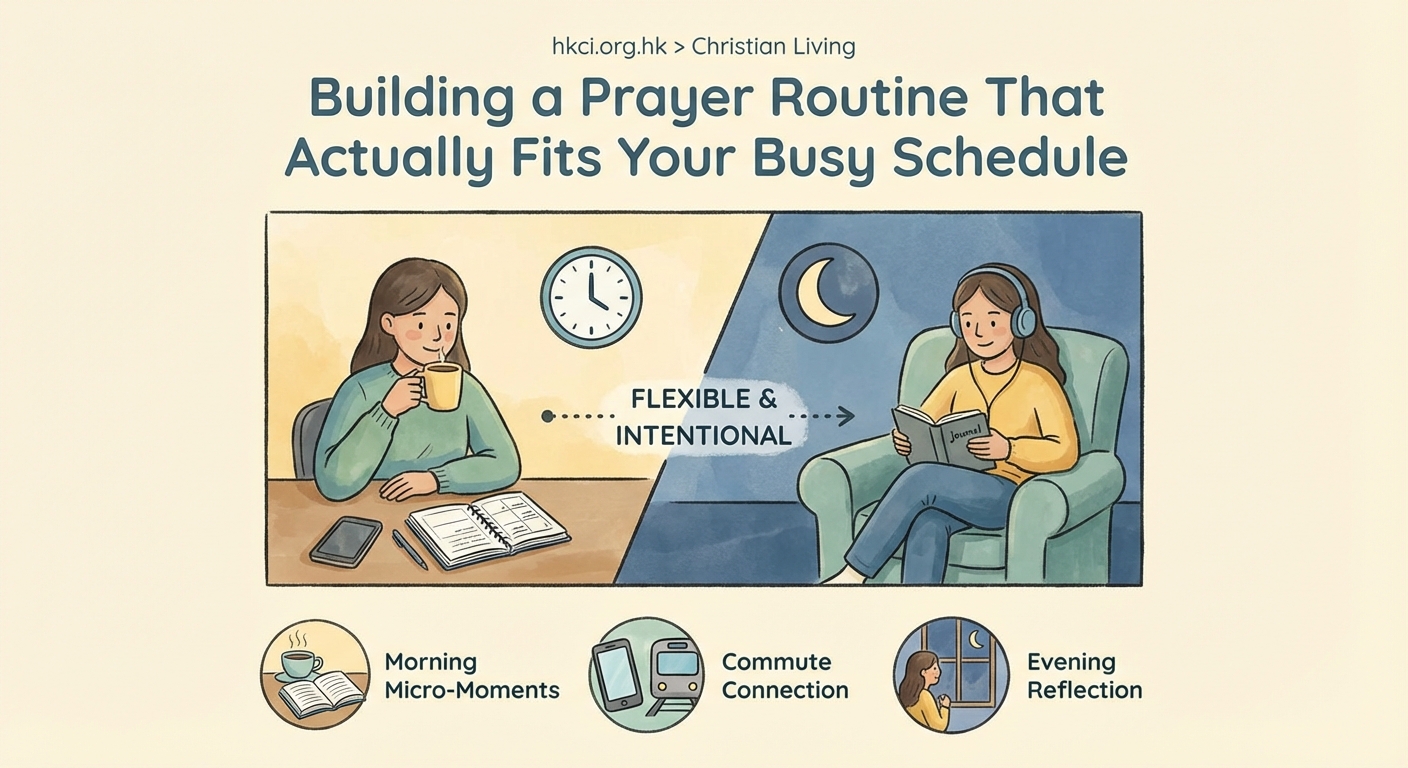
The most sustainable prayer routine for busy schedule situations doesn’t require you to wake up earlier or stay up later. It layers prayer onto activities you already do every single day.
Think about your morning routine. You brush your teeth. You make coffee. You check your phone. These happen whether you plan them or not.
Now attach a prayer practice to one of them.
While the coffee brews, pray for your day. While brushing your teeth, thank God for three specific things. While waiting for your computer to boot up at work, pray for a colleague by name.
These micro-prayers take zero additional time because they happen during activities that already have built-in waiting periods.
The anchor method for consistent prayer
Habit research shows that new behaviors stick best when anchored to existing ones. This principle transforms how you build a prayer routine.
Here’s how to implement it:
- List five things you do every day without thinking (showering, eating lunch, putting on shoes, etc.)
- Choose one anchor activity and pair it with a specific prayer type
- Practice the pairing for two weeks until it feels automatic
- Add a second anchor-prayer pair once the first becomes natural
- Build up to five or six prayer moments scattered throughout your day
Your prayer routine becomes distributed across your schedule instead of concentrated in one block you can’t protect.
Prayer types that fit different time pockets
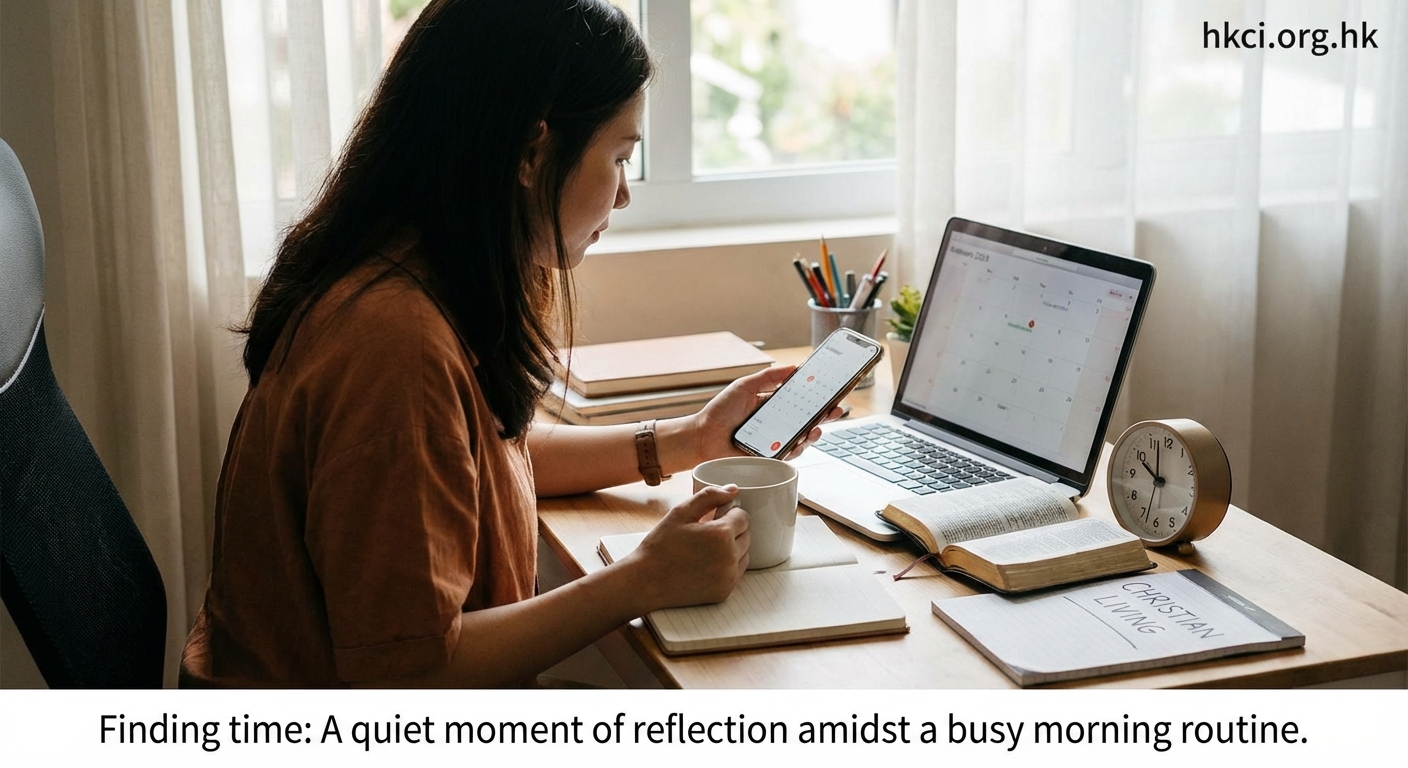
Not all prayers need the same format or length. Matching prayer style to available time makes consistency actually possible.
| Time Available | Prayer Type | Example |
|---|---|---|
| 30 seconds | Breath prayer | “Lord Jesus Christ, have mercy on me” repeated three times |
| 2 minutes | Gratitude list | Name five specific things you’re thankful for today |
| 5 minutes | Intercession | Pray through your family members or close friends by name |
| 10 minutes | Scripture meditation | Read one Psalm slowly, then respond in prayer |
| 15+ minutes | Journaling prayer | Write your prayers and God’s responses as a conversation |
Notice how even 30 seconds counts. You’re not trying to have a 30-minute prayer time. You’re building a prayer-saturated day using the time pockets you actually have.
Environmental cues that trigger prayer
Your environment can work for you instead of against you. Strategic cues remind you to pray without requiring willpower or memory.
Place a small stone in your pocket. Every time you feel it, pray a one-sentence prayer. Put a sticky note on your car dashboard. When you see it at red lights, pray for whoever comes to mind. Set your phone wallpaper to a simple word like “Pray” or “Breathe.”
These physical reminders create prayer moments you wouldn’t otherwise remember.
One parent keeps a small cross on the kitchen windowsill above the sink. Every time she washes dishes and sees it, she prays for one of her children. The dishes get done anyway. The prayer happens because the cue is always there.
Common mistakes that sabotage busy schedules
Even with good intentions, certain approaches make failure almost guaranteed.
Setting vague goals. “I’ll pray more” means nothing. “I’ll pray while my lunch heats up in the microwave” creates a specific trigger.
Starting too big. Attempting 45 minutes of prayer when you haven’t prayed consistently in months sets you up for disappointment. Start with two minutes.
Ignoring your actual energy patterns. If you’re not a morning person, stop trying to pray at 5 AM. Find your natural alert times and use those.
Treating missed days as failure. You’ll miss days. That’s not failure. That’s life. The routine that survives is the one that allows for imperfection.
Waiting for ideal conditions. Your life will not get less busy next month. Build the routine that works now, not the one you wish you could have.
The power of praying what you see
One of the most practical prayer methods for busy people is praying for what’s right in front of you.
Stuck in traffic? Pray for the drivers around you. Waiting in the school pickup line? Pray for the teachers. Standing in the grocery store checkout? Pray for the cashier and the person ahead of you.
This approach requires zero preparation and works in any situation. Your surroundings become your prayer list.
“Prayer doesn’t require a quiet room and a leather journal. It requires a willing heart and an awareness that God is present in the carpool lane just as much as in the sanctuary.” (Anonymous pastor)
Building in flexibility without losing consistency
The best prayer routine for busy schedule management includes planned flexibility. This sounds contradictory but it’s essential.
Identify your non-negotiable anchor prayers. Maybe that’s praying while your coffee brews and praying before bed. These happen every day, no exceptions.
Then add flexible prayer pockets. These happen when opportunity allows but don’t derail your whole routine if you miss them.
This two-tier system means you maintain consistency with your anchors while allowing life’s unpredictability to happen without guilt.
Using transitions as prayer opportunities
Your day is full of transitions. Waking up. Leaving home. Starting work. Lunch break. Leaving work. Arriving home. Going to bed.
Each transition is a natural pause point. Your brain is already shifting gears. Adding a 30-second prayer costs nothing but transforms these moments.
Before you walk into your house after work, pause in the car for ten seconds. Pray for patience with your family. Before you open your laptop in the morning, pray for wisdom in your work. Before you turn off the light at night, pray a simple thank you for the day.
These transition prayers create a rhythm that sanctifies your whole day without requiring you to carve out new time.
Technology that helps instead of distracts
Your phone can be a prayer tool instead of just a distraction source.
- Set three daily alarms with prayer reminders as the label
- Use a prayer app that sends simple prompts throughout the day
- Keep a running note of prayer requests you can review during waiting time
- Set your most-used app icon to trigger a breath prayer before you open it
The goal isn’t to add screen time. It’s to redeem the screen time you already have by inserting prayer into the gaps.
What to do when you miss days
You will miss days. Multiple days in a row sometimes.
This is not failure. This is being human with a busy schedule.
The routine that survives isn’t the one you never break. It’s the one you can restart without shame or complicated catch-up requirements.
When you realize you haven’t prayed in three days, don’t try to make up for lost time with an hour-long session. Just pray your next anchor prayer when the moment comes.
Consistency is built over months, not perfected in weeks.
Involving others in your routine
Praying with family members, even briefly, can strengthen both your routine and your relationships.
Pray with your spouse for 60 seconds before one of you leaves for work. Pray with your kids while buckling them into car seats. Text a prayer to a friend during your lunch break.
Shared prayer creates accountability without adding pressure. Someone else knows you’re trying to maintain this rhythm, and you’re blessing them in the process.
Adjusting as seasons change
Your prayer routine for busy schedule needs will shift as life changes. The routine that worked when your kids were toddlers won’t work when they’re teenagers. The routine that fits your current job might not fit your next one.
Review your routine every few months. Ask yourself what’s actually working and what’s creating frustration. Adjust the anchors. Change the prayer types. Move the timing.
A living routine adapts. A dead routine stays rigid until you abandon it completely.
Making prayer your default mode
After weeks of practicing anchor prayers and transition prayers, something shifts. Prayer stops being an item on your to-do list and starts becoming your default response to life.
You’re worried about something, and prayer happens before you even think about it. You see something beautiful, and gratitude to God surfaces naturally. Someone shares a struggle, and you pray for them right there instead of promising to pray later and forgetting.
This is the goal. Not a perfect 30-minute quiet time. A prayer-saturated life where talking with God is as natural as breathing.
Your next faithful step
You don’t need to overhaul your entire life to build a meaningful prayer routine. You just need to start with one anchor prayer this week.
Pick the most consistent part of your day. Attach a 30-second prayer to it. Do it tomorrow. Do it the next day. Do it until it happens without thinking.
Then add another.
Your prayer life doesn’t have to look like anyone else’s. It just has to be real, sustainable, and woven into the actual rhythms of your beautifully busy, wonderfully messy, completely normal life.