

Starting the Bible feels like opening a 1,200-page book with no table of contents, no plot summary, and characters who lived thousands of years ago. You want to understand it, but you don’t know if you should start at page one or jump to a specific section. You’re not sure what half the names mean or why some parts read like poetry while others feel like ancient law books.
Reading the Bible for the first time doesn’t require starting at Genesis. Begin with one of the four Gospels (Mark is shortest), read in short sessions, use a modern translation like NIV or NLT, and focus on understanding the story before analyzing every detail. Keep a notebook, read whole chapters instead of random verses, and don’t worry about what you don’t understand immediately.
Why starting at Genesis might frustrate you
Most people assume they should start at the beginning. That sounds logical for any book.
But the Bible isn’t arranged chronologically. Genesis through Deuteronomy covers laws, genealogies, and ancient customs that make more sense after you understand the bigger picture.
Starting there often leads to confusion. You’ll hit lists of regulations in Leviticus and wonder what any of it has to do with faith or spirituality.
Where to actually begin
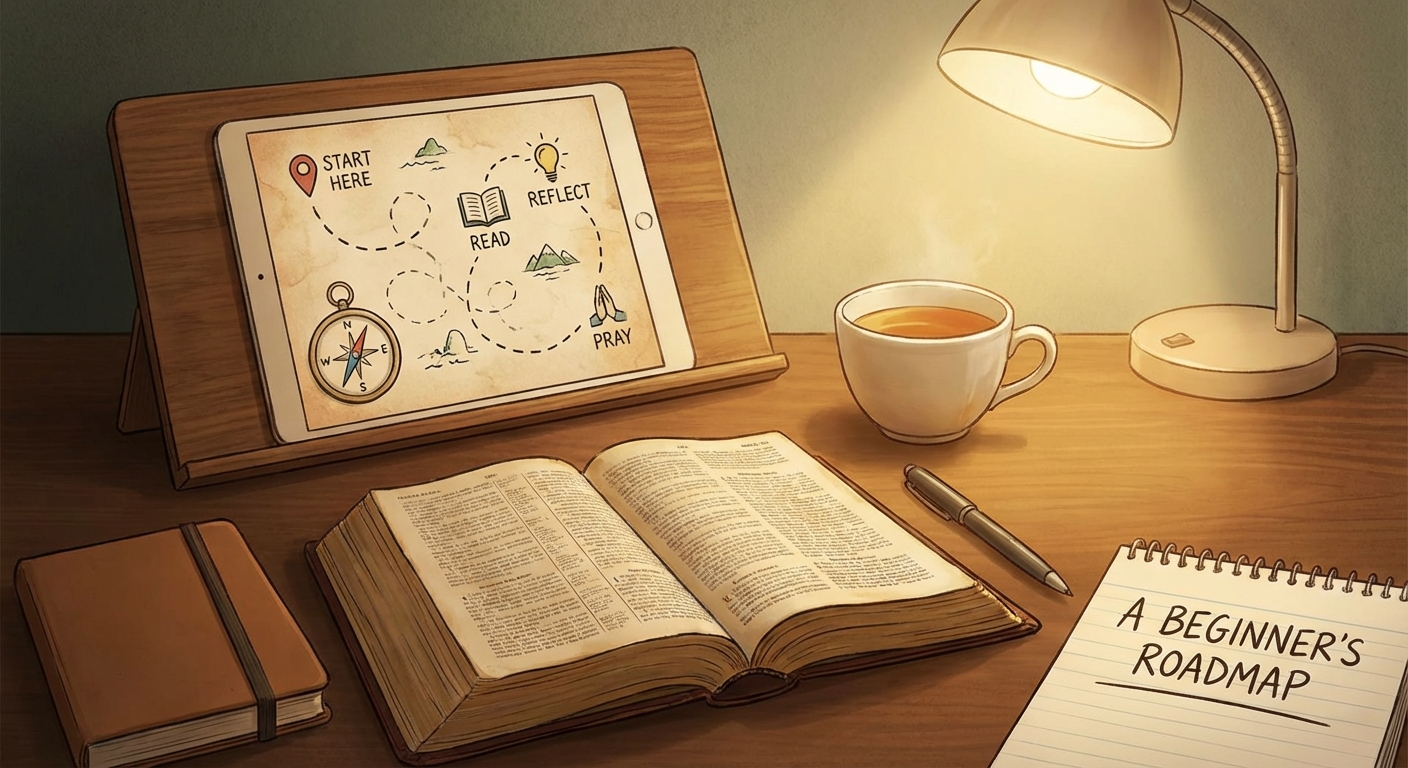
The four Gospels (Matthew, Mark, Luke, and John) tell the story of Jesus from four different perspectives. They sit in the New Testament and give you the central narrative of Christianity.
Mark is the shortest and most action-focused. It moves fast and gives you the essential events without lengthy genealogies or extended teachings.
Luke provides the most detailed narrative. It includes parables and stories you won’t find in the other Gospels.
John takes a different approach. It’s more reflective and focuses on the meaning behind events rather than just the timeline.
Matthew connects many Old Testament prophecies to Jesus, which might feel confusing if you haven’t read those earlier books yet.
Start with Mark. Read it all the way through in a few sittings. Treat it like a short biography. You’ll finish it in under two hours if you read without stopping.
Choosing a translation that actually makes sense
The Bible was written in Hebrew, Aramaic, and Greek. Every English version is a translation, and they vary in how they balance word-for-word accuracy with readability.
| Translation | Style | Best For |
|---|---|---|
| NIV | Balance of accuracy and clarity | General reading and study |
| NLT | Thought-for-thought, very readable | First-time readers |
| ESV | More literal, formal language | Those who want precision |
| KJV | 1611 English, poetic but archaic | Traditional preference only |
| MSG | Paraphrase, conversational | Getting the gist of a passage |
NIV (New International Version) and NLT (New Living Translation) work best for beginners. They use modern English without losing meaning.
Avoid starting with KJV (King James Version). The “thee” and “thou” language adds an unnecessary barrier. You’re trying to understand ancient concepts, not decode 17th-century English at the same time.
How much to read at once
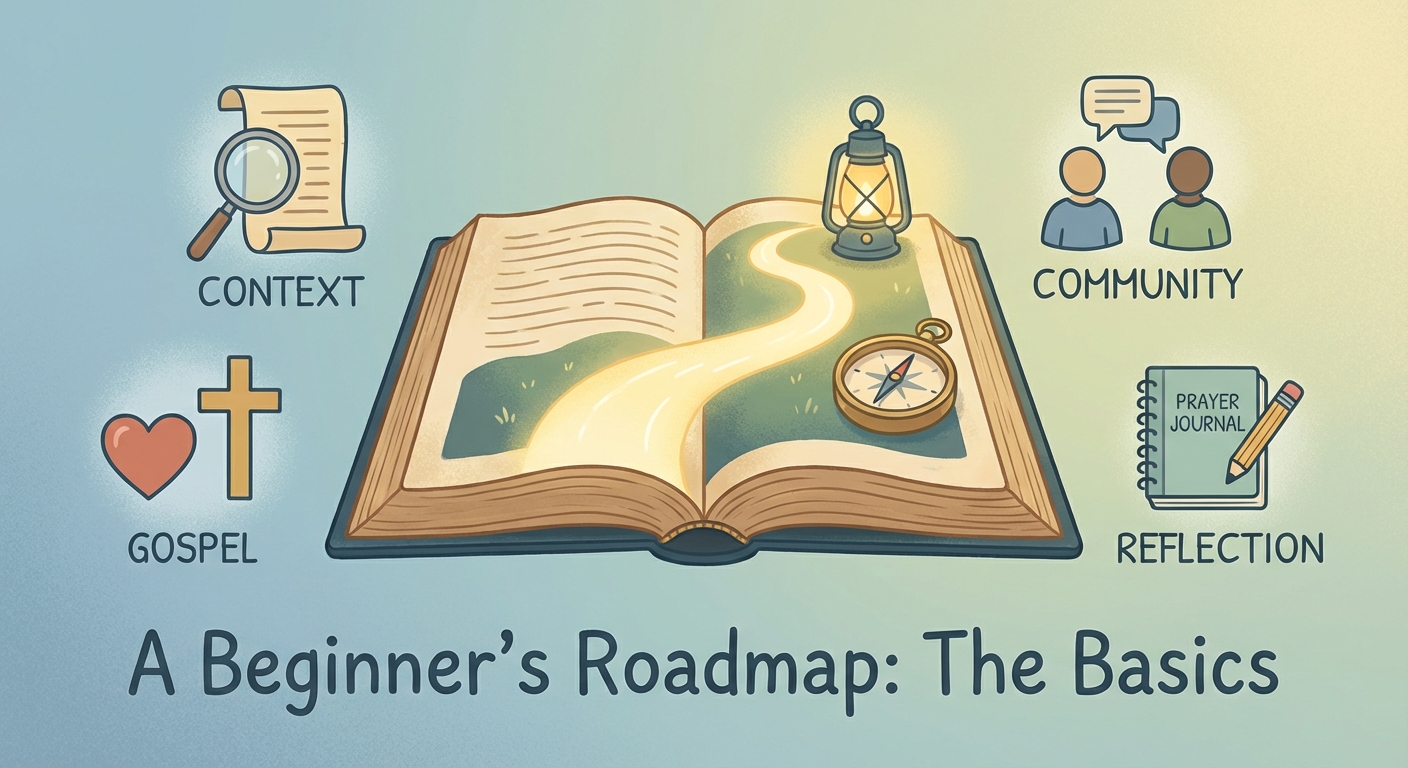
Don’t try to read the Bible like a novel you finish in a week.
Read one chapter at a time. Some chapters take five minutes. Others need twenty.
After you finish a chapter, pause. Think about what happened. If you’re reading a story, ask yourself what the people did and why. If you’re reading a teaching section, identify the main point.
Set a sustainable pace:
- Read one chapter per day if you want a steady rhythm
- Read three to four chapters per week if daily feels like too much
- Finish one book before moving to another
Reading seven chapters in one sitting because you feel motivated, then nothing for two weeks, builds no momentum. Consistency beats intensity.
What to do when you don’t understand something
You will hit confusing parts. Everyone does.
Some passages reference historical events you’ve never heard of. Others use metaphors that made sense in ancient agricultural societies but feel foreign now.
Keep moving. Don’t let one confusing verse stop you from reading the next fifty.
Mark unclear parts with a pen or a bookmark. Come back to them later after you’ve read more. Often, other sections will clarify what confused you earlier.
“Understanding the Bible isn’t about figuring out every detail on the first read. It’s about seeing the larger story and letting the pieces connect over time.”
Reading whole chapters instead of random verses
Many people treat the Bible like a fortune cookie. They open to a random page, read one verse, and try to apply it to their day.
That approach rips sentences out of context. You wouldn’t do that with any other book.
A verse might say “there is no God” if you only read Psalm 14:1 partially. The full verse says “The fool says in his heart, ‘There is no God.'” Context changes everything.
Read complete chapters. Understand who is speaking, who they’re speaking to, and what situation they’re addressing.
Taking notes without overcomplicating it
Keep a simple notebook next to you.
Write down:
- Anything that surprises you
- Questions you have
- Patterns you notice
- Verses that stand out
You don’t need a complex system. You’re not writing a research paper. You’re tracking your own thoughts.
Looking back at notes from a month ago shows you how much more you understand now. It also reminds you of questions you had that later sections answered.
Building a reading plan that fits your life
After you finish Mark, you have options.
Option 1: Read the other three Gospels
This gives you the complete picture of Jesus’ life and teaching. You’ll notice different details in each account.
Option 2: Read Acts
Acts continues the story after Jesus and shows how the early church started. It reads like a historical narrative and connects naturally to the Gospels.
Option 3: Read Genesis
Now that you understand the New Testament context, the Old Testament makes more sense. Genesis tells the creation story and introduces key figures like Abraham, Isaac, and Jacob.
Option 4: Read Psalms
These are songs and prayers. They’re poetic, emotional, and you can read them in any order. Many people read one Psalm per day alongside another book.
Don’t try to read the Bible cover to cover in order unless you’re committed to pushing through the challenging middle sections. A better approach:
- Read all four Gospels
- Read Acts
- Read Genesis through Deuteronomy
- Read one or two shorter letters like Philippians or James
- Read a few Psalms each week
- Continue through other New Testament letters
- Read Old Testament narrative books like 1 and 2 Samuel
- Fill in the prophets and remaining books
Common mistakes that slow you down
Trying to memorize everything. You’re not studying for a test. You’re getting familiar with the text.
Reading only when you feel inspired. Treat it like brushing your teeth. You do it whether you feel like it or not.
Skipping parts that seem boring. Some genealogies and laws do feel dry. Skim them if you need to, but don’t let them stop you from reaching the next section.
Comparing yourself to people who have read the Bible for years. They didn’t start with deep understanding either. They built it over time.
Waiting until you have an hour of free time. Fifteen minutes works. Ten minutes works. You’re building familiarity, not cramming for an exam.
Using resources without getting overwhelmed
Study Bibles add notes at the bottom of each page. They explain historical context, define terms, and cross-reference related passages.
The NIV Study Bible and the ESV Study Bible are both solid choices. The notes stay helpful without becoming distracting.
Bible apps like YouVersion offer reading plans, audio versions, and multiple translations. You can highlight verses and add notes from your phone.
Commentaries explain passages in detail. They’re useful once you’ve read a book and want to go deeper, but they’re overkill for a first read.
Start simple. One translation, one notebook, one book at a time.
What to expect in your first month
Week one feels exciting. Everything is new.
Week two might feel harder. The initial novelty fades, and you’re still building the habit.
Week three, things start connecting. A phrase in one chapter reminds you of something you read earlier. You begin recognizing names and places.
By week four, reading feels more natural. You’ve built enough context that new sections make more sense.
Most people quit in week two. Push through that point, and the momentum carries you forward.
Handling parts that challenge or confuse you
Some passages describe violence. Others contain laws that feel harsh by modern standards. You’ll read things that don’t align with how you think the world should work.
That’s normal.
The Bible records history, including the brutal parts. It shows flawed people making terrible decisions. Not every action described is endorsed.
When something bothers you, note it. Keep reading. See if later sections address it. Many difficult Old Testament passages become clearer after you understand the full biblical narrative.
You don’t have to agree with everything immediately. You’re allowed to sit with questions.
Making it part of your routine
Attach Bible reading to something you already do every day.
- Read one chapter with your morning coffee
- Read before bed instead of scrolling your phone
- Read during lunch breaks at work
- Read right after you exercise
The specific time matters less than the consistency.
If you miss a day, don’t try to catch up by reading three chapters the next day. Just continue where you left off.
Your first steps matter more than your pace
You don’t need to become a Bible scholar in three months. You’re building a foundation.
Pick up Mark tomorrow. Read the first chapter. See what stands out to you. Write down one thought.
Do that again the next day.
That’s how you read the Bible for the first time. Not by understanding everything at once, but by showing up consistently and letting the pieces come together slowly.