

You know that person who drains your energy every time you interact? The family member who criticizes everything you do? The coworker who takes credit for your ideas? We all have someone in our lives who tests our patience and challenges our commitment to love like Jesus.
Learning how to love difficult people requires intentional prayer, biblical wisdom, and practical boundaries. Christ calls us to love even those who frustrate us, not by tolerating toxic behavior, but by extending grace while protecting our hearts. This approach transforms both us and our relationships, reflecting God’s love in authentic ways that honor Him and preserve our wellbeing.
Why difficult people trigger us spiritually
Challenging relationships expose what’s really happening in our hearts. That critical mother-in-law reveals our pride. The gossiping friend shows us where we’re holding unforgiveness. The demanding boss highlights our struggle with patience.
God often uses difficult people as mirrors. They reflect areas where we need His transformation.
Scripture reminds us that “iron sharpens iron” (Proverbs 27:17). Sometimes the sharpening process feels uncomfortable. But growth rarely happens in comfort zones.
The question isn’t whether we’ll encounter difficult people. We will. The question is how we’ll respond when we do.
The biblical foundation for loving challenging people
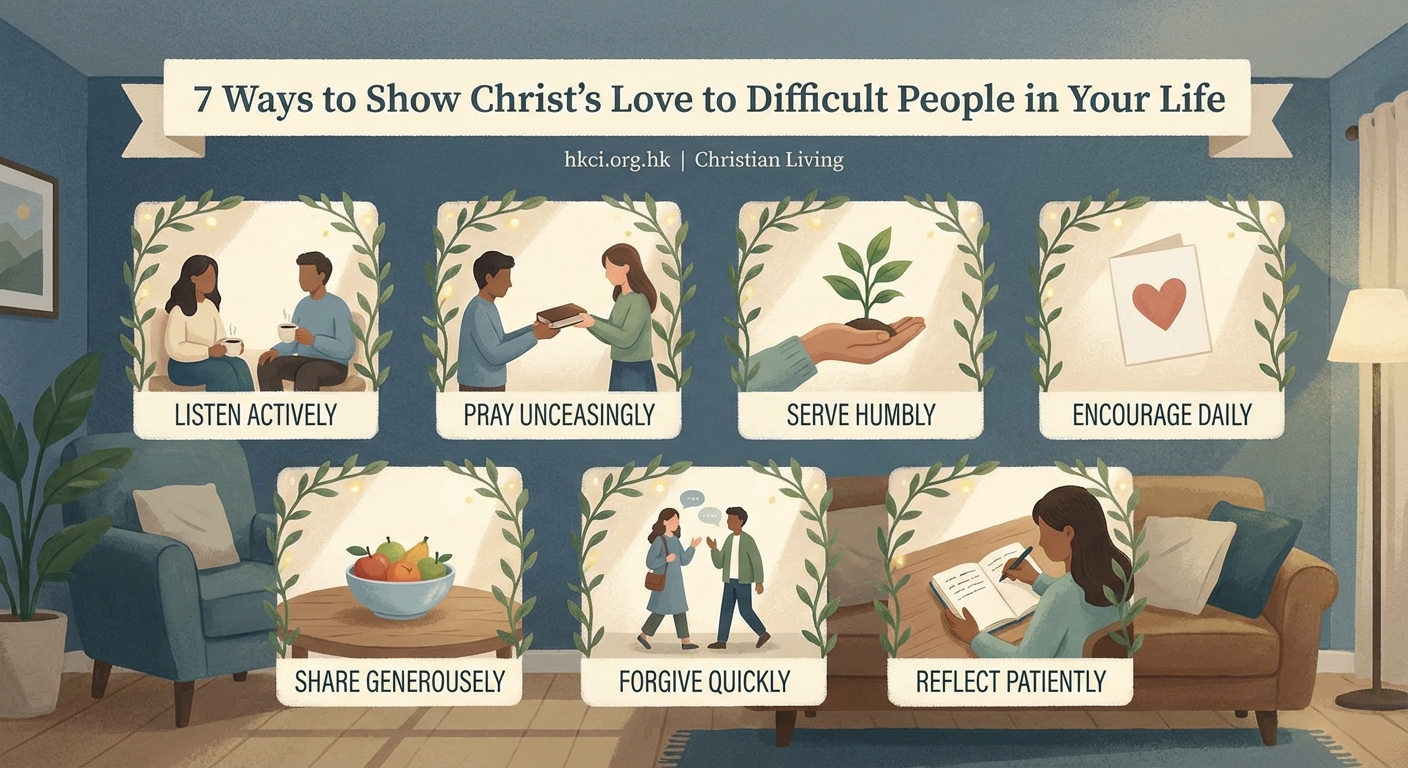
Jesus didn’t just suggest we love difficult people. He commanded it.
“Love your enemies and pray for those who persecute you” (Matthew 5:44). Not tolerate them. Not avoid them. Love them.
That’s a tall order. Especially when someone has hurt you deeply.
But Christ modeled this perfectly. While dying on the cross, He prayed, “Father, forgive them, for they do not know what they are doing” (Luke 23:34). His executioners were torturing Him, and He asked God to forgive them.
Paul echoes this in Romans 12:18: “If it is possible, as far as it depends on you, live at peace with everyone.” Notice the qualifier. Paul acknowledges that peace isn’t always possible. But we’re responsible for our part.
This biblical framework doesn’t mean accepting abuse or enabling harmful behavior. It means responding with Christ’s character while maintaining healthy boundaries.
Five practical steps to love difficult people
Here’s a process you can follow when facing challenging relationships:
-
Pray before you engage. Ask God to give you His perspective on the person. Ask Him to reveal any blind spots in your own heart. Developing consistent prayer habits prepares you for these tough interactions.
-
Identify your triggers. Write down what specifically bothers you about this person. Is it their tone? Their assumptions? Their demands? Understanding your triggers helps you respond rather than react.
-
Set clear boundaries. Loving someone doesn’t mean giving them unlimited access to your time, energy, or emotions. Decide what you will and won’t accept, then communicate it kindly but firmly.
-
Look for the wound behind the behavior. Hurt people hurt people. That critical person might be dealing with deep insecurity. The controlling person might have experienced chaos they’re trying to prevent. Compassion doesn’t excuse bad behavior, but it helps you respond with grace.
-
Release the outcome to God. You can’t control how someone responds to your love. You can only control your obedience to Christ. Trust God with the results.
Common mistakes when dealing with difficult people

| Mistake | Why it fails | Better approach |
|---|---|---|
| Avoiding the person completely | Unresolved tension grows; you miss growth opportunities | Address issues directly with grace and truth |
| Trying to change them | You’re not the Holy Spirit; this creates frustration | Focus on your own responses and character |
| Venting to others | Gossip damages your witness and the person’s reputation | Process feelings through prayer or with a trusted counselor |
| Accepting toxic behavior | Enables harm; confuses love with doormat mentality | Set firm boundaries while maintaining kindness |
| Expecting immediate transformation | Real change takes time; impatience leads to bitterness | Celebrate small progress; trust God’s timing |
Recognizing when you’re the difficult person
Here’s an uncomfortable truth: sometimes we’re the challenging person in someone else’s story.
Self-awareness is crucial. Ask yourself these questions:
- Do people seem to walk on eggshells around me?
- Am I defensive when receiving feedback?
- Do my relationships often end in conflict?
- Am I more focused on being right than being kind?
- Do I make everything about my needs and feelings?
If you answered yes to several of these, you might need to do some heart work. Understanding what it means to be transformed by Christ can help you see where God wants to work in your character.
“Search me, God, and know my heart; test me and know my anxious thoughts. See if there is any offensive way in me, and lead me in the way everlasting.” (Psalm 139:23-24)
This prayer invites God to show us our blind spots. It takes humility to pray it and mean it.
The role of forgiveness in loving difficult people
You can’t genuinely love someone you refuse to forgive.
Unforgiveness is like drinking poison and expecting the other person to die. It destroys you from the inside out while the person who hurt you goes about their life unaffected.
Learning to practice forgiveness doesn’t mean pretending the hurt never happened. It means releasing your right to revenge and trusting God to handle justice.
Forgiveness is a decision, not a feeling. You choose to forgive even when your emotions haven’t caught up yet.
Some days you’ll need to forgive the same person for the same thing multiple times. That’s normal. Peter asked Jesus how many times he should forgive someone. Jesus essentially said, “Stop counting” (Matthew 18:21-22).
Building support systems for challenging relationships
You can’t do this alone. God designed us for community.
Identify a few mature believers who can:
- Pray with you about the relationship
- Offer biblical perspective when you’re too close to see clearly
- Hold you accountable to respond with Christ’s character
- Encourage you when you want to give up
Building authentic community in your church provides this kind of support. Don’t try to be a lone ranger Christian.
Be careful about who you share with, though. Choose people who will point you to Scripture, not just validate your frustrations.
What loving difficult people looks like in practice
Let’s get specific. Here are real-world examples:
The critical family member: Instead of defending yourself or attacking back, try: “I hear that you’re concerned. I’ve made a different decision, and I’d appreciate your support even if you don’t agree.”
The gossiping friend: Rather than participating or ghosting them, say: “I care about you, but I’m not comfortable talking about people who aren’t here. Can we talk about something else?”
The demanding coworker: Set boundaries with kindness: “I want to help when I can, but I have other commitments. I can do X, but not Y. Let me know if that works.”
The manipulative church member: Respond with clarity: “I understand you’re disappointed. I’ve prayed about this and believe God is leading me in a different direction.”
Notice the pattern? Each response combines truth with grace. You’re not being mean, but you’re also not being a doormat.
When to create distance from difficult people
Sometimes loving someone means loving them from a distance.
If someone is consistently:
- Verbally or physically abusive
- Manipulating you through guilt or fear
- Refusing to respect reasonable boundaries
- Leading you away from God
- Draining your mental or emotional health
You may need to limit or end contact. This isn’t unloving. It’s wise.
Jesus Himself withdrew from hostile crowds when necessary (Luke 4:30, John 10:39). He prioritized His mission over people’s demands.
Creating distance doesn’t mean you stop praying for the person. It means you recognize that proximity isn’t always healthy.
Seek counsel from trusted spiritual leaders before making major relationship decisions. They can help you discern between temporary frustration and genuine toxicity.
How Scripture study strengthens your capacity to love
The more you know God’s Word, the better equipped you are to love difficult people.
Scripture shows you:
- How Jesus responded to critics and enemies
- What genuine love looks like versus worldly counterfeits
- How to renew your mind when negative thoughts dominate
- God’s promises when relationships feel impossible
Studying the Bible effectively gives you a foundation that emotions can’t shake. When your feelings scream “give up,” God’s Word reminds you of His faithfulness.
Memorize verses that speak to your specific struggles. When that difficult person triggers you, recall Scripture instead of reacting from emotion.
Some helpful passages to start with:
- Ephesians 4:29-32 on communication and forgiveness
- Colossians 3:12-14 on compassion and patience
- James 1:19-20 on listening and anger
- 1 Corinthians 13:4-7 on what love actually does
Measuring growth in difficult relationships
How do you know if you’re making progress?
Look for these signs:
- You can think about the person without your blood pressure rising
- You’re able to pray genuine blessings over them
- You respond with patience more often than frustration
- You see them as image-bearers of God, not just sources of stress
- You’re less focused on changing them and more focused on honoring God
Growth isn’t linear. You’ll have good days and bad days. Don’t beat yourself up over setbacks.
Keep a journal tracking your interactions and responses. Over time, you’ll see patterns and progress you might miss in the moment.
Celebrate small victories. Did you bite your tongue instead of snapping back? That’s growth. Did you pray for them when you wanted to complain about them? That’s transformation.
The supernatural power available to you
Here’s the good news: you’re not doing this in your own strength.
The same Spirit that raised Jesus from the dead lives in you (Romans 8:11). That power is available for every interaction, every conversation, every moment of frustration.
When you feel like you can’t love that difficult person one more day, you’re right. You can’t. But God can through you.
Paul wrote, “I can do all things through Christ who strengthens me” (Philippians 4:13). That includes loving the unlovable.
Surrender your inability to God. Tell Him you don’t have the strength, patience, or grace needed. Ask Him to love that person through you.
This isn’t about trying harder. It’s about depending more fully on God’s power working in you.
Love that transforms both people
Learning how to love difficult people changes you as much as it might change them.
It humbles you. It refines you. It makes you more like Jesus.
You’ll find compassion you didn’t know you had. Patience you thought was impossible. Grace that surprises even you.
And sometimes, your consistent love breaks through the other person’s defenses. They soften. They change. They respond to the Christ they see in you.
But even if they never change, you’re still called to love them. Because this isn’t ultimately about them. It’s about your obedience to the One who first loved you when you were difficult, rebellious, and unlovable.
Start with one person today. One interaction. One prayer. One boundary. One act of grace.
God will meet you there and give you everything you need to love like He does.