

Walking into a church building doesn’t automatically create community. You can have hundreds of people show up every Sunday and still feel like strangers passing through revolving doors. Real community happens when people move from polite handshakes to honest conversations, from surface-level smiles to sharing actual struggles.
Building authentic community in church requires intentional structures that move people beyond Sunday services into meaningful relationships. Church leaders must create consistent gathering spaces, model vulnerability, empower member-led initiatives, and design environments where people can share life together. Genuine connections form when congregations prioritize relational depth over programmatic expansion and give people permission to be real about their struggles and celebrations.
Why Surface Connections Keep Churches Stuck
Most churches accidentally encourage shallow relationships. The typical Sunday morning schedule leaves about three minutes for greeting time before the service starts. People exchange names, comment on the weather, and return to their seats.
That pattern repeats week after week. Everyone stays comfortable. Nobody gets too personal. And the church remains a collection of individuals rather than a connected body.
Authentic community requires a different approach. It needs structures that bring people together repeatedly in settings where real conversation can happen. It demands leaders who model openness about their own struggles. And it takes a willingness to prioritize relationships over programs.
Create Consistent Small Group Rhythms
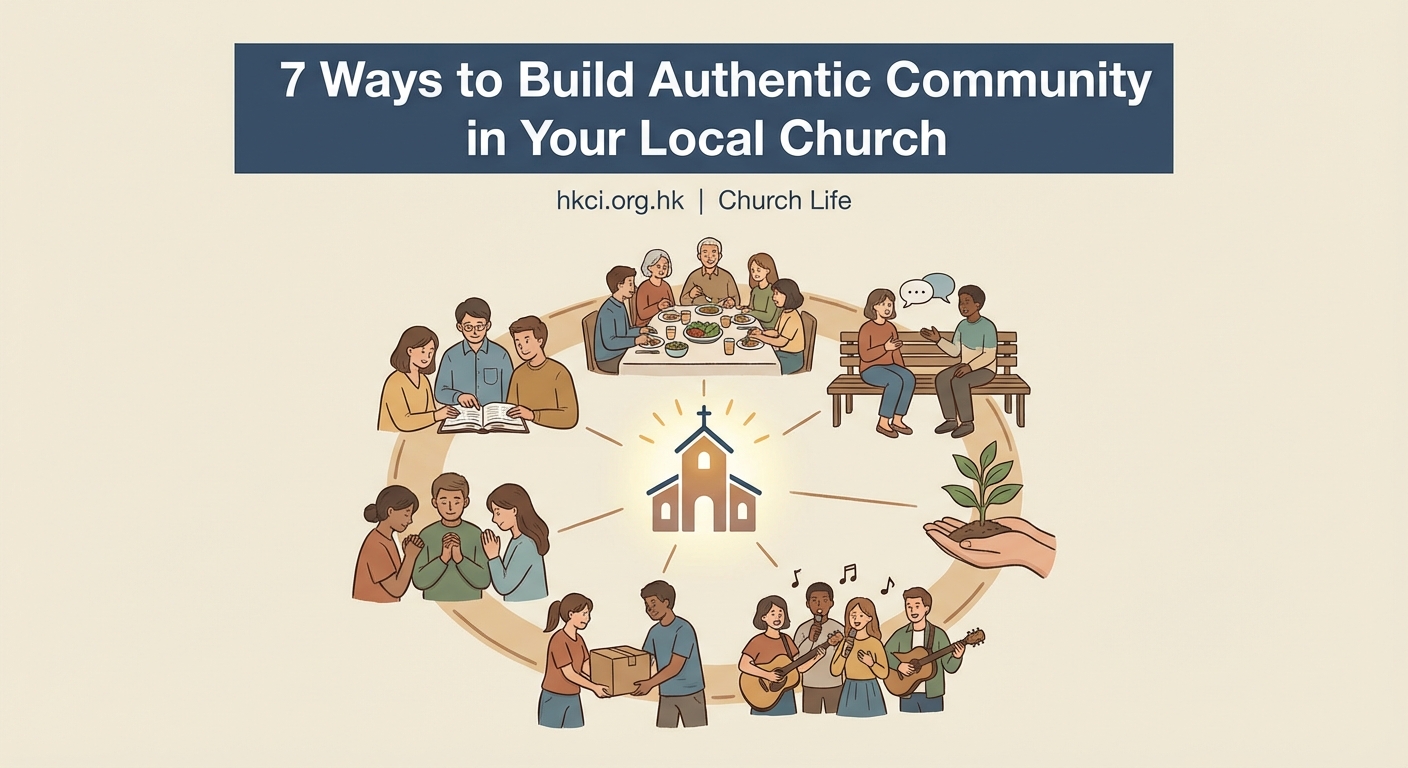
Small groups form the backbone of authentic community. They provide the regular, predictable space where relationships can deepen over time.
Here’s how to make them work:
- Set a clear meeting schedule that repeats weekly or biweekly throughout the year
- Keep groups small enough that everyone can speak in a single meeting (8 to 12 people works best)
- Design meetings around discussion rather than lecture, giving people space to share their actual lives
- Run groups for defined seasons (10 to 12 weeks) with natural break points where people can join or transition
- Train facilitators to ask open-ended questions that invite honest responses rather than correct answers
Small groups fail when they become another obligation on an already crowded calendar. They succeed when people genuinely look forward to seeing their group each week because those relationships matter.
Consider starting with a pilot group before launching church-wide. Test your discussion materials. Work out the logistics. Learn what questions generate meaningful conversation and which ones fall flat.
Design Spaces for Informal Connection
Authentic community needs room to breathe. Not every meaningful conversation happens during scheduled meeting times.
Create environments where people naturally bump into each other:
- Keep the building open during weekday evenings for people to study, work, or just hang out
- Set up a coffee area that encourages lingering after services rather than rushing to the parking lot
- Host monthly meals where the only agenda is eating together and talking
- Organize service projects that put people side by side working toward a common goal
- Plan outdoor activities like hiking groups or sports leagues that attract people with shared interests
The goal isn’t to fill the church calendar with more events. The goal is to give people reasons to be in the same place at the same time, creating opportunities for relationships to form organically.
One church turned their fellowship hall into a coworking space three days a week. Remote workers from the congregation started showing up with their laptops. They’d work independently but take coffee breaks together. Friendships formed naturally because people saw each other consistently in a low-pressure environment.
Model Vulnerability from the Front
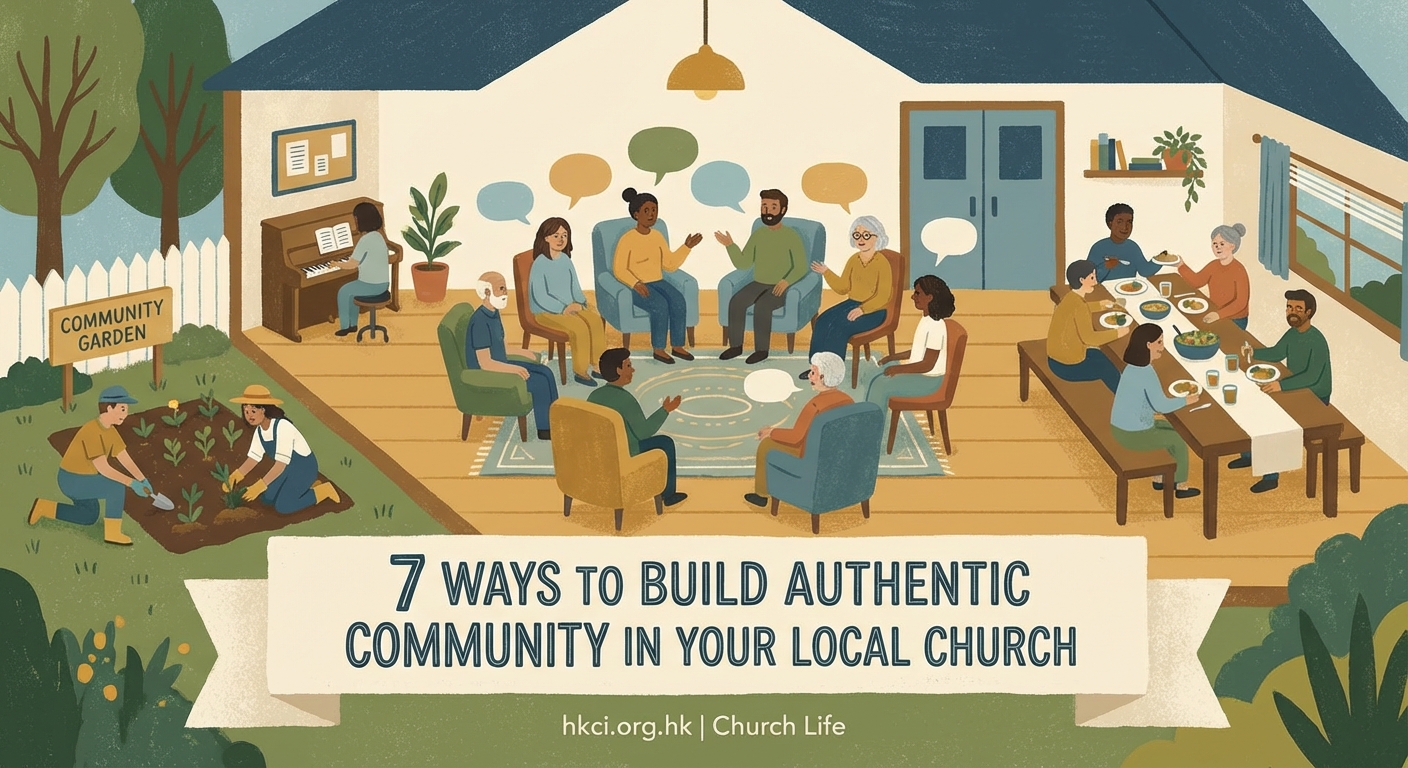
Congregations mirror their leadership. If pastors and ministry leaders only share polished success stories, church members assume they should do the same.
Authentic community starts when leaders go first with honesty. That means occasionally sharing from the pulpit about personal struggles, not just victory stories. It means admitting in small group settings when you’re having a hard week. It means asking for prayer about real issues rather than vague requests.
“People don’t connect with perfection. They connect with authenticity. When church leaders share their actual struggles, it gives everyone else permission to be real too.”
This doesn’t mean oversharing or making every service about the pastor’s problems. It means being selectively vulnerable in ways that demonstrate faith in the middle of real life challenges.
One pastor started occasionally sharing during announcement time about something he was genuinely struggling with that week. Nothing dramatic or overly personal, just honest. Within months, the tone of the entire church shifted. People started having more honest conversations in the lobby and small groups because their leader had modeled that it was safe.
Common Approaches and Their Outcomes
Different strategies for building community produce different results. Understanding what works and what doesn’t helps you invest energy wisely.
| Approach | Typical Outcome | Why It Happens |
|---|---|---|
| Adding more church programs | People attend events but remain disconnected | Programs create activity without requiring relational investment |
| Forcing people into assigned groups | Awkward gatherings with low retention | Relationships need organic chemistry to thrive |
| Only meeting on Sundays | Surface-level friendships | Weekly services don’t provide enough time for depth |
| Creating interest-based groups | Natural connections that extend beyond church activities | Shared interests give people easy conversation starters |
| Training members to facilitate groups | Sustainable community that doesn’t depend on staff | Empowered members take ownership of relational health |
| Hosting quarterly church-wide events | Brief connection spikes that fade without follow-up | One-time gatherings don’t build consistent relationships |
The most effective churches combine multiple approaches. They offer interest-based groups, train member facilitators, and create both structured and informal gathering opportunities.
Empower Members to Lead Initiatives
Staff-driven community doesn’t scale. As your church grows, pastoral staff can’t possibly maintain personal relationships with everyone.
Healthy churches distribute leadership. They identify people with relational gifts and give them permission to start groups or initiatives without waiting for official approval.
This might look like:
- A member who loves running starts a weekly jogging group
- Someone passionate about hospitality begins hosting monthly dinners in their home
- A young parent organizes a playground meetup for families with small children
- A retired professional offers to mentor younger workers in their field
These member-led initiatives create multiple entry points for community. Different people connect in different settings, so variety matters.
Your role as a church leader isn’t to control every gathering. It’s to celebrate when members take initiative, provide light support when needed, and trust that the Spirit works through ordinary people creating space for relationships.
Address Practical Barriers to Participation
Good intentions don’t overcome logistical obstacles. If you want people to engage in community, you need to remove unnecessary barriers.
Consider these common challenges:
- Childcare: Parents can’t attend evening groups if they can’t find babysitters. Provide childcare for small group nights or help groups coordinate childcare swaps.
- Transportation: Not everyone drives. Help connect people who need rides with those who have extra seats.
- Scheduling: Working parents, shift workers, and people with irregular schedules need flexible options. Offer groups at different times throughout the week.
- Financial constraints: Don’t make community expensive. Keep activities affordable or free.
- Social anxiety: Some people find large gatherings overwhelming. Create smaller, quieter options for connection.
One church surveyed their congregation about barriers preventing them from joining small groups. They discovered that 40% of parents cited childcare as the main obstacle. The church started providing free childcare during small group nights. Participation jumped within a month.
Celebrate Milestones Together
Authentic community shows up for both celebrations and struggles. Create rhythms where your congregation marks significant moments in each other’s lives.
This includes:
- Recognizing graduations, new jobs, and major accomplishments during services
- Organizing meal trains when families face medical crises or new babies arrive
- Sending cards or care packages to members going through difficult seasons
- Hosting celebrations for engagements, weddings, and anniversaries
- Praying specifically for people facing major decisions or transitions
These practices communicate that church isn’t just a Sunday morning gathering. It’s a community that pays attention to what’s happening in people’s actual lives.
Some churches create a shared calendar where members can post about upcoming events in their lives. Others use a communication app where people can request prayer or share good news. The specific tool matters less than the culture it creates.
Build a Culture of Invitation
Community grows when existing members actively invite others in. This applies both to newcomers visiting your church and to long-time attendees who haven’t yet connected deeply.
Train your congregation to:
- Introduce themselves to unfamiliar faces rather than only talking with friends
- Invite people to join them for lunch after service
- Bring newcomers along to small groups or church activities
- Follow up with visitors during the week to answer questions
- Include people on the margins in conversations and activities
This requires shifting from a consumer mindset to a contributor mindset. Instead of asking “What did I get out of church today?” people start asking “Who did I help connect today?”
Model this behavior consistently. When you notice someone standing alone, go talk with them. When you meet visitors, connect them with others who share similar life stages or interests. Your actions teach your congregation how to create welcoming spaces.
The Long Game of Building Relationships
Authentic community doesn’t happen overnight. Relationships take time to develop. Trust builds slowly through consistent presence and genuine care.
Some people will connect immediately. Others need months or even years before they’re ready to open up. Both timelines are normal.
Your job as a church leader is to create the conditions where community can flourish and then patiently tend those relationships over time. Keep showing up. Keep creating spaces for connection. Keep modeling vulnerability and invitation.
The investment pays off when you see people who once felt isolated now surrounded by friends who know their story. When church members text each other during the week just to check in. When someone facing a crisis has a dozen people ready to help without being asked.
That’s the church functioning as it was meant to be. Not a building people visit, but a family that does life together through all its seasons.